Verb Forms V1 V2 V3: 150 Verbs Table with Tamil Meaning (and Where Each Form Is Used)
 Vishaleni
Content Writer
Published
Time to read
9 minutes
Vishaleni
Content Writer
Published
Time to read
9 minutes
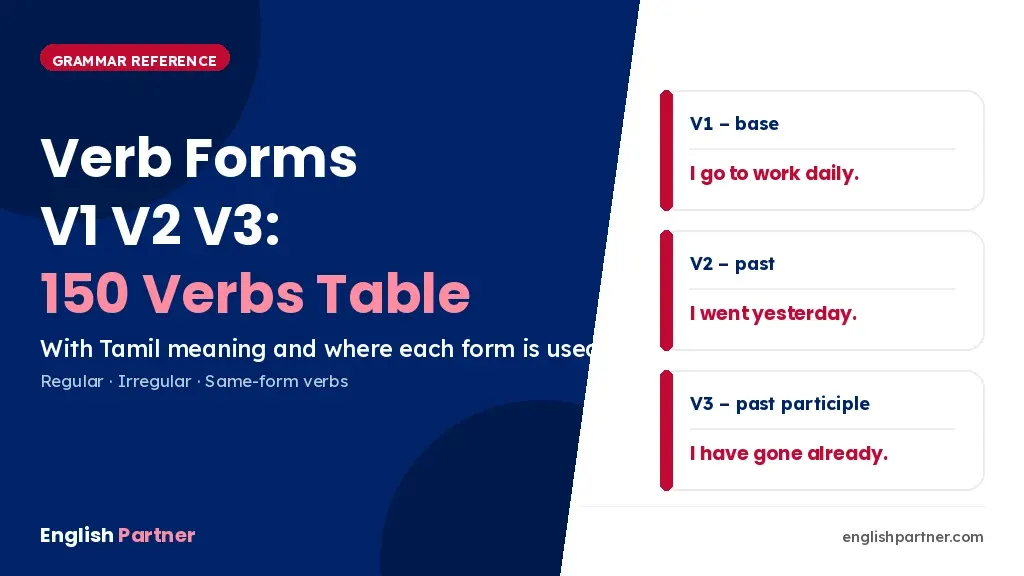
Quick answer: V1 is the base form (go), V2 is the simple past (went), V3 is the past participle (gone). Use V1 after do/does/did and will/can, V2 alone for the simple past, and V3 after have/has/had. The full table of 150 verbs with Tamil meaning is below.
Why the three-column list never sticks
Almost every learner has seen the V1 V2 V3 table at school. Go, went, gone. Eat, ate, eaten. And almost none of them can produce the right form in a real sentence under pressure.
The reason is how it was taught – as a list to memorise, not as three jobs. Once you know which form does which job, you stop reciting and start choosing. Trainers at English Partner teach the job first, then the list.
Where each form is used
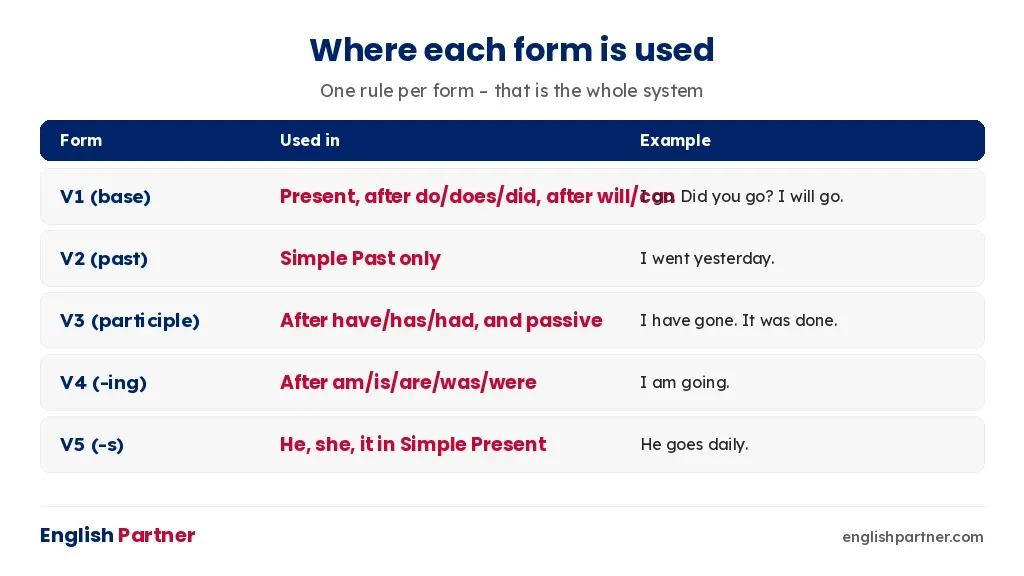
| Form | Used in | Example |
|---|---|---|
| V1 – base | Simple Present; after do / does / did; after will, can, should, must | I go daily. Did you go? I will go. |
| V2 – past | Simple Past only, standing alone | I went yesterday. |
| V3 – past participle | After have / has / had; passive voice | I have gone. The work was done. |
| V4 – -ing | After am / is / are / was / were | I am going now. |
| V5 – -s form | He, she, it in Simple Present | He goes daily. |
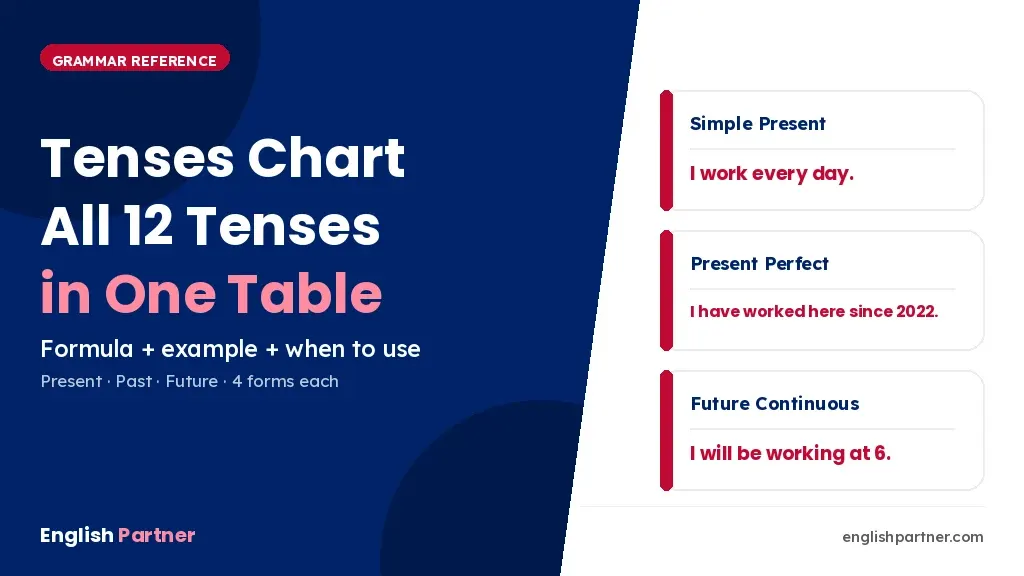
That is the entire system. If you want to see how these five forms build all twelve tenses, our tenses chart puts them side by side.
Verbs fall into three groups
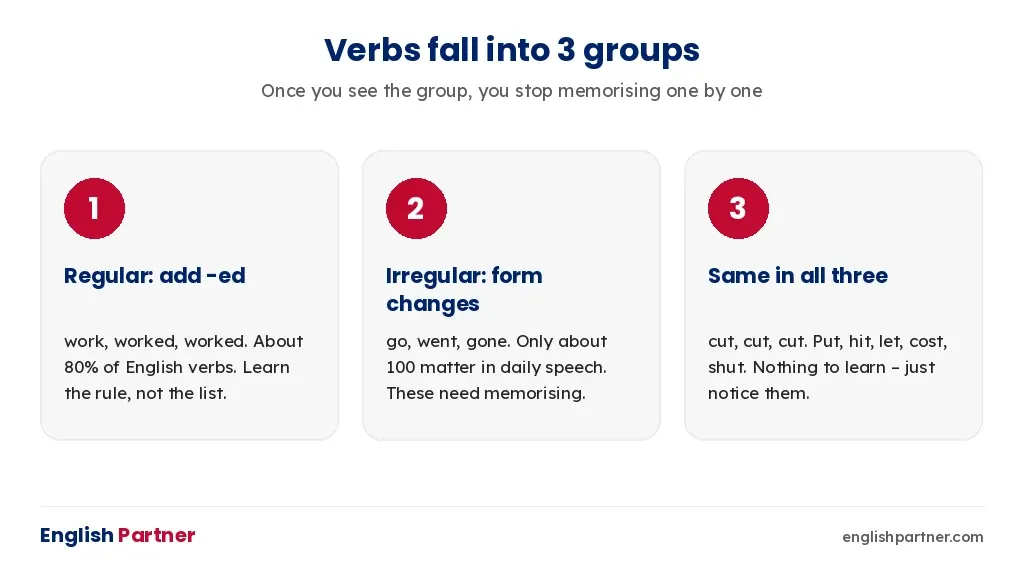
Regular – add -ed. Work, worked, worked. About 80% of English verbs. There is no list to memorise, only a spelling rule: add -ed; if the verb ends in e, add -d; if it ends in consonant + y, change to -ied (study → studied).
Irregular – the form changes. Go, went, gone. These genuinely need memorising, but only about 100 matter in daily speech.
Same in all three. Cut, cut, cut. Put, hit, let, set, shut, cost, hurt, spread. Nothing to learn – just notice them so you stop adding -ed.
Verb forms V1 V2 V3: the 40 you use every day
Start here. These forty cover most of what you say in a normal day.
| V1 | V2 | V3 | Tamil |
|---|---|---|---|
| go | went | gone | போ |
| come | came | come | வா |
| eat | ate | eaten | சாப்பிடு |
| drink | drank | drunk | குடி |
| see | saw | seen | பார் |
| do | did | done | செய் |
| make | made | made | உண்டாக்கு |
| take | took | taken | எடு |
| give | gave | given | கொடு |
| get | got | got / gotten | பெறு |
| say | said | said | சொல் |
| tell | told | told | சொல்லு |
| speak | spoke | spoken | பேசு |
| write | wrote | written | எழுது |
| read | read | read | படி |
| know | knew | known | தெரிஞ்சிரு |
| think | thought | thought | நினை |
| buy | bought | bought | வாங்கு |
| bring | brought | brought | கொண்டு வா |
| teach | taught | taught | கற்றுக்கொடு |
| catch | caught | caught | பிடி |
| sleep | slept | slept | தூங்கு |
| keep | kept | kept | வை |
| leave | left | left | கிளம்பு |
| feel | felt | felt | உணர் |
| meet | met | met | சந்தி |
| sit | sat | sat | உட்கார் |
| stand | stood | stood | நில் |
| run | ran | run | ஓடு |
| begin | began | begun | ஆரம்பி |
| find | found | found | கண்டுபிடி |
| send | sent | sent | அனுப்பு |
| pay | paid | paid | பணம் கட்டு |
| lose | lost | lost | தொலை |
| win | won | won | ஜெயி |
| wear | wore | worn | அணி |
| break | broke | broken | உடை |
| forget | forgot | forgotten | மற |
| understand | understood | understood | புரிஞ்சுக்கோ |
| become | became | become | ஆகு |
The next 40 irregular verbs
| V1 | V2 | V3 | Tamil |
|---|---|---|---|
| begin | began | begun | துவங்கு |
| bite | bit | bitten | கடி |
| blow | blew | blown | ஊது |
| build | built | built | கட்டு |
| burn | burnt | burnt | எரி |
| choose | chose | chosen | தேர்ந்தெடு |
| draw | drew | drawn | வரை |
| drive | drove | driven | ஓட்டு |
| fall | fell | fallen | விழு |
| feed | fed | fed | ஊட்டு |
| fight | fought | fought | சண்டை போடு |
| fly | flew | flown | பற |
| grow | grew | grown | வளர் |
| hang | hung | hung | தொங்கவிடு |
| hear | heard | heard | கேள் |
| hide | hid | hidden | ஒளி |
| hold | held | held | பிடி |
| lead | led | led | வழிநடத்து |
| learn | learnt | learnt | கற்றுக்கொள் |
| lend | lent | lent | கடன் கொடு |
| lie | lay | lain | படு |
| mean | meant | meant | அர்த்தம் |
| ride | rode | ridden | ஓட்டு |
| ring | rang | rung | அடி |
| rise | rose | risen | உயர் |
| sell | sold | sold | விற் |
| shake | shook | shaken | குலுக்கு |
| shine | shone | shone | ஒளிரு |
| show | showed | shown | காட்டு |
| sing | sang | sung | பாடு |
| sink | sank | sunk | மூழ்கு |
| spend | spent | spent | செலவழி |
| steal | stole | stolen | திருடு |
| stick | stuck | stuck | ஒட்டு |
| swim | swam | swum | நீந்து |
| swing | swung | swung | ஆடு |
| throw | threw | thrown | எறி |
| wake | woke | woken | எழுந்திரு |
| wear | wore | worn | அணி |
| wind | wound | wound | சுற்று |
Verbs with the same form in all three
| V1 = V2 = V3 | Tamil | Sentence |
|---|---|---|
| cut | வெட்டு | I cut my finger yesterday. |
| put | வை | I have put it on the table. |
| hit | அடி | The ball hit the window. |
| let | அனுமதி | He let me go early. |
| set | அமை | She has set the alarm. |
| shut | மூடு | I shut the door. |
| cost | விலை | It cost me 500 rupees. |
| hurt | வலி | My back has hurt since Monday. |
| spread | பரவு | The news spread fast. |
| read | படி | I read it last night. (past sounds like “red”) |
30 regular verbs (just add -ed)
| V1 | V2 / V3 | Tamil |
|---|---|---|
| work | worked | வேலை செய் |
| play | played | விளையாடு |
| watch | watched | பார் |
| call | called | கூப்பிடு |
| ask | asked | கேள் |
| answer | answered | பதில் சொல் |
| help | helped | உதவி செய் |
| open | opened | திற |
| close | closed | மூடு |
| start | started | ஆரம்பி |
| finish | finished | முடி |
| wait | waited | காத்திரு |
| want | wanted | வேண்டும் |
| need | needed | தேவை |
| like | liked | பிடி |
| live | lived | வாழ் |
| move | moved | நகர் |
| clean | cleaned | சுத்தம் செய் |
| cook | cooked | சமை |
| wash | washed | கழுவு |
| walk | walked | நட |
| talk | talked | பேசு |
| learn | learned | கற்றுக்கொள் |
| study | studied | படி |
| try | tried | முயற்சி செய் |
| carry | carried | சுமந்து செல் |
| stop | stopped | நிறுத்து |
| plan | planned | திட்டமிடு |
| travel | travelled | பயணம் செய் |
| arrive | arrived | வந்து சேரு |
3 verb-form mistakes trainers hear every batch
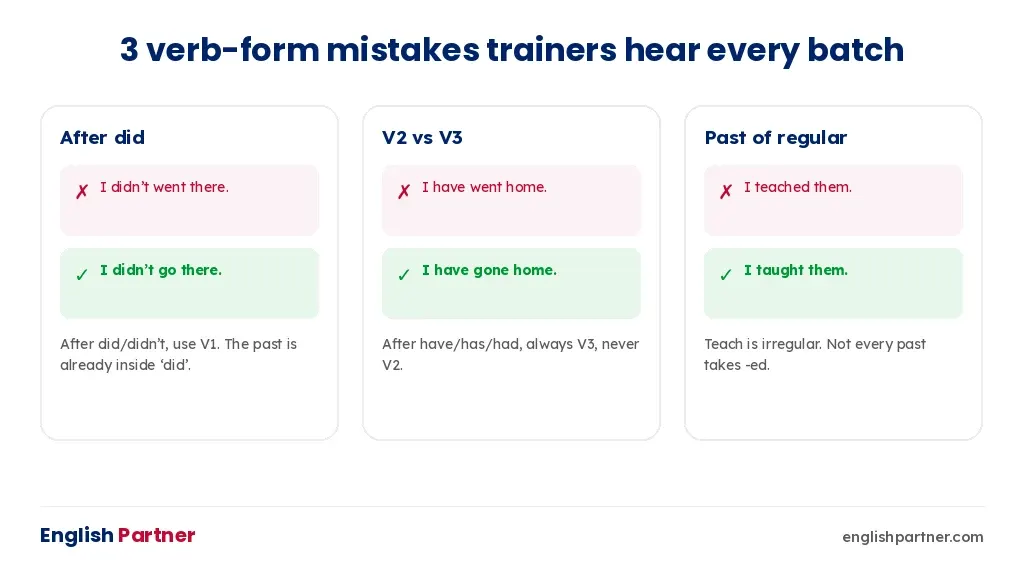
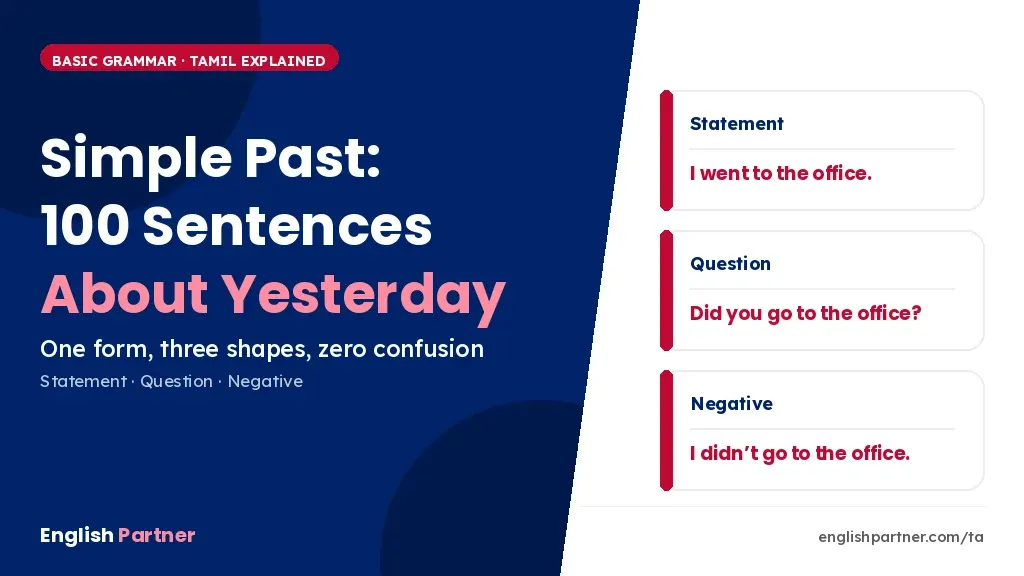
Mistake 1: “I didn’t went there.” After did or didn’t, the verb returns to V1. The past is already inside did: “I didn’t go there.” Same with questions: “Did you go?”, never “Did you went?”
Mistake 2: “I have went home.” After have, has, had, always V3: “I have gone home.” This is the mistake that makes V2 and V3 worth separating in your head – and our present perfect vs simple past guide shows when each is needed.
Mistake 3: “I teached them.” Not every past takes -ed. Teach is irregular: taught. The safest habit is to check any new verb against the irregular list once, then use it in a sentence.
How to learn these without memorising a list
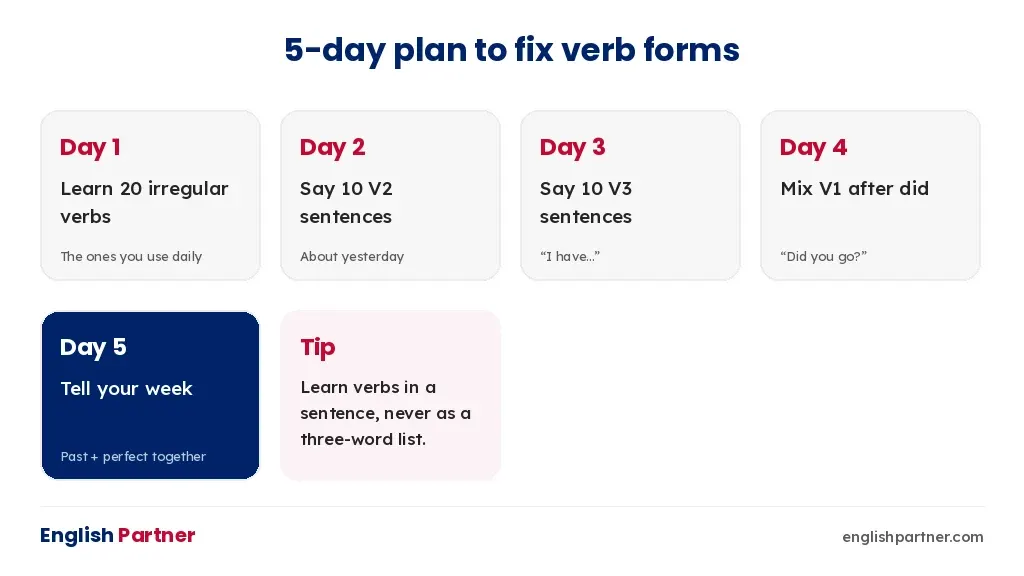
Never learn a verb as three isolated words. Learn it inside three sentences:
I go to work daily. I went yesterday. I have gone already.
Day 1: Pick twenty irregular verbs you actually use. Write three sentences for each.
Day 2: Ten V2 sentences about yesterday, out loud.
Day 3: Ten V3 sentences starting with “I have…”.
Day 4: Ten questions with did – remembering the verb goes back to V1.
Day 5: Describe your whole week using past and perfect together.
Five days, sixty sentences. That beats reciting a 200-verb table for a month, because the form comes back attached to a sentence you have already said.
When self-practice is not enough
Verb forms are the part of grammar where mistakes are hardest to hear in yourself. “I have went” sounds fine in your own head, and nobody corrects adults mid-conversation.
That is what daily practice with a trainer fixes. Our Basic level builds V1 and V2 through simple present and past speaking, and Intermediate brings in V3 with the perfect tenses – explained in your mother tongue first, practised in English every day on WhatsApp. Learners in the city can join our spoken English classes in Coimbatore in person. As Cambridge English notes, verb accuracy improves fastest through use with feedback, not through list revision.
Final thoughts and your next step
Three forms, three jobs. V1 after do/did/will, V2 alone for the past, V3 after have/has/had. The table is reference; the sentences are the practice.
Pick twenty verbs tonight and write your three sentences for each. Then pair this with our tenses chart and the have, has, had guide, and the whole system fits together.
Not sure which level to start from? Send “Hi” on WhatsApp for a free five-minute level test in your language.
Frequently asked questions
What do V1, V2 and V3 mean?
V1 is the base form (go), V2 is the simple past (went), V3 is the past participle (gone). Some books add V4 for the -ing form (going) and V5 for the -s form (goes).
Where is V3 used?
After have, has or had – I have gone, she has finished, we had left – and in the passive: the work was done. Never use V2 there.
What is the difference between V2 and V3?
V2 stands alone in the simple past: I went. V3 always needs a helper: I have gone, it was written. For many regular verbs they look identical (worked / worked), which is why the difference only becomes visible with irregular verbs.
Why is “I didn’t went” wrong?
Because did already carries the past. After do, does or did, the verb goes back to V1: I didn’t go, Did you go, He doesn’t go.
How many irregular verbs do I need to learn?
About 100 cover almost everything you say in daily English. The full list runs to 200 plus, but the rest are rare. Start with the 40 in the first table here.
Which verbs have the same form for V1, V2 and V3?
Cut, put, hit, let, set, shut, cost, hurt, read (pronunciation changes), spread. Nothing to memorise – just notice them.
What is the easiest way to remember verb forms?
Learn them inside a sentence, not as a three-word list. “Go, went, gone” is hard to recall under pressure; “I go daily, I went yesterday, I have gone already” comes out automatically.
Which English Partner course covers this?
Basic covers V1 and V2 through simple present and past speaking practice. Intermediate covers V3 with the perfect tenses. Both are taught in your mother tongue first.