Have, Has, Had: The 3-Minute Rule (With 40 Sentences and a Tamil Comparison)
 Vishaleni
Content Writer
Published
Time to read
8 minutes
Vishaleni
Content Writer
Published
Time to read
8 minutes
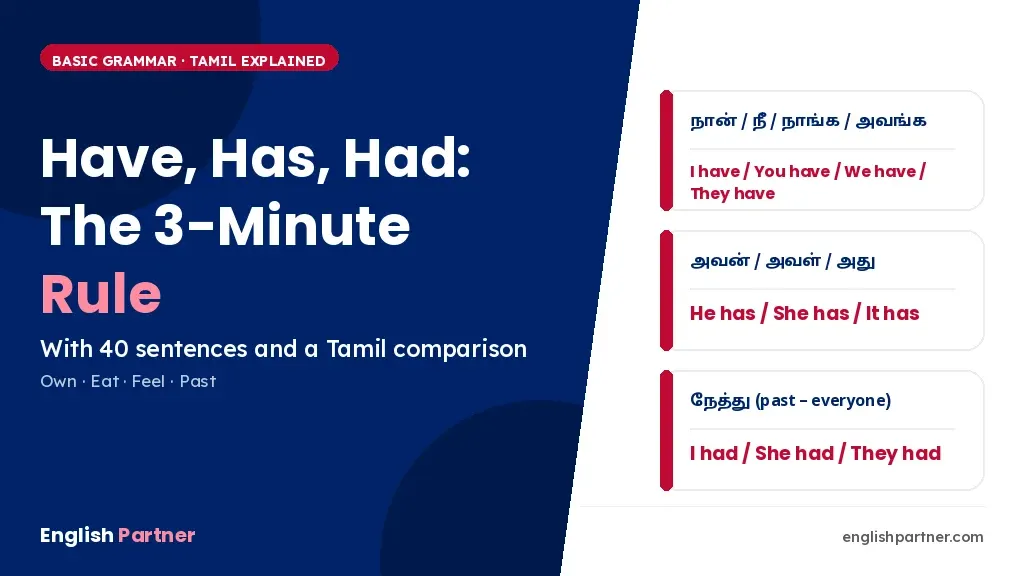
Quick answer: Have goes with I, you, we, they. Has goes with he, she, it, or any single name. Had is the past form for everyone. Tamil says இருக்கு for all of these, which is why Tamil speakers reach for “I am having” – the most common mistake in the whole Basic level. The chart, the Tamil comparison, 40 sentences and the fix are below.
Why such a small word causes so much trouble
Ask a Tamil speaker “Do you have a car?” and you will often hear “Yes, I am having one car.”
The grammar in their head is perfect – for Tamil. எனக்கு ஒரு கார் இருக்கு. The car is there, with me. So having feels like the honest translation.
English does not think that way. English says you have the car, the way you have a headache or have two brothers. No -ing. Having is saved for two things only: eating (I am having lunch) and events (we are having a party).
Trainers at English Partner correct this sentence in almost every Basic batch. Once a learner sees that இருக்கு = have, and that -ing is not needed, the mistake usually disappears within a week.
The only chart you need
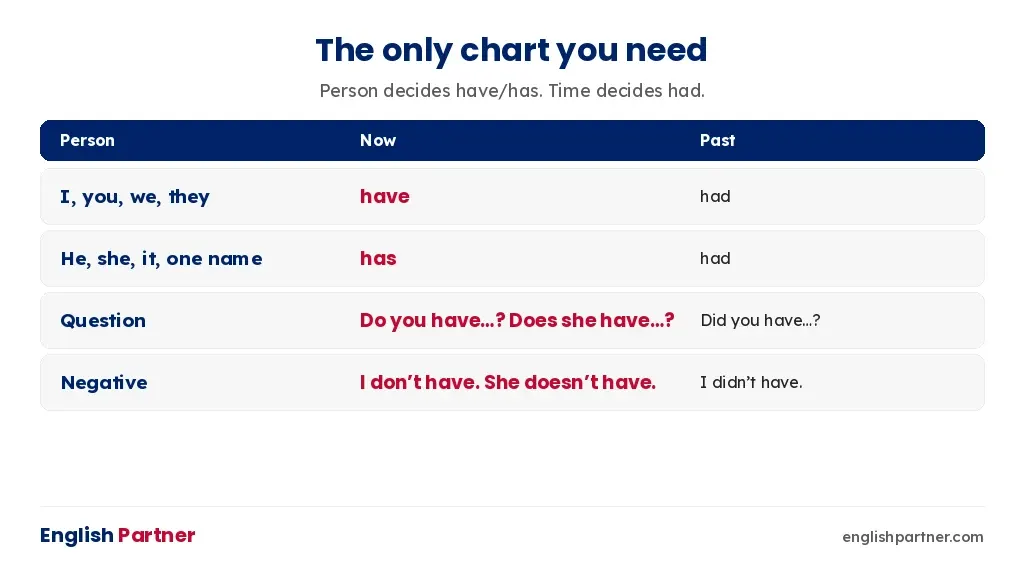
| Person | Now | Past |
|---|---|---|
| I, you, we, they | have | had |
| He, she, it, Kavitha, the shop | has | had |
| Question | Do you have…? Does she have…? | Did you have…? |
| Negative | I don’t have. She doesn’t have. | I didn’t have. |
Two decisions, that is all. Who? – that picks have or has. When? – if it is past, everyone uses had. Notice also that has is only for one person or thing, exactly like is in our is, am, are guide. Same rule, different word.
Tamil vs English: where the word goes
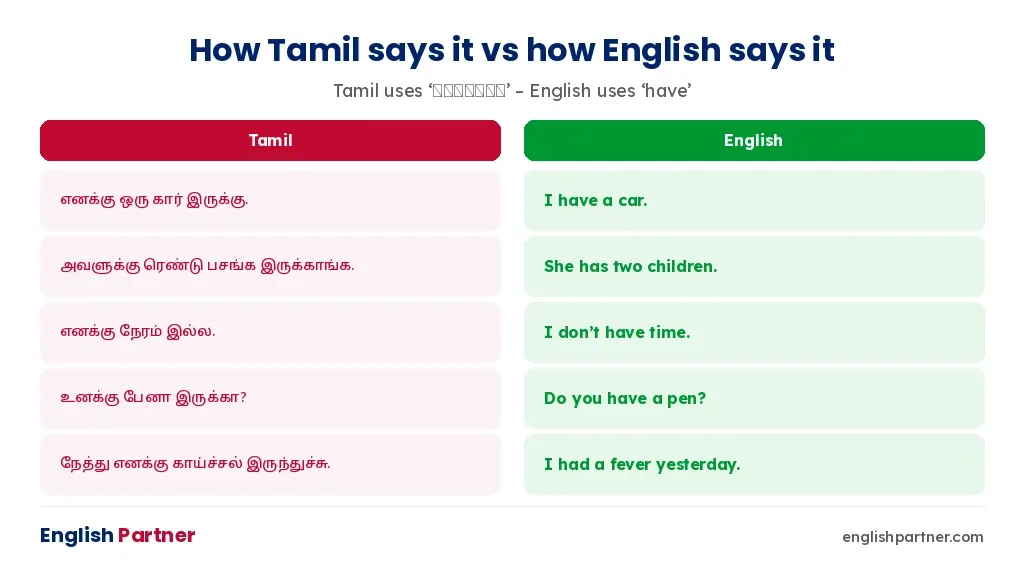
| Tamil | English |
|---|---|
| எனக்கு ஒரு கார் இருக்கு. | I have a car. |
| அவளுக்கு ரெண்டு பசங்க இருக்காங்க. | She has two children. |
| எனக்கு நேரம் இல்ல. | I don’t have time. |
| உனக்கு பேனா இருக்கா? | Do you have a pen? |
| அவனுக்கு பைக் இருக்கா? | Does he have a bike? |
| நேத்து எனக்கு காய்ச்சல் இருந்துச்சு. | I had a fever yesterday. |
See the pattern? Tamil puts the owner first (எனக்கு – “to me”) and the thing after, with இருக்கு at the end. English puts the owner first too, but as I, then have, then the thing. Once you map இருக்கு → have/has, the sentence almost builds itself.
40 sentences with have, has and had
Say each one aloud. The goal is your mouth, not your eyes.
“Have” – I, you, we, they
| Tamil | English |
|---|---|
| எனக்கு ரெண்டு அண்ணன் இருக்காங்க. | I have two brothers. |
| எனக்கு தலைவலி. | I have a headache. |
| எனக்கு நாளைக்கு மீட்டிங் இருக்கு. | I have a meeting tomorrow. |
| எனக்கு ஒரு சந்தேகம் இருக்கு. | I have a question. |
| எங்களுக்கு ஒரு சின்ன வீடு இருக்கு. | We have a small house. |
| எங்களுக்கு நேரம் இல்ல. | We don’t have time. |
| உனக்கு நல்ல வாய்ப்பு இருக்கு. | You have a good chance. |
| உங்களுக்கு பசங்க இருக்காங்களா? | Do you have children? |
| அவங்களுக்கு ரெண்டு கார் இருக்கு. | They have two cars. |
| அவங்களுக்கு இன்னைக்கு லீவு இல்ல. | They don’t have leave today. |
| எனக்கு சில்லறை இல்ல. | I don’t have change. |
| எனக்கு உன் நம்பர் இருக்கு. | I have your number. |
| எங்களுக்கு ஒரு நாய் இருக்கு. | We have a dog. |
| உங்களுக்கு ஏதாவது கேள்வி இருக்கா? | Do you have any questions? |
“Has” – he, she, it, one name
| Tamil | English |
|---|---|
| அவனுக்கு ஒரு பைக் இருக்கு. | He has a bike. |
| அவளுக்கு நல்ல வேலை இருக்கு. | She has a good job. |
| அம்மாவுக்கு காய்ச்சல். | Amma has a fever. |
| ரவிக்கு ரெண்டு பொண்ணுங்க. | Ravi has two daughters. |
| கடைக்கு ஒரு பிராஞ்ச் இருக்கு. | The shop has one branch. |
| என் போன்ல சார்ஜ் இல்ல. | My phone has no charge. |
| அவனுக்கு நேரம் இல்ல. | He doesn’t have time. |
| அவளுக்கு கார் இருக்கா? | Does she have a car? |
| இந்த வீட்டுக்கு மூணு ரூம் இருக்கு. | This house has three rooms. |
| அவளுக்கு தலைவலி. | She has a headache. |
| பஸ்ஸுக்கு ஏசி இருக்கா? | Does the bus have AC? |
| அவனுக்கு பாஸ்போர்ட் இல்ல. | He doesn’t have a passport. |
| கவிதாவுக்கு நல்ல குரல். | Kavitha has a good voice. |
“Had” – the past, for everyone
| Tamil | English |
|---|---|
| நேத்து எனக்கு காய்ச்சல் இருந்துச்சு. | I had a fever yesterday. |
| நான் காலையில இட்லி சாப்பிட்டேன். | I had idli for breakfast. |
| எங்களுக்கு நேத்து மீட்டிங் இருந்துச்சு. | We had a meeting yesterday. |
| அவளுக்கு முன்னாடி ஒரு கார் இருந்துச்சு. | She had a car before. |
| அவங்களுக்கு நேரம் இல்ல. | They didn’t have time. |
| நீ சாப்பிட்டியா? | Did you have lunch? |
| எனக்கு போன வருஷம் ஒரு நல்ல வேலை இருந்துச்சு. | I had a good job last year. |
| அவனுக்கு சின்ன வயசுல நாய் இருந்துச்சு. | He had a dog when he was small. |
| எனக்கு நேத்து சில்லறை இல்ல. | I didn’t have change yesterday. |
| நல்ல நாளா இருந்துச்சா? | Did you have a good day? |
| எங்களுக்கு நேத்து கரண்ட் இல்ல. | We had no power yesterday. |
| அவளுக்கு நேத்து பரீட்சை இருந்துச்சு. | She had an exam yesterday. |
| எனக்கு நேத்து ராத்திரி தூக்கம் வரல. | I didn’t have a good sleep last night. |
The two jobs of “having”
Since this is the sentence trainers fix most often, here is exactly when having is right.
| Meaning | Having is correct | Having is wrong |
|---|---|---|
| Eating / drinking | I am having lunch. She is having tea. | – |
| An event | We are having a party on Sunday. | – |
| Owning | – | I am having a car → I have a car. |
| Family | – | I am having two brothers → I have two brothers. |
| Feelings / sickness | – | I am having a headache → I have a headache. |
3 mistakes trainers hear in every Basic batch
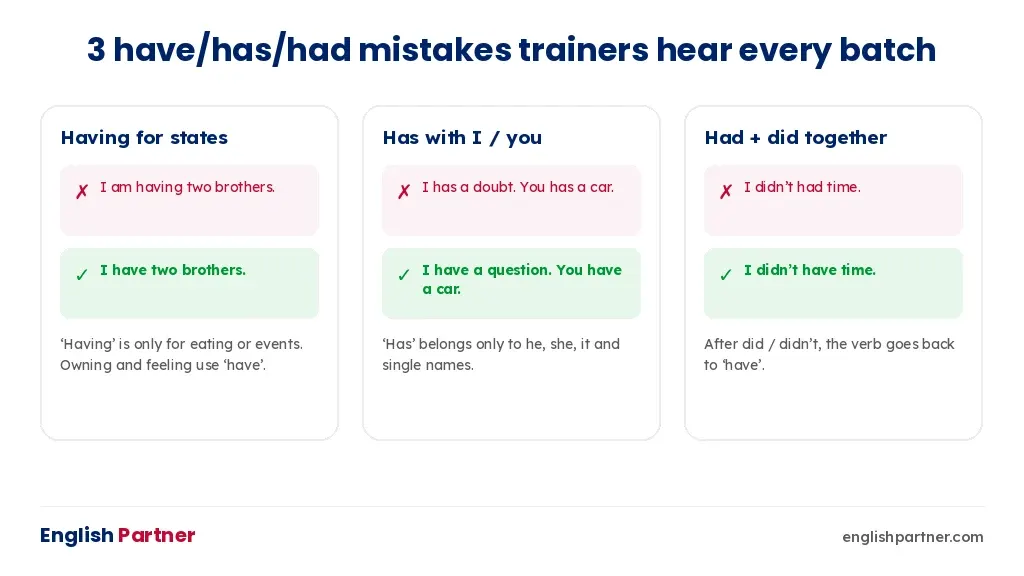
Mistake 1: “I am having two brothers.” Covered above – but it is worth repeating because it is everywhere. Own it, feel it, be related to it: have. Eat it or celebrate it: having.
Mistake 2: “I has” / “You has.” Has belongs only to he, she, it and single names. I, you, we, they always take have – even when “you” is one person.
Mistake 3: “I didn’t had time.” After did or didn’t, the verb goes back to its base form: I didn’t have time. Did you have lunch? The past is already inside did; you do not need it twice.
Your 3-day practice plan
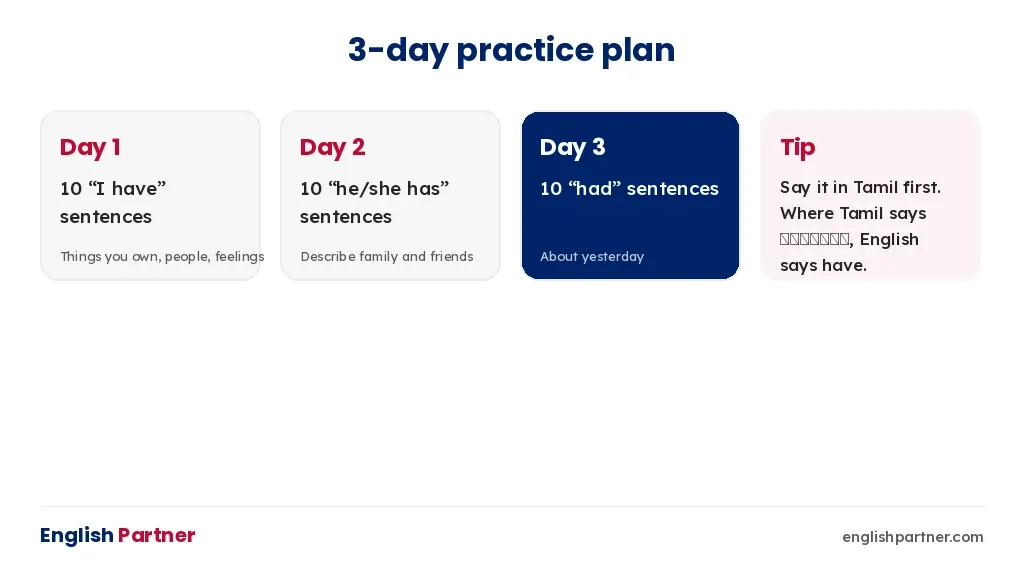
Day 1: Ten I have sentences – things you own, people in your family, how you feel.
Day 2: Ten he/she has sentences – describe your friends, your neighbours, a film star.
Day 3: Ten had sentences – what you had yesterday: for breakfast, at work, at home.
Say each Tamil sentence first, then the English. Wherever Tamil says இருக்கு, English says have or has. After three days the mapping is automatic.
When self-practice is not enough
This rule is easy to read and hard to make automatic, because Tamil keeps offering “I am having” as the natural translation. What fixes it is not another explanation – it is someone hearing you say it and gently correcting it, every day, until it stops.
That is what our Basic level does: have/has/had is in the first week, explained in Tamil, then practised in English on WhatsApp and live calls daily. The spoken English in Tamil page explains the method, and learners in the city can join our spoken English classes in Coimbatore in person.
Final thoughts and your next step
Who decides have or has. When decides had. Having is for eating and events only. And இருக்கு = have. Four lines, and the whole topic is covered.
Next, put it together with tenses: our tenses chart shows how have + V3 builds the Present Perfect, and the 100 Tamil to English sentences give you plenty of have sentences to practise.
Not sure where to start? Send “Hi” on WhatsApp and a Tamil trainer will do a free five-minute level test.
Frequently asked questions
What is the rule for have, has and had?
Have goes with I, you, we and they. Has goes with he, she, it and any single name. Had is the past form for everyone. The person decides have or has; the time decides had.
Why do Tamil speakers say “I am having two brothers”?
Because Tamil uses “இருக்கு” (is/exists) for possession, so “having” feels like a direct translation. In English, “having” is only for eating or events. Owning, relationships and feelings use “have”: I have two brothers.
Is “I have a doubt” correct?
The grammar is fine, but the meaning is off. In English, a doubt means you do not believe something. When you want to ask, say “I have a question.”
How do I ask a question with have?
Use do/does: “Do you have a pen?” “Does she have a car?” For the past, use did: “Did you have lunch?” The verb stays as “have” after do, does and did.
How do I make a negative with have?
Add don’t/doesn’t/didn’t: I don’t have time. She doesn’t have a car. I didn’t have lunch. Not “I haven’t a car” – that is old-fashioned.
Is “has” used with “you”?
No. You always takes have, whether you are talking to one person or many: You have a nice house.
What is the difference between “had” and “have had”?
Had is simple past with a finished time: “I had a fever yesterday.” Have had is present perfect – no time, or an unfinished time: “I have had a fever since Monday.”
Which English Partner course covers have, has, had?
Basic. It is in the first week, taught in Tamil first and practised in English every day on WhatsApp.