Simple Past Tense: 100 Sentences About Yesterday (With Tamil Meaning)
 Vishaleni
Content Writer
Published
Time to read
9 minutes
Vishaleni
Content Writer
Published
Time to read
9 minutes
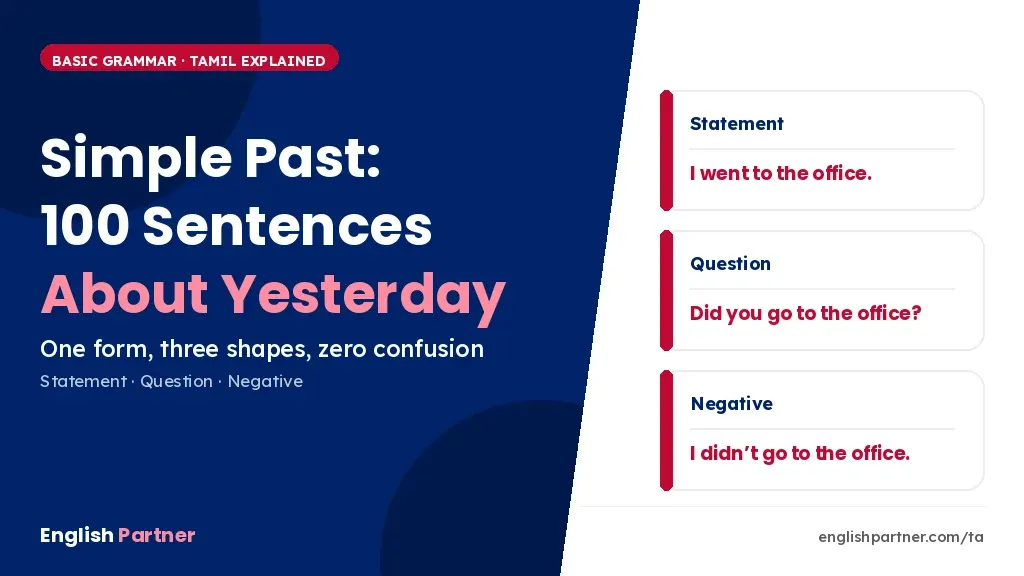
Quick answer: The simple past has one form and three shapes. Statements use V2 – I went. Questions use did + V1 – Did you go? Negatives use didn’t + V1 – I didn’t go. Was and were never take did. A hundred sentences with Tamil meaning are below.
Why this tense matters more than any other
If you can only use one English tense properly, make it this one. Most of what we say in daily conversation is about something that already happened – what you did yesterday, where you went, who you met, what you ate.
It is also the tense where trainers at English Partner hear the most mistakes, and always the same three: “Did you went?”, “I didn’t went”, “Did you was there?” All three come from the same misunderstanding, and all three disappear once you see the rule below.
The only chart you need
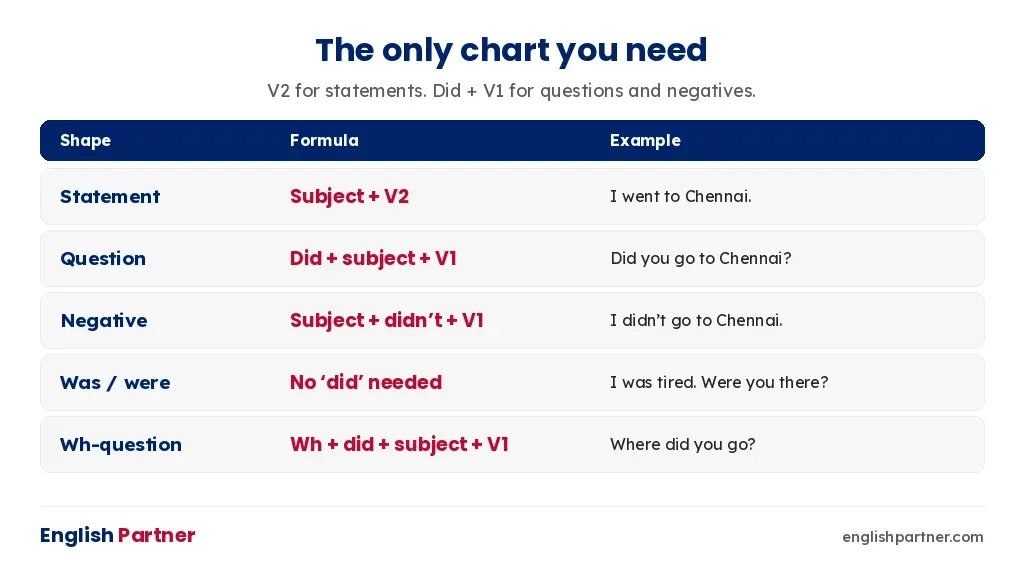
| Shape | Formula | Example |
|---|---|---|
| Statement | Subject + V2 | I went to Chennai. |
| Question | Did + subject + V1 | Did you go to Chennai? |
| Negative | Subject + didn’t + V1 | I didn’t go to Chennai. |
| Wh-question | Wh + did + subject + V1 | Where did you go? |
| Was / were | No did at all | I was tired. Were you there? |
Here is the whole logic in one line: the past can only be marked once. If did carries it, the verb goes back to its base form. That single idea removes all three of the common mistakes.
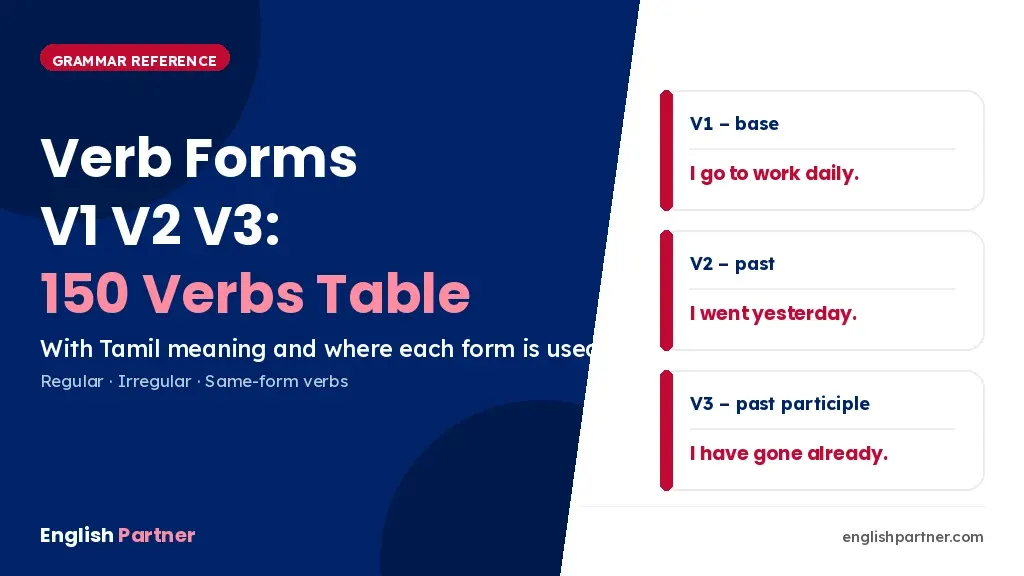
If V1 and V2 are still unclear, our verb forms V1 V2 V3 guide has 150 verbs with Tamil meaning.
Tamil vs English: where the past lives
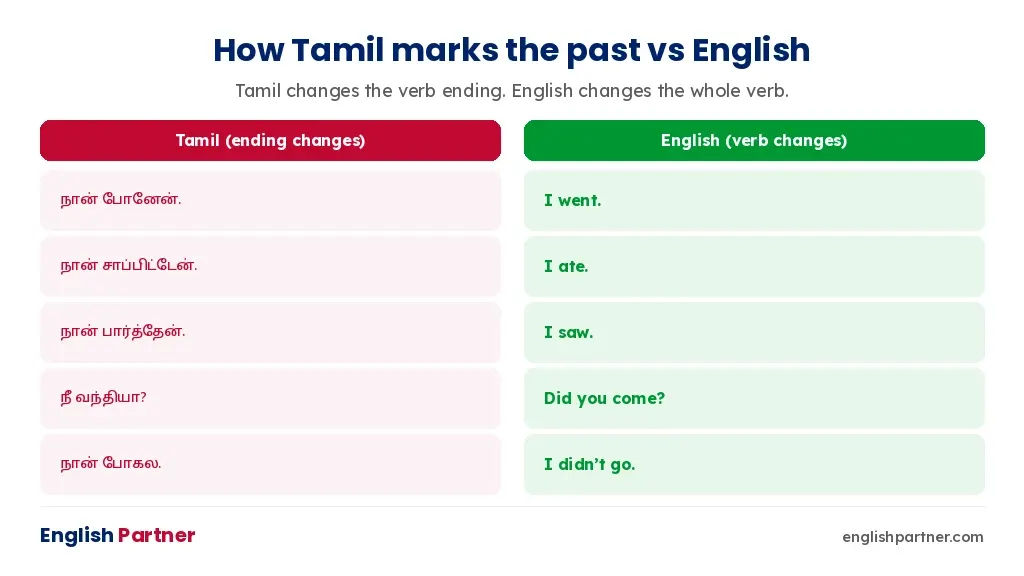
Tamil marks the past by changing the ending of the verb – போ → போனேன். English changes the verb itself – go → went – and for questions and negatives it moves the past into a separate word, did.
| Tamil | English |
|---|---|
| நான் போனேன். | I went. |
| நான் சாப்பிட்டேன். | I ate. |
| நான் பார்த்தேன். | I saw. |
| நீ வந்தியா? | Did you come? |
| நான் போகல. | I didn’t go. |
| நான் களைப்பா இருந்தேன். | I was tired. |
Look at the last three rows. In Tamil, the question and the negative still keep the past inside the verb. In English, the moment did appears, the verb drops back to plain form. That is the whole difference.
Simple past tense examples: 100 sentences
1. Your day yesterday (statements)
| Tamil | English |
|---|---|
| நான் ஆறு மணிக்கு எழுந்தேன். | I woke up at six. |
| நான் பல் தேய்ச்சேன். | I brushed my teeth. |
| நான் குளிச்சேன். | I took a bath. |
| நான் இட்லி சாப்பிட்டேன். | I ate idli for breakfast. |
| நான் காபி குடிச்சேன். | I drank coffee. |
| நான் பஸ் புடிச்சேன். | I took the bus. |
| நான் ஒன்பது மணிக்கு ஆபீஸ் போனேன். | I went to the office at nine. |
| நான் மீட்டிங்ல கலந்துக்கிட்டேன். | I attended a meeting. |
| நான் ரிப்போர்ட் முடிச்சேன். | I finished the report. |
| நான் ஒரு மணிக்கு சாப்பிட்டேன். | I had lunch at one. |
| நான் அம்மாவை கூப்பிட்டேன். | I called my mother. |
| நான் மெயில் அனுப்பினேன். | I sent the mail. |
| நான் ஆறு மணிக்கு வீட்டுக்கு வந்தேன். | I came home at six. |
| நான் டிவி பார்த்தேன். | I watched TV. |
| நான் பத்து மணிக்கு தூங்கினேன். | I slept at ten. |
2. Places and people
| Tamil | English |
|---|---|
| நான் நேத்து சென்னை போனேன். | I went to Chennai yesterday. |
| நான் என் நண்பனை சந்திச்சேன். | I met my friend. |
| நாங்க கடைக்கு போனோம். | We went to the shop. |
| அவங்க எங்க வீட்டுக்கு வந்தாங்க. | They came to our house. |
| அவள் பேங்க்ல வேலை செஞ்சா. | She worked at a bank. |
| அவன் புது கார் வாங்கினான். | He bought a new car. |
| நாங்க சினிமா பார்த்தோம். | We watched a film. |
| நான் ஒரு புத்தகம் படிச்சேன். | I read a book. |
| அவங்க நல்லா பாடினாங்க. | They sang well. |
| நான் ஒரு மெசேஜ் அனுப்பினேன். | I sent a message. |
| நான் என் போன தொலைச்சேன். | I lost my phone. |
| நான் அதை கண்டுபிடிச்சேன். | I found it. |
| அவங்க பரீட்சையில ஜெயிச்சாங்க. | They passed the exam. |
| நான் அந்த வார்த்தையை கத்துக்கிட்டேன். | I learned that word. |
| அவரு எனக்கு உதவினாரு. | He helped me. |
3. Questions with “did”
Notice that every verb here is in its plain V1 form. The past is in did.
| Tamil | English |
|---|---|
| நீ சாப்பிட்டியா? | Did you eat? |
| நீ ஆபீஸ் போனியா? | Did you go to the office? |
| நீ அவனை பார்த்தியா? | Did you see him? |
| நீ மெயில் அனுப்பினியா? | Did you send the mail? |
| நீ அம்மாவை கூப்பிட்டியா? | Did you call your mother? |
| அவன் வந்தானா? | Did he come? |
| அவள் சொன்னாளா? | Did she say anything? |
| அவங்க முடிச்சாங்களா? | Did they finish? |
| நீ நல்லா தூங்கினியா? | Did you sleep well? |
| நீ அதை வாங்கினியா? | Did you buy it? |
| நீ எங்க போன? | Where did you go? |
| நீ என்ன சாப்பிட்ட? | What did you eat? |
| நீ எப்போ வந்த? | When did you come? |
| நீ யாரை சந்திச்ச? | Who did you meet? |
| ஏன் லேட் ஆச்சு? | Why did you get late? |
4. Negatives with “didn’t”
| Tamil | English |
|---|---|
| நான் நேத்து போகல. | I didn’t go yesterday. |
| நான் சாப்பிடல. | I didn’t eat. |
| நான் அவனை பார்க்கல. | I didn’t see him. |
| நான் மெசேஜ் பார்க்கல. | I didn’t see the message. |
| அவரு வரல. | He didn’t come. |
| அவங்க பதில் சொல்லல. | They didn’t reply. |
| நான் அதை வாங்கல. | I didn’t buy it. |
| நான் நல்லா தூங்கல. | I didn’t sleep well. |
| நான் வேலை முடிக்கல. | I didn’t finish the work. |
| நாங்க வெளிய போகல. | We didn’t go out. |
| அவள் எதுவும் சொல்லல. | She didn’t say anything. |
| எனக்கு நேரம் கிடைக்கல. | I didn’t get time. |
| எனக்கு புரியல. | I didn’t understand. |
| நான் மறக்கல. | I didn’t forget. |
| அவரு சொல்லல. | He didn’t tell me. |
5. Was and were (no “did” here)
| Tamil | English |
|---|---|
| நான் நேத்து களைப்பா இருந்தேன். | I was tired yesterday. |
| நான் வீட்ல இருந்தேன். | I was at home. |
| அவரு ஆபீஸ்ல இருந்தாரு. | He was at the office. |
| அவங்க சந்தோஷமா இருந்தாங்க. | They were happy. |
| நாங்க லேட்டா வந்தோம். | We were late. |
| நீ அங்க இருந்தியா? | Were you there? |
| அவரு பிஸியா இருந்தாரா? | Was he busy? |
| வானிலை நல்லா இருந்துச்சு. | The weather was nice. |
| கடை மூடி இருந்துச்சு. | The shop was closed. |
| அது கஷ்டமா இருந்துச்சு. | It was difficult. |
| நான் ரெடியா இல்ல. | I wasn’t ready. |
| அவங்க வீட்ல இல்ல. | They weren’t at home. |
6. Time words that come with the simple past
| Tamil | English |
|---|---|
| நேத்து | yesterday |
| நேத்து ராத்திரி | last night |
| போன வாரம் | last week |
| போன மாசம் | last month |
| ரெண்டு நாளைக்கு முன்னாடி | two days ago |
| இரண்டாயிரத்து இருபதுல | in 2020 |
| அப்போ | then |
| சின்ன வயசுல | when I was young |
If one of these words is in the sentence, the simple past is almost always the right tense – not the present perfect. Our present perfect vs simple past guide explains exactly where the line falls.
3 mistakes trainers hear every batch
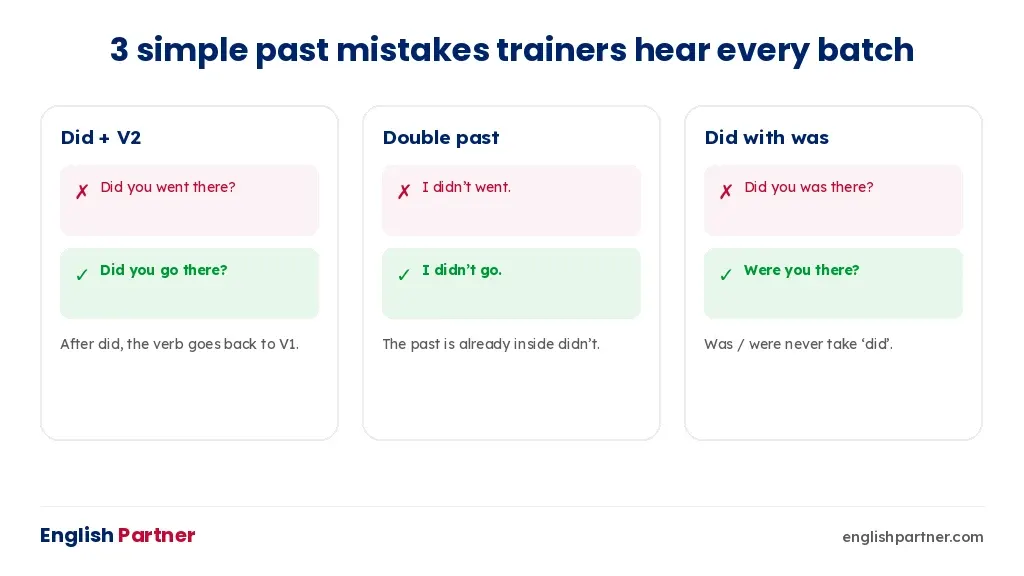
Mistake 1: “Did you went there?” The past is already inside did, so the verb goes back to V1: “Did you go there?”
Mistake 2: “I didn’t went.” Same rule, negative shape: “I didn’t go.” Think of it as the past being allowed only once per sentence.
Mistake 3: “Did you was there?” Was and were are already past forms of is/am/are, and they never take did: “Were you there?” If is/am/are still slips, our is, am, are guide covers it.
Your 3-day practice plan
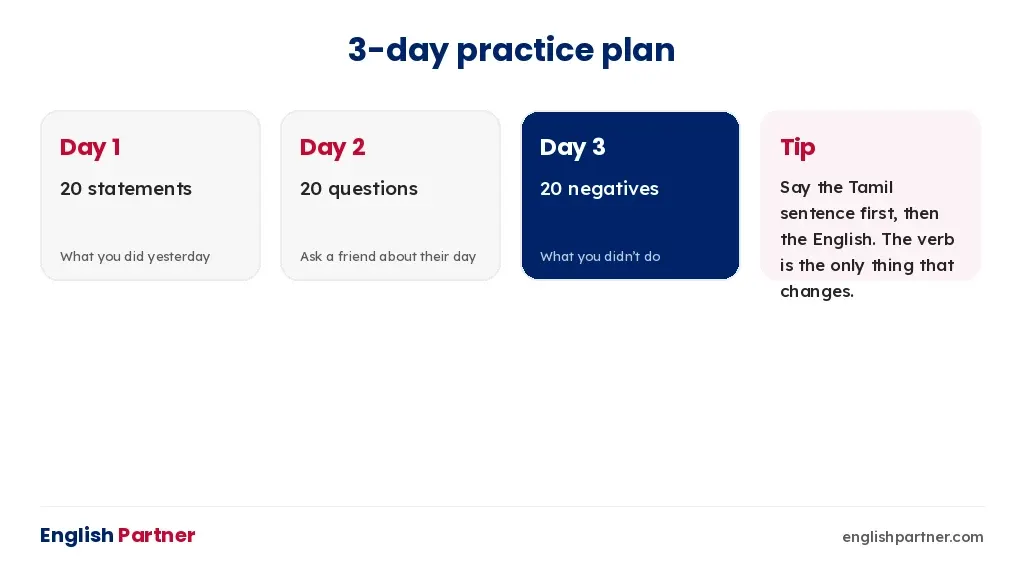
Day 1: Twenty statements about what you did yesterday, out loud, in order from waking up to sleeping.
Day 2: Twenty questions. Ask a friend or family member about their day – all in English.
Day 3: Twenty negatives. What you didn’t do yesterday, and why.
Say the Tamil sentence first, then the English. The only thing that changes is the verb, and after sixty sentences your mouth stops checking.
When self-practice is not enough
The simple past is easy to understand and hard to make automatic, because did + V2 keeps feeling more complete than did + V1. Reading the rule does not fix that. Being corrected while speaking does.
Our Basic level covers simple present, past and continuous through daily speaking practice on WhatsApp and live calls, explained in Tamil first. If you are starting from zero, Pre-Basic comes first, and the spoken English in Tamil page explains the method. Learners in the city can join our spoken English classes in Coimbatore in person. As Cambridge English notes, grammar accuracy improves fastest when practice comes with feedback.
Final thoughts and your next step
One form, three shapes, one rule: mark the past only once. Statements take V2. Questions and negatives hand the past to did and leave the verb alone. Was and were work on their own.
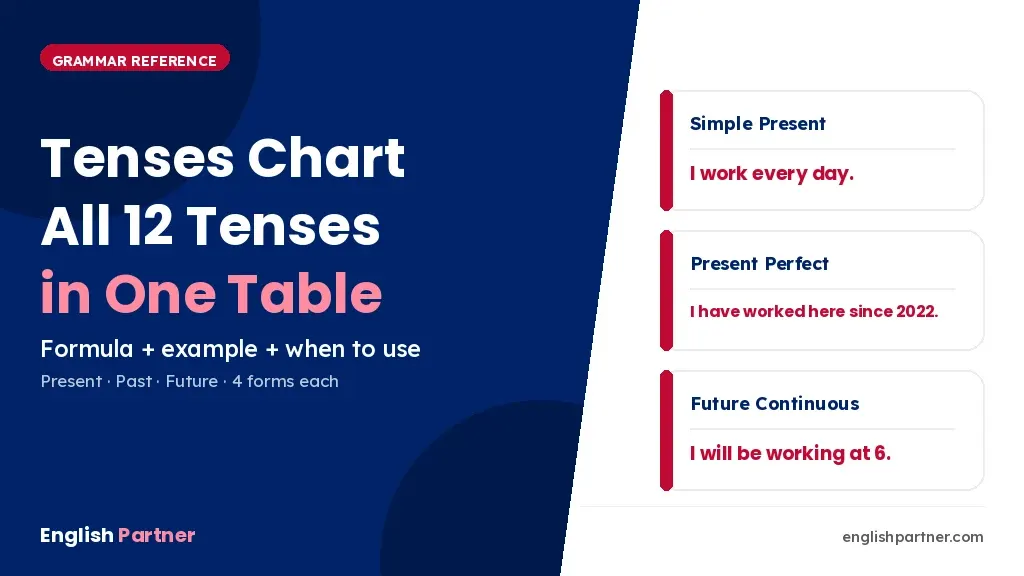
Start tonight with the twenty statements. Then pair this with the verb forms table for the V2 forms and the tenses chart to see where the simple past sits among the twelve.
Not sure which level to start from? Send “Hi” on WhatsApp for a free five-minute level test in Tamil.
Frequently asked questions
What is the simple past tense?
It is the tense for a finished action at a finished time: I went to the office yesterday. The verb takes its V2 form (go → went, work → worked), and a time word like yesterday, last week or in 2020 usually appears with it.
How do I form a question in the simple past?
Use did plus the base verb: “Did you go?” “Did she call?” The verb goes back to V1 because did already carries the past. “Did you went” is the most common beginner mistake.
How do I make a negative in the simple past?
Subject + didn’t + V1: I didn’t go. She didn’t call. Never “I didn’t went” — the past is already inside didn’t.
When do I use was and were instead of did?
Was and were are the past of is, am and are, and they never take did. Say “I was tired”, “Were you there?”, “They weren’t at home.”
What is the difference between simple past and present perfect?
Simple past has a finished time: “I met him yesterday.” Present perfect has no stated time or an unfinished one: “I have met him.” If you can say when, use simple past.
How do I know the V2 form of a verb?
Regular verbs add -ed (work → worked). Irregular verbs change form (go → went, eat → ate) and need to be learned — about 100 cover daily speech.
Is “I did go” correct?
Yes, but it is emphasis, not a normal statement. “I did go, I promise.” In ordinary sentences, just use the V2 form: “I went.”
Which English Partner course covers the simple past?
Basic. It covers simple present, past and continuous through daily speaking practice, explained in your mother tongue first.