Is, Am, Are: When to Use Each One (With 50 Sentences and a Tamil Comparison)
 Vishaleni
Content Writer
Published
Time to read
8 minutes
Vishaleni
Content Writer
Published
Time to read
8 minutes
Quick answer: Am goes with I. Is goes with he, she, it, or any single name. Are goes with you, we, they, or anything plural. Tamil has no word in this position, which is why Tamil speakers skip it – but English cannot. Below: the rule, a Tamil comparison, 50 sentences, and a 3-day plan.
Why this tiny word causes such big trouble
On the first day of every Pre-Basic batch, the trainer asks learners to introduce themselves. And the trainer hears the same sentence, batch after batch:
“I Kavitha. I teacher. I from Coimbatore.”
Perfectly clear. Every word in the right order. And every sentence missing the same small thing.
It is not carelessness. In Tamil, நான் டீச்சர் is a complete, correct sentence. There is no word between நான் and டீச்சர். So when a Tamil speaker builds the English sentence, the brain reaches for a word that, in Tamil, does not exist – and finds nothing.
English is different. It always wants a linking word between the person and what you are saying about them. That word is is, am or are. Once you know that gap exists, you can fill it every time.
The only chart you need
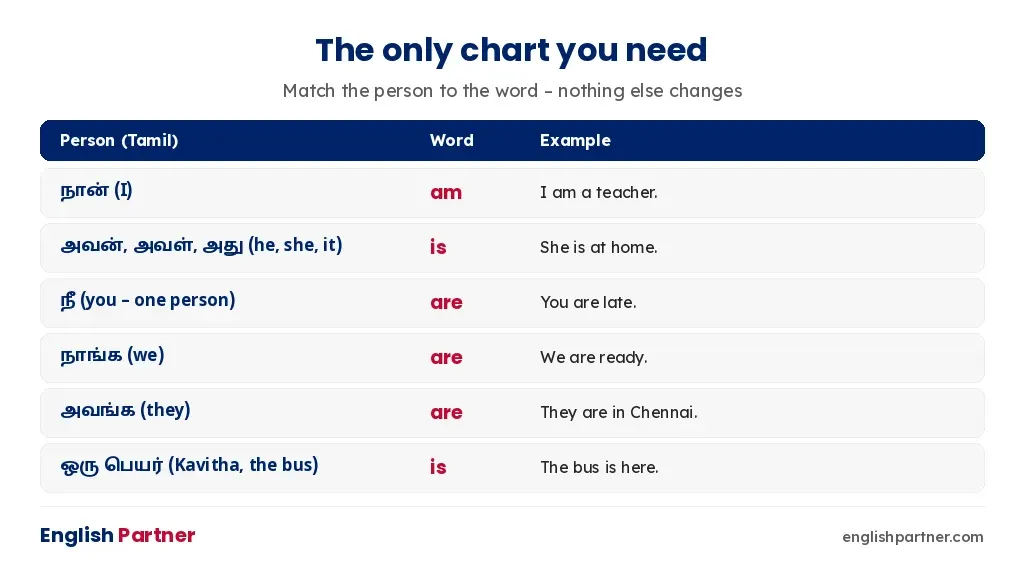
| Person (Tamil) | Word | Example |
|---|---|---|
| நான் (I) | am | I am a teacher. |
| அவன், அவள், அது (he, she, it) | is | She is at home. |
| ஒரு பெயர் – Kavitha, the bus, my phone | is | The bus is late. |
| நீ / நீங்க (you) | are | You are early. |
| நாங்க / நாம (we) | are | We are ready. |
| அவங்க (they) – and any plural | are | They are in Chennai. |
That is the whole rule. Look at the person. Pick the word. Nothing else in the sentence changes it – not the time of day, not the length of the sentence, not whether it is a question.
One thing that surprises learners: you always takes are, even when you are talking to one person. “You are late” to a friend, “You are late” to the whole class. Same word.
Tamil vs English: where the word goes
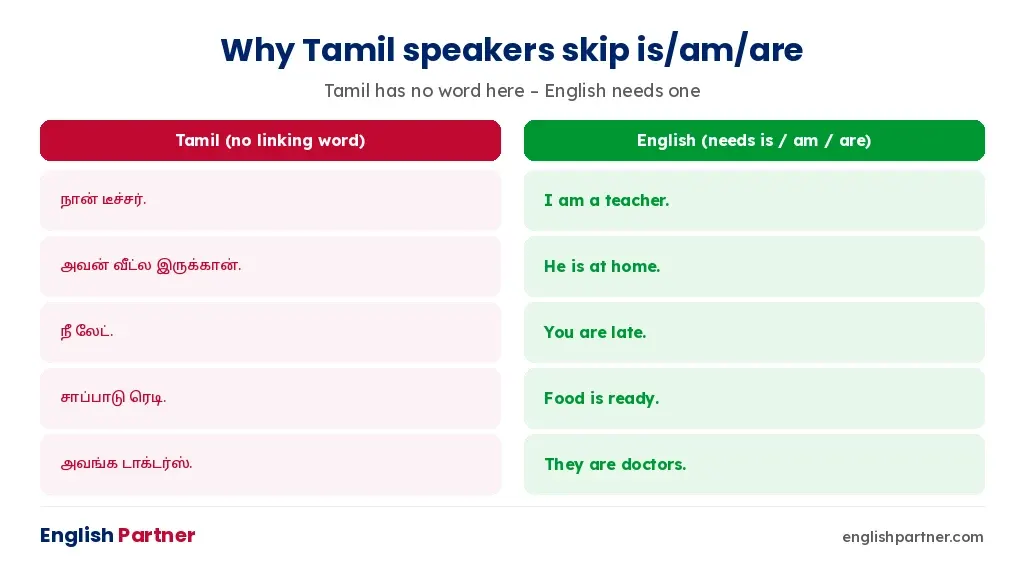
Look at these pairs and notice that the English column always has one extra word the Tamil column does not.
| Tamil | English |
|---|---|
| நான் டீச்சர். | I am a teacher. |
| அவன் வீட்ல இருக்கான். | He is at home. |
| நீ லேட். | You are late. |
| சாப்பாடு ரெடி. | Food is ready. |
| அவங்க டாக்டர்ஸ். | They are doctors. |
| எனக்கு பசிக்குது. | I am hungry. |
Here is the trick our trainers give in class: say the sentence in Tamil first. Then, when you say it in English, add the word Tamil doesn’t have. Person, then is/am/are, then the rest. After a week it stops being a step and becomes a habit.
50 sentences with is, am and are
Say each one aloud. Do not read silently – the point is to get the word into your mouth, not your eyes.
Sentences with “am” (about yourself)
| Tamil | English |
|---|---|
| நான் கவிதா. | I am Kavitha. |
| நான் கோயம்புத்தூர்ல இருந்து வர்றேன். | I am from Coimbatore. |
| நான் நர்ஸ். | I am a nurse. |
| நான் இருபத்தி ஐந்து வயசு. | I am twenty-five years old. |
| எனக்கு பசிக்குது. | I am hungry. |
| நான் ரொம்ப களைப்பா இருக்கேன். | I am very tired. |
| நான் இப்போ ஆபீஸ்ல இருக்கேன். | I am at the office now. |
| நான் ரெடி. | I am ready. |
| நான் சந்தோஷமா இருக்கேன். | I am happy. |
| நான் ஒரு ஸ்டூடன்ட். | I am a student. |
| நான் இங்க புதுசு. | I am new here. |
| நான் பிஸியா இருக்கேன். | I am busy. |
| நான் சரியா இருக்கேன். | I am fine. |
| நான் லேட். | I am late. |
| நான் வீட்ல இருக்கேன். | I am at home. |
Sentences with “is” (one person or thing)
| Tamil | English |
|---|---|
| அவள் என் அக்கா. | She is my sister. |
| அவன் டாக்டர். | He is a doctor. |
| இது என் புத்தகம். | This is my book. |
| பஸ் லேட். | The bus is late. |
| சாப்பாடு ரெடி. | Food is ready. |
| இன்னைக்கு வெயில் அதிகம். | It is very hot today. |
| கடை மூடி இருக்கு. | The shop is closed. |
| என் போன் டேபிள் மேல இருக்கு. | My phone is on the table. |
| அம்மா சமையலறையில இருக்காங்க. | Amma is in the kitchen. |
| அவன் ரொம்ப நல்லவன். | He is very kind. |
| தண்ணி சூடா இருக்கு. | The water is hot. |
| மீட்டிங் பத்து மணிக்கு. | The meeting is at ten. |
| அவள் இப்போ ஸ்கூல்ல இருக்கா. | She is at school now. |
| இது ரொம்ப விலை. | This is too expensive. |
| ரவி என் நண்பன். | Ravi is my friend. |
| மழை பெய்யுது. | It is raining. |
| கதவு திறந்து இருக்கு. | The door is open. |
| என் பெயர் சுரேஷ். | My name is Suresh. |
Sentences with “are” (you, we, they, plurals)
| Tamil | English |
|---|---|
| நீங்க எப்படி இருக்கீங்க? | How are you? |
| நீ லேட். | You are late. |
| நாங்க ரெடி. | We are ready. |
| அவங்க என் பெற்றோர். | They are my parents. |
| பசங்க வெளில விளையாடறாங்க. | The children are outside. |
| நீங்க சரியா சொல்றீங்க. | You are right. |
| நாங்க கோயம்புத்தூர்ல இருக்கோம். | We are in Coimbatore. |
| அவங்க டாக்டர்ஸ். | They are doctors. |
| கடைகள் மூடி இருக்கு. | The shops are closed. |
| என் நண்பர்கள் இங்க இருக்காங்க. | My friends are here. |
| நீங்க ரொம்ப நல்லவங்க. | You are very kind. |
| நாங்க பிஸியா இருக்கோம். | We are busy. |
| பஸ்கள் லேட். | The buses are late. |
| அவங்க வீட்ல இருக்காங்க. | They are at home. |
| நீங்க எங்க இருக்கீங்க? | Where are you? |
| நாங்க நண்பர்கள். | We are friends. |
| பழங்கள் ஃப்ரெஷ். | The fruits are fresh. |
Questions and negatives (the two things nobody teaches)
Questions: move the word to the front. That is all.
| Statement | Question |
|---|---|
| You are ready. | Are you ready? |
| She is at home. | Is she at home? |
| They are doctors. | Are they doctors? |
| I am late. | Am I late? |
Tamil speakers often keep the statement order and just raise the voice – “You are ready?” People will understand you, but it sounds unsure. Move the word and you sound confident.
Negatives: put not after the word. In speaking, we shorten.
| Full form | How we actually say it |
|---|---|
| I am not hungry. | I’m not hungry. |
| He is not at home. | He isn’t at home. / He’s not at home. |
| They are not ready. | They aren’t ready. / They’re not ready. |
3 mistakes trainers hear in every Pre-Basic batch
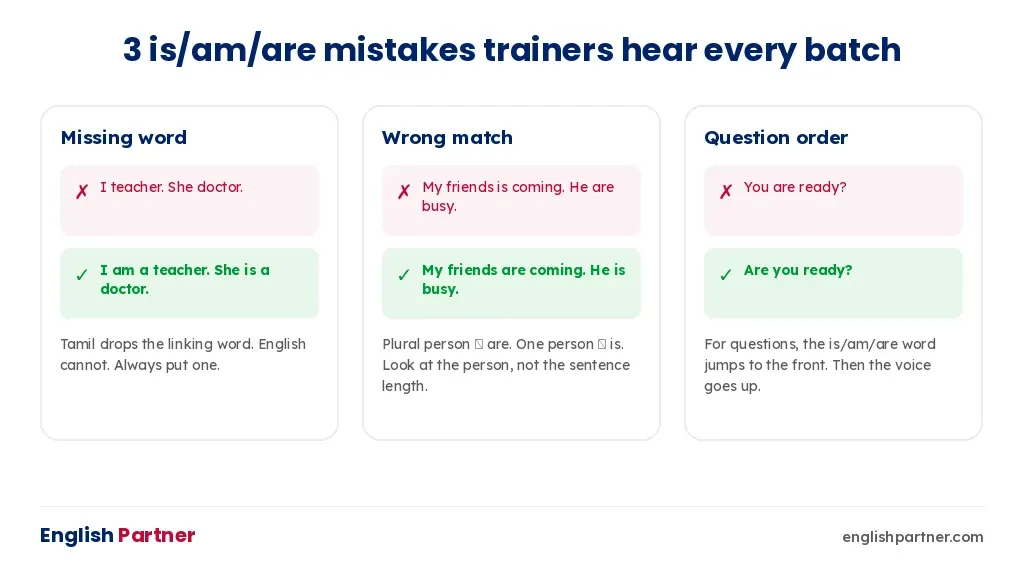
Mistake 1: leaving it out. “I teacher.” “She doctor.” “Food ready.” This is Tamil grammar walking into English. The fix is the habit above: person, then the word, then the rest.
Mistake 2: the wrong match. “My friends is coming.” “He are busy.” Usually this happens when the sentence gets long and the learner loses track of who it is about. Find the person, ignore everything else, pick the word.
Mistake 3: question order. “You are coming?” instead of “Are you coming?” Understandable, but it sounds hesitant. Move the word to the front and let your voice rise at the end.
And one small one: “I am agree” – no. Agree is a verb, so it is “I agree.” Same with “I am understand.” Just “I understand.”
Your 3-day practice plan
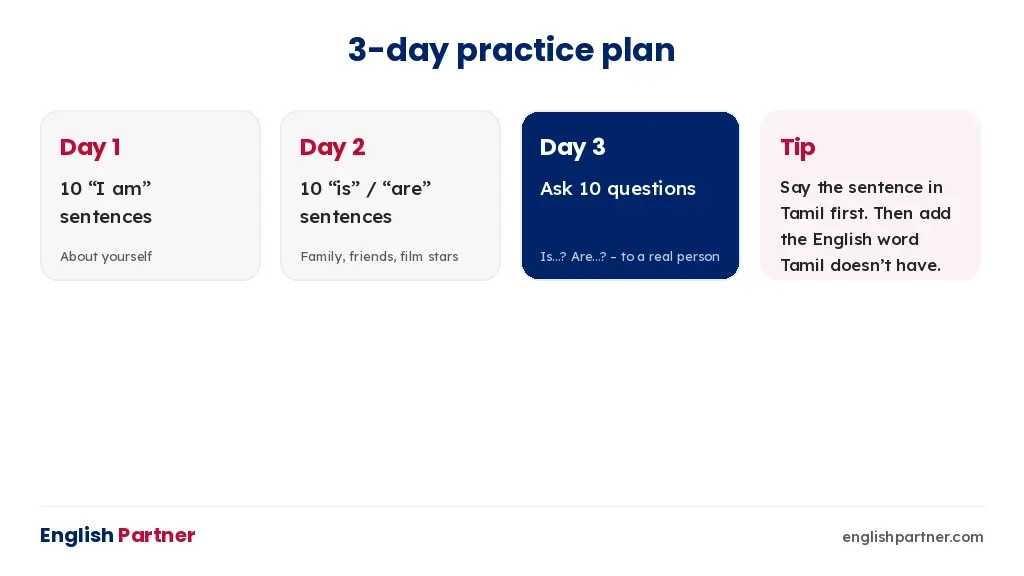
Day 1: Ten “I am” sentences about yourself – name, job, city, age, mood. Say them aloud, twice.
Day 2: Describe ten people with is and are – your family, your neighbours, a film star. “Vijay is an actor. My parents are in Salem.”
Day 3: Ask ten questions to a real person. “Are you busy? Is the shop open? Are the children home?”
Three days. Thirty sentences. After that the word will start to appear on its own – which is exactly what we want.
When self-practice is not enough
This rule is simple to read and surprisingly hard to make automatic, because Tamil keeps pulling you back to the sentence without the word. Reading a chart does not fix that. Saying a hundred sentences with someone correcting you does.
That is what our Pre-Basic level is built for – is/am/are is literally Day 1 of the course. Your trainer explains it in Tamil, you practise it in English every day on WhatsApp, and by week two you stop thinking about it. If you want to hear it explained in your own language first, our spoken English classes in Tamil page has the details.
Final thoughts and your next step
One small word. One simple rule: I → am, one person or thing → is, everyone else → are. And one reason Tamil speakers struggle with it – Tamil doesn’t have it.
Now that you know the gap is there, you can fill it. Start with the ten “I am” sentences tonight.
And if you would rather have someone check your sentences as you go, send “Hi” on WhatsApp for a free level test in Tamil. Five minutes, no payment.
Frequently asked questions
What is the rule for is, am and are?
Match the word to the person. I → am. He, she, it, or any single name → is. You, we, they, or any plural → are. Nothing else in the sentence changes the choice.
Why do Tamil speakers forget is, am and are?
Because Tamil has no word in that position. “நான் டீச்சர்” is a complete sentence in Tamil, so “I teacher” feels complete in English too. It is not – English always needs the linking word.
Is it “you is” or “you are”?
Always “you are,” even when you are talking to one person. English uses the same word for singular and plural you.
How do I make a question with is, am and are?
Move the word to the front. “You are ready” becomes “Are you ready?” “She is at home” becomes “Is she at home?” No extra word is needed.
How do I make a negative with is, am and are?
Add “not” after the word: I am not, he is not, they are not. In speaking, we usually shorten: I’m not, he isn’t, they aren’t.
When do I use “is” and when “are” with things?
One thing → is (“the bus is late”). More than one → are (“the buses are late”). Count the things, then choose.
Can I use is, am and are for the future?
Not by themselves. For the future, use will (“I will be there”) or “going to” (“I am going to be there”). Is, am and are describe now.
Which English Partner course covers this?
Pre-Basic. It starts with exactly this – is, am, are, this, that, simple sentences about yourself – explained in Tamil first, then practised in English every day on WhatsApp.