Was and Were: Simple Rules with 50 Past Sentences
 Dhinesh Kumar
Content Writer
Published
Time to read
7 minutes
Dhinesh Kumar
Content Writer
Published
Time to read
7 minutes
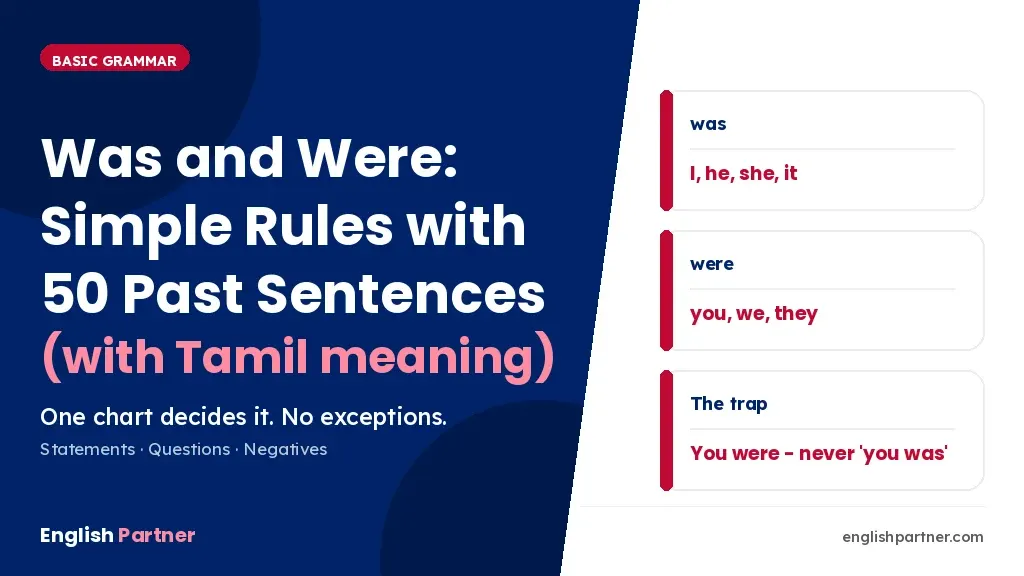
Quick answer: Was goes with I, he, she, it and singular nouns. Were goes with you, we, they and plural nouns. You always takes were, even for one person. That is the whole rule – the chart, 50 sentences and the three mistakes are below.
Why was and were disappear from Indian English
Tamil, Telugu and Kannada mark the past on the verb itself. நான் வீட்ல இருந்தேன் has no separate word for was – the past is already inside இருந்தேன்.
So when the sentence switches to English, nothing in your mother tongue reminds you to insert an extra word. That is why “I at home yesterday” and “She very tired” come out so naturally. It is not carelessness; there is simply no equivalent to copy.
The second problem is you. Tamil has separate singular and plural forms, so learners expect English to change too – and say “you was” for one person. English does not. You takes were always.
The was and were chart
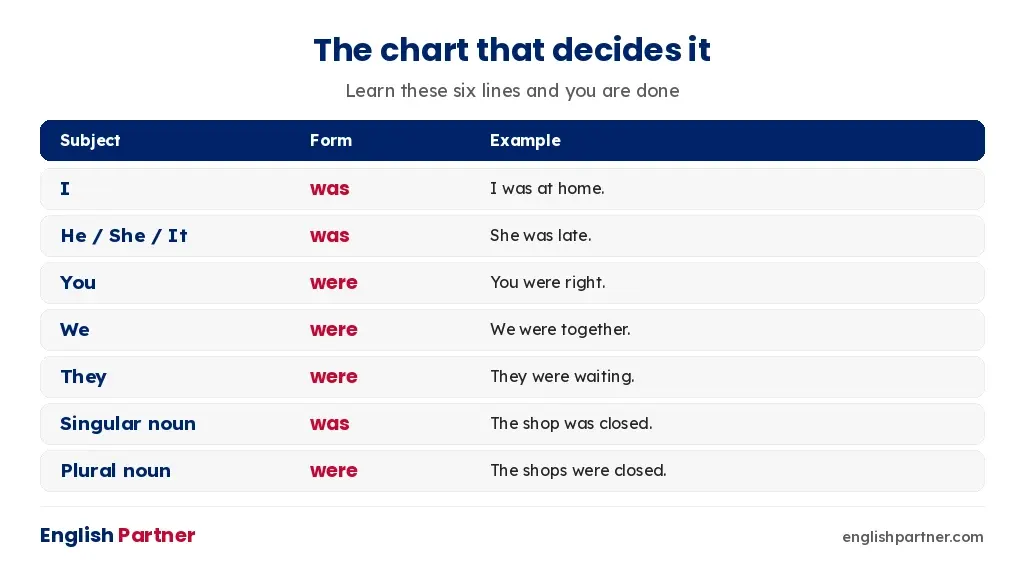
Six lines. Learn them as a block and there is nothing else to remember – no irregular cases, no exceptions, no tense changes.
50 was and were sentences with Tamil meaning
With I, he, she, it – always was
| English | Tamil |
|---|---|
| I was at home yesterday. | நேத்து நான் வீட்ல இருந்தேன். |
| I was very tired. | நான் ரொம்ப சோர்வா இருந்தேன். |
| He was late for the meeting. | அவர் மீட்டிங்குக்கு லேட்டா வந்தார். |
| She was happy with the result. | அவங்க ரிசல்ட்டுல சந்தோஷமா இருந்தாங்க. |
| It was very hot yesterday. | நேத்து ரொம்ப வெயிலா இருந்துச்சு. |
| The shop was closed. | கடை மூடி இருந்தது. |
| My phone was switched off. | என் ஃபோன் ஆஃப்ல இருந்துச்சு. |
| The food was good. | சாப்பாடு நல்லா இருந்துச்சு. |
With you, we, they – always were
| English | Tamil |
|---|---|
| You were right about him. | அவரைப் பத்தி நீ சொன்னது சரி. |
| You were very helpful. | நீங்க ரொம்ப உதவியா இருந்தீங்க. |
| We were at the wedding. | நாங்க கல்யாணத்துல இருந்தோம். |
| We were waiting outside. | நாங்க வெளியே காத்திட்டு இருந்தோம். |
| They were in the same class. | அவங்க ஒரே கிளாஸ்ல இருந்தாங்க. |
| They were not ready. | அவங்க ரெடியா இல்ல. |
| The shops were closed. | கடைகள் மூடி இருந்தன. |
| The children were asleep. | பசங்க தூங்கிட்டு இருந்தாங்க. |
Read both tables aloud once. The pattern locks in faster through the mouth than through the eyes.
Three shapes, one form
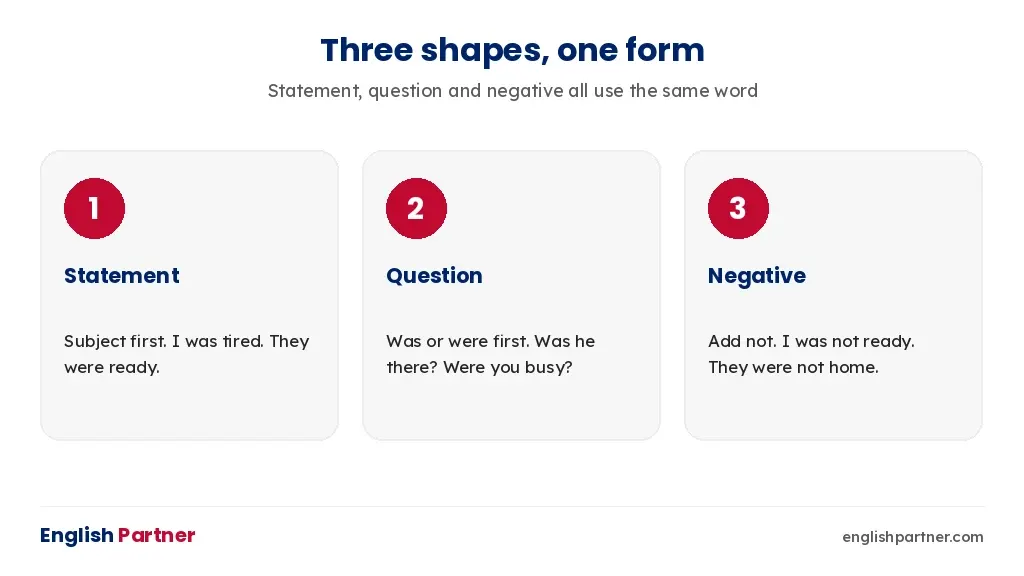
Statement – subject first: I was tired. They were ready.
Question – was or were first, and nothing else changes: Was he there? Were you busy yesterday? No did is added.
Negative – add not: I was not ready. They were not at home. In speech this becomes wasn’t and weren’t, which is correct and normal.
Questions and negatives with Tamil meaning
| English | Tamil |
|---|---|
| Was he at the office? | அவர் ஆபீஸ்ல இருந்தாரா? |
| Were you at home? | நீங்க வீட்ல இருந்தீங்களா? |
| Why were you late? | ஏன் லேட்டா வந்தீங்க? |
| Where was the meeting? | மீட்டிங் எங்க இருந்துச்சு? |
| I was not well yesterday. | நேத்து எனக்கு உடம்பு சரியில்ல. |
| She was not in the office. | அவங்க ஆபீஸ்ல இல்ல. |
| We were not informed. | எங்களுக்கு சொல்லலை. |
| They were not interested. | அவங்களுக்கு ஆர்வம் இல்ல. |
Three uses you will need every day
Once the chart is fixed, was and were do three jobs in ordinary speech. Almost every past sentence you make will be one of these.
1. Describing – how something was. The food was good. The traffic was terrible. They were very kind. Here the word after was or were is a describing word, and this is the most common use by far.
2. Locating – where someone was. I was at the bank. She was in Chennai last week. We were upstairs. Notice there is no action verb at all – the sentence only says where.
3. With an -ing form – what was going on. I was working. They were waiting. It was raining. This is the past continuous, and it is the one place was and were are allowed next to another verb – because the -ing form is not a main verb on its own.
If your sentence does not fit one of these three, you probably need did instead.
There was and there were
This pair causes a separate set of slips, because the subject comes after the verb and learners match the wrong word.
| English | Tamil |
|---|---|
| There was a lot of traffic. | நிறைய ட்ராஃபிக் இருந்துச்சு. |
| There was no water yesterday. | நேத்து தண்ணி இல்ல. |
| There were many people at the function. | ஃபங்ஷன்ல நிறைய பேர் இருந்தாங்க. |
| There were no buses after ten. | பத்து மணிக்கு அப்புறம் பஸ் இல்ல. |
The form follows the thing that comes after it: one thing takes there was, many things take there were. “There were a lot of traffic” is wrong because traffic is one uncountable thing.
“If I were you” – the one special case
You will hear “If I were you, I would wait” rather than “if I was you”. This is not the chart breaking down; it is a separate form English uses for imagined situations that are not real.
Both versions are heard in casual speech, but were is the standard one, and it appears in a small set of fixed phrases worth learning whole: If I were you… / I wish I were… / as if he were… Learn them as units and there is nothing extra to work out.
Was/were or did? The mix-up that changes the meaning
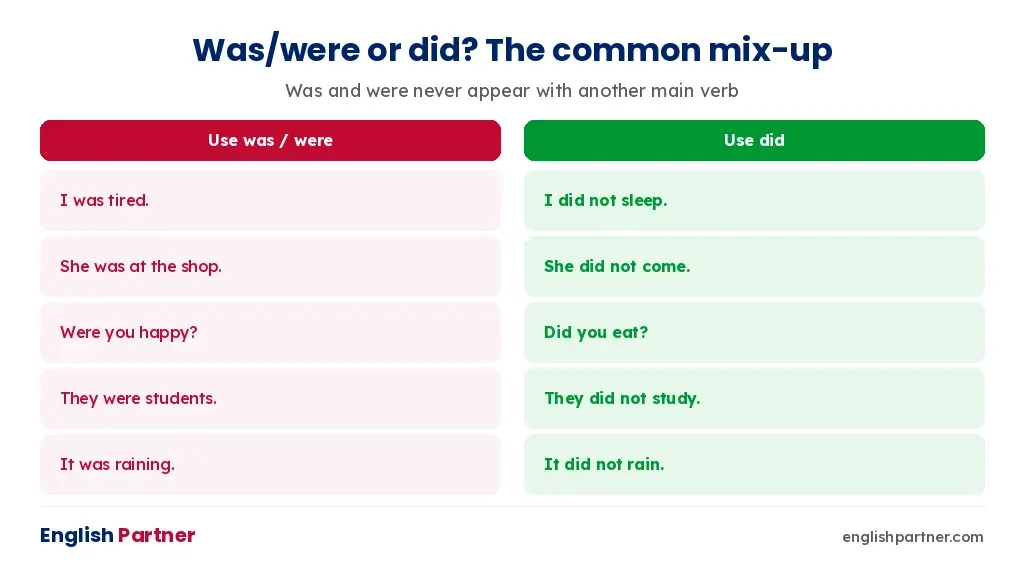
This is the one place learners genuinely lose marks and clarity. The rule is short: was and were never sit beside another main verb.
Use was/were when the sentence describes a state, a place or an ongoing action: I was tired. She was at the shop. It was raining.
Use did when there is a real action verb: I did not sleep. She did not come. Did you eat?
So “Was you went there?” mixes both systems. The correct form is “Did you go there?”
3 mistakes trainers hear every week
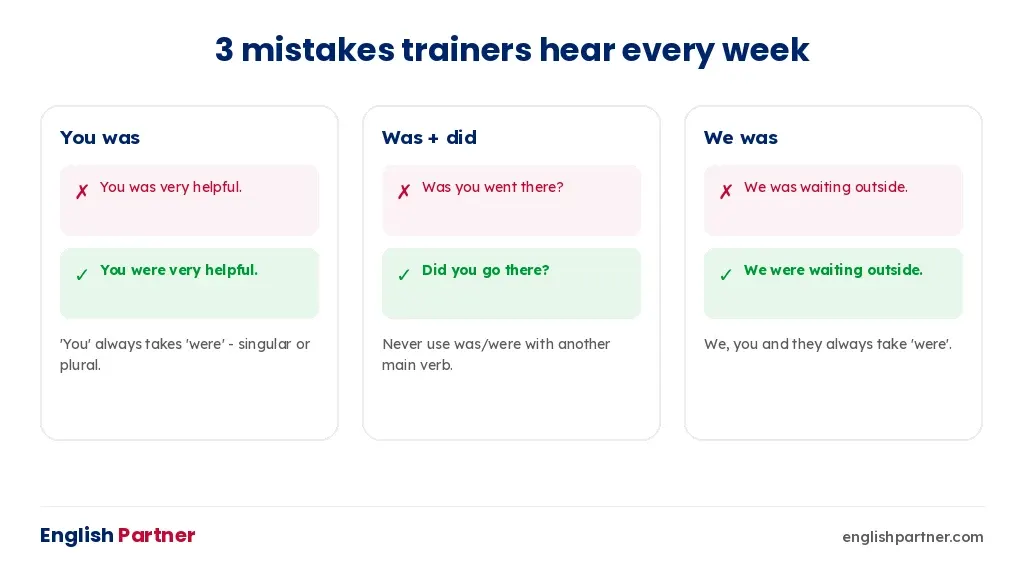
Mistake 1 – “you was”. “You was very helpful.” You always takes were, even for one person: “You were very helpful.”
Mistake 2 – was plus a main verb. “Was you went there?” Choose one system: “Did you go there?”
Mistake 3 – “we was”. “We was waiting outside.” We, you and they all take were: “We were waiting outside.”
All three are habits rather than knowledge gaps. Most learners know the chart and still slip in conversation, which is why spoken repetition matters more than another explanation. The British Council makes the same point about basic verb forms in adult learning.
Your 3-day practice plan
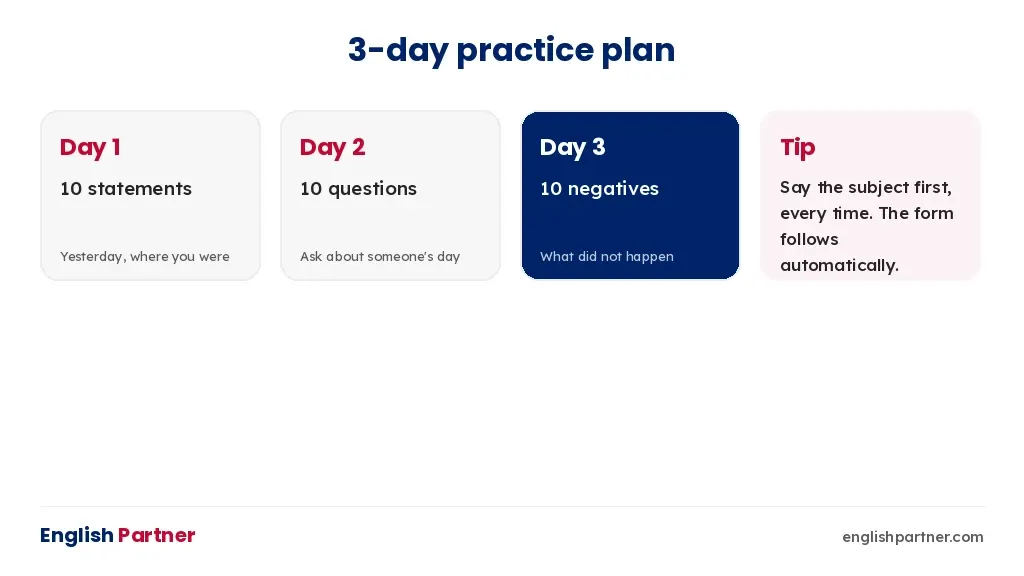
Day 1: Ten statements about yesterday – where you were, how you felt, what the weather was like.
Day 2: Ten questions asking someone about their day: Where were you? Was the traffic bad?
Day 3: Ten negatives – things that were not the case: I was not free. The shop was not open.
Say the subject first every time. Once the subject is out of your mouth, the form follows automatically.
When self-practice is not enough
Was and were are easy to understand and hard to make automatic, because the slip happens mid-sentence when you are thinking about something else – and nobody corrects adults in conversation.
That is what trainer-led practice fixes: someone who hears the slip as it happens and explains it in your mother tongue. Learners can join our spoken English classes in Coimbatore, our spoken English classes in Chennai, or our spoken English classes in Pondicherry.
Final thoughts and your next step
Six lines, no exceptions. I, he, she, it take was. You, we, they take were. Questions put the word first, negatives add not, and neither one ever appears beside another main verb.
Tonight, say ten sentences about yesterday out loud, starting each one with the subject. That is Day 1 finished.
Not sure which level to start from? Send “Hi” on WhatsApp for a free five-minute level test in your language.
Frequently asked questions
What is the difference between was and were?
Was goes with I, he, she, it and any singular noun. Were goes with you, we, they and any plural noun. That is the entire rule – there are no exceptions to learn.
Why is “you was” wrong?
Because you always takes were, whether it means one person or many. “You were right” is correct for a single friend and for a whole group. This is the mistake trainers correct most often.
Can I use was with another verb?
No. Was and were never sit next to another main verb in the past. Say “Did you go?”, not “Was you went?”. Use was or were only with a describing word, a place, or an -ing form: “I was tired”, “I was at home”, “I was working.”
How do I make a question with was or were?
Put it first: “Was he at the office?”, “Were you busy yesterday?” Nothing else changes and no did is needed.
How do I make a negative?
Add not after the word: “I was not ready”, “They were not at home.” In speech these shorten to wasn’t and weren’t, and both are perfectly correct.
Is “if I were you” correct, or should it be was?
Both are heard, but “If I were you” is the standard form for imagined situations. It is a fixed expression worth learning as one unit.
What is “was” in Tamil?
There is no single Tamil word for it, because Tamil marks the past on the verb itself. That is why learners drop was and were entirely – nothing in the mother tongue reminds you to add it.
Which English Partner course covers this?
Pre-Basic Level, and it is revised in Basic Level. Both explain the rule in your mother tongue first, then build it through daily speaking practice.