How to Learn Communication Skills in English: A Simple Step-by-Step Guide
 Vishaleni
Content Writer
Last Updated
Time to read
6 minutes
Vishaleni
Content Writer
Last Updated
Time to read
6 minutes
The good news is simple. Communication skills can be learned, step by step, with regular practice. You do not need perfect English to start. You only need the right approach and a little patience with yourself.
In this guide, we will explain what communication skills really mean, why speaking feels hard, and the practical steps you can take to improve. Let us walk through it together, calmly and clearly.
What Are Communication Skills in English?
Communication skills are the ability to share your thoughts clearly and understand what others are saying. In English, this means speaking, listening, reading, and writing in a way people can follow easily.
Many people think communication is only about speaking. But listening is just as important. Real communication is a two-way process where both people understand each other.
Good communication is not about using big or difficult words. It is about being clear, simple, and easy to understand. A short, clear sentence often works better than a long, complicated one.
Why Speaking English Feels Difficult for Many Learners
Most people who hesitate are not weak in English. They simply lack confidence and regular speaking practice. These are two very different things.
Common Reasons You May Feel Stuck
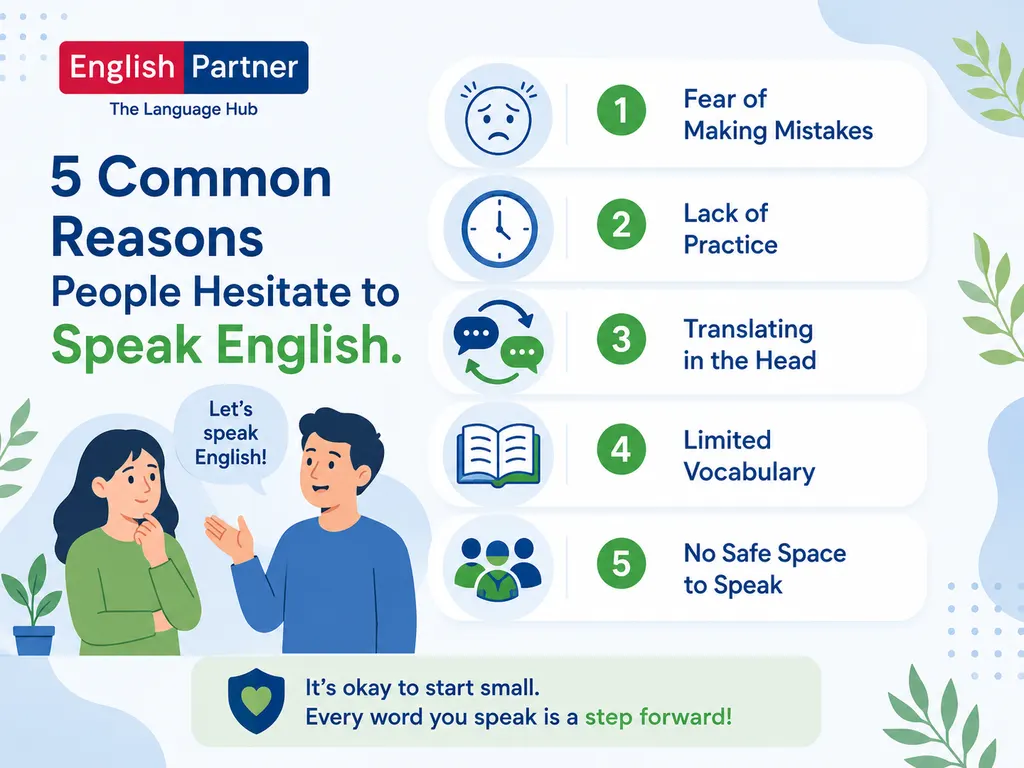
Here are some everyday reasons learners struggle with English communication:
- Fear of making mistakes – Worrying about grammar errors stops you from speaking freely.
- Lack of practice – You may understand English well but rarely speak it aloud.
- Translating in your head – Thinking in Tamil, Hindi, or Telugu first slows you down.
- Limited vocabulary – Not knowing the right word in the moment causes you to pause.
- No safe space to practice – Without a supportive environment, fear grows over time.
Recognising your specific challenge is the first step. Once you know what holds you back, you can work on it directly.
The Four Core Communication Skills You Should Build
Strong English communication rests on four connected skills. Working on all four together gives the best results.
1. Listening Skills
Active listening means paying full attention to the speaker without planning your reply. According to a Harvard Division of Continuing Education guide, most people hear only about half of what is said in a conversation.
When you listen carefully, you understand better and respond more naturally. Try repeating key points in your mind to stay focused.
2. Speaking Skills
Speaking is where most learners feel the pressure. The goal is clarity, not perfection. Focus on getting your message across in simple words. Speak slowly at first. Clear, calm speech sounds more confident than fast, rushed sentences.
3. Reading Skills
Reading English daily builds your vocabulary and sentence sense without effort. Newspapers, simple articles, and short stories work very well. When you read regularly, the right words come to you more easily during conversations.
4. Writing Skills
Clear writing reflects clear thinking. Practising emails, messages, and short notes helps you organise your ideas in English. These four skills support each other. Improving one often strengthens the others naturally.
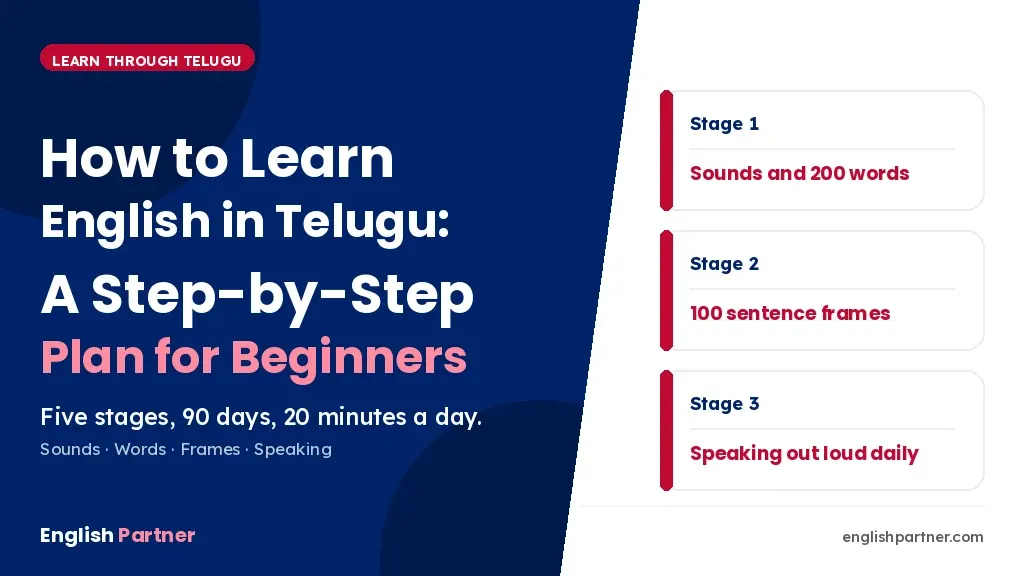
How to Learn Communication Skills in English: Step-by-Step
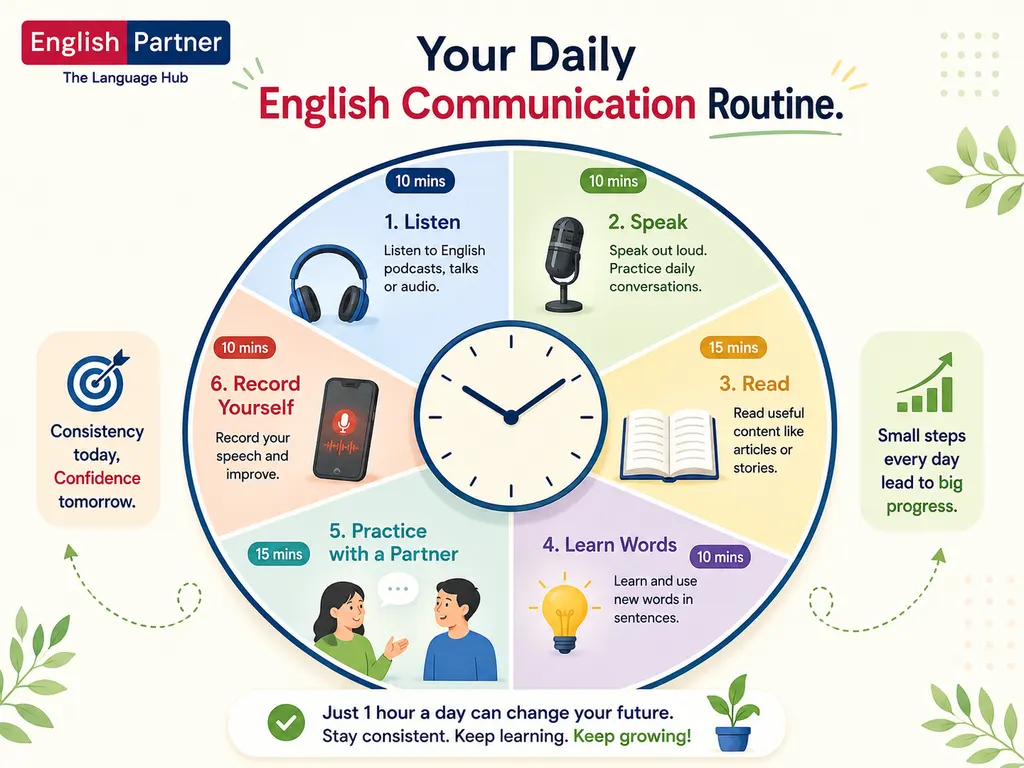
Here is a simple, practical path you can start today. Each step builds on the one before it.
| Step | What to Do | Why It Helps |
|---|---|---|
| 1 | Listen to English daily (podcasts, news, videos) | Trains your ear and improves understanding |
| 2 | Speak aloud for 10 minutes every day | Builds fluency and reduces hesitation |
| 3 | Learn 5 new words each day and use them | Expands vocabulary in a manageable way |
| 4 | Read one short article daily | Improves sentence structure naturally |
| 5 | Practise with a partner or mentor | Gives feedback and real conversation practice |
| 6 | Record yourself speaking | Helps you notice and correct mistakes calmly |
Consistency matters more than long study hours. Ten focused minutes every day works better than three hours once a week.
Practical Daily Habits That Build Confidence
Small daily habits make a big difference over time. Here are simple ones you can fit into a busy day.
Talk to yourself in English. Describe your day, your plans, or what you see around you. This is a safe way to practise without fear of judgment.
Think directly in English. Slowly reduce the habit of translating from your mother tongue. This makes speaking faster and smoother.
Watch English content with subtitles. Films and shows teach you natural expressions and how real people speak. This is experience-based learning that textbooks cannot offer.
Join group conversations. Even short chats with colleagues or friends in English help you apply what you learn.
When Self-Study Is Not Enough
Self-study is a great start, but it has limits. Many learners reach a point where they stop improving on their own.
If you have practised for a few months and still feel stuck, guided learning may be the right next step. A structured programme gives you regular speaking practice and honest feedback.
You may need guided support if you:
- Feel confident reading but freeze while speaking
- Need English for interviews, presentations, or workplace meetings
- Struggle to practise consistently without a routine
- Want a clear path instead of trying random methods
A proper assessment can help identify exactly where you need to focus. This saves time and builds confidence faster than guessing on your own.
What to Expect From Structured Learning
A good spoken english classesprogramme is built around real practice, not just rules. You should expect plenty of speaking time, gentle correction, and a supportive environment.
Results depend on your effort and how regularly you practise. Most learners notice improvement in their confidence within a few weeks of consistent effort.
Remember, improvement varies from person to person. The key is steady practice with the right guidance, not speed.
For more on why communication matters in your career, the SkillsYouNeed communication guide explains how these skills support both work and personal life.
Frequently asked questions
How long does it take to learn communication skills in English?
It depends on your current level and how regularly you practise. Many learners see noticeable improvement in confidence within a few weeks to a few months of consistent daily effort.
Can I improve my English communication without joining a class?
Yes, self-study with daily practice can help a lot. However, if you feel stuck or need feedback, a structured programme often speeds up your progress.
I know grammar but cannot speak. What should I do?
This is very common. Your issue is likely speaking practice and confidence, not knowledge. Start by speaking aloud daily, even to yourself, and gradually join conversations.
Is listening really important for communication?
Absolutely. Communication is a two-way process. Listening carefully helps you understand others and respond more naturally and clearly.
How can I stop feeling nervous while speaking English?
Practise in a safe space first, such as talking to yourself or a trusted friend. Confidence grows with repetition. Mistakes are a normal part of learning.
Do I need a big vocabulary to communicate well?
No. Clear communication uses simple, everyday words. Focus on being understood rather than using difficult vocabulary.
Which is more important, fluency or accuracy?
Both matter, but clarity comes first. It is better to speak simply and clearly than to stay silent while searching for perfect grammar.