English at the Doctor and the Pharmacy: 40 Real Lines
 Dhinesh Kumar
Content Writer
Published
Time to read
8 minutes
Dhinesh Kumar
Content Writer
Published
Time to read
8 minutes
Quick answer: You do not need medical vocabulary at a clinic. You need four pieces of information – what it is, how long, whether it is constant or comes and goes, and what makes it worse. Say those four in order and the conversation works. Reception, doctor and pharmacy lines are below.
This is a language guide, not medical advice. For anything about your health, ask your doctor or pharmacist.
Why the clinic feels harder than it is
Most learners walk into a clinic expecting to need difficult words. In practice, the words are easy – headache, cough, fever, stomach pain. What people struggle with is something else entirely.
The difficulty is describing time and pattern. “Since three days” instead of “for three days”. “Sometimes coming” instead of “it comes and goes”. These are the sentences that make a doctor ask the same question twice, and that is what makes the visit stressful.
There is also a practical reason to get it right. You are usually in that room for five or six minutes, and how clearly you describe the problem shapes how useful those minutes are.
A conversation with a doctor in English, start to finish
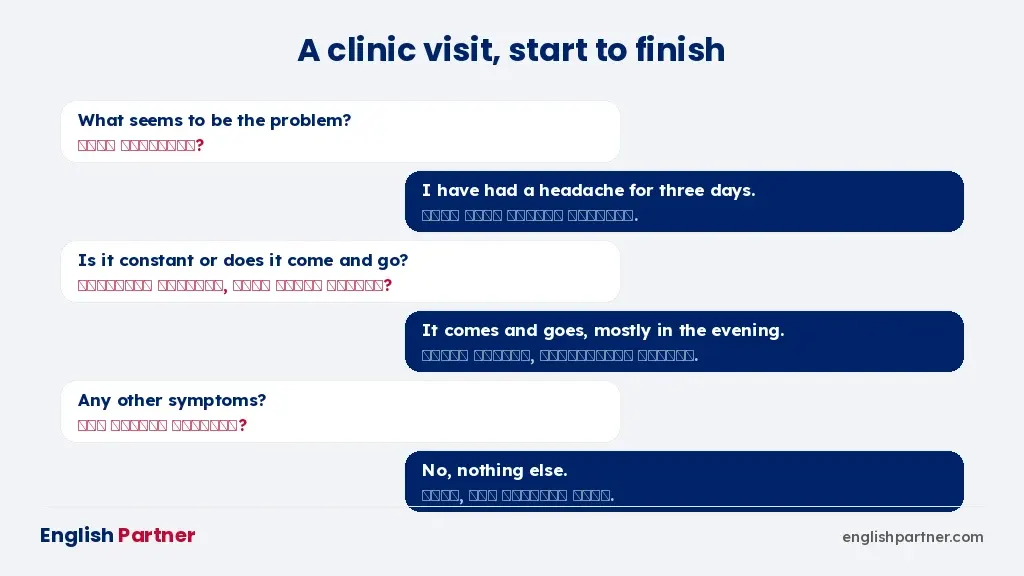
Notice how short the answers are. Doctors are not assessing your English – they want specific facts in as few words as possible. Short and precise beats long and polite here.
How to describe a problem in English
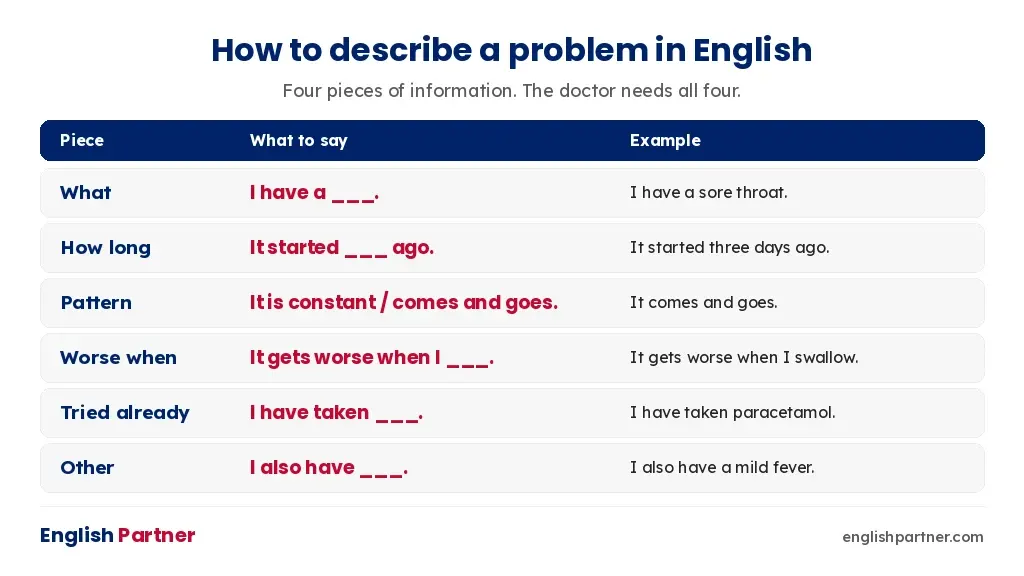
This is the part worth memorising. Six slots, and you will usually use four of them.
| English | Tamil |
|---|---|
| I have a headache. | எனக்கு தலைவலி இருக்கு. |
| I have had it for three days. | மூணு நாளா இருக்கு. |
| It comes and goes. | வந்து போகுது. |
| It is worse in the evening. | சாயங்காலம் அதிகமா இருக்கு. |
| It gets worse when I bend down. | குனியும்போது அதிகமாகுது. |
| I have taken a tablet for it. | ஒரு மாத்திர போட்டுக்கிட்டேன். |
| I also have a mild fever. | கொஞ்சம் காய்ச்சலும் இருக்கு. |
| I have not slept well because of it. | அதனால சரியா தூங்கல. |
Put those together and you have a complete description in about twenty seconds. Practise it once at home with a real problem and the shape stays with you.
At the reception counter
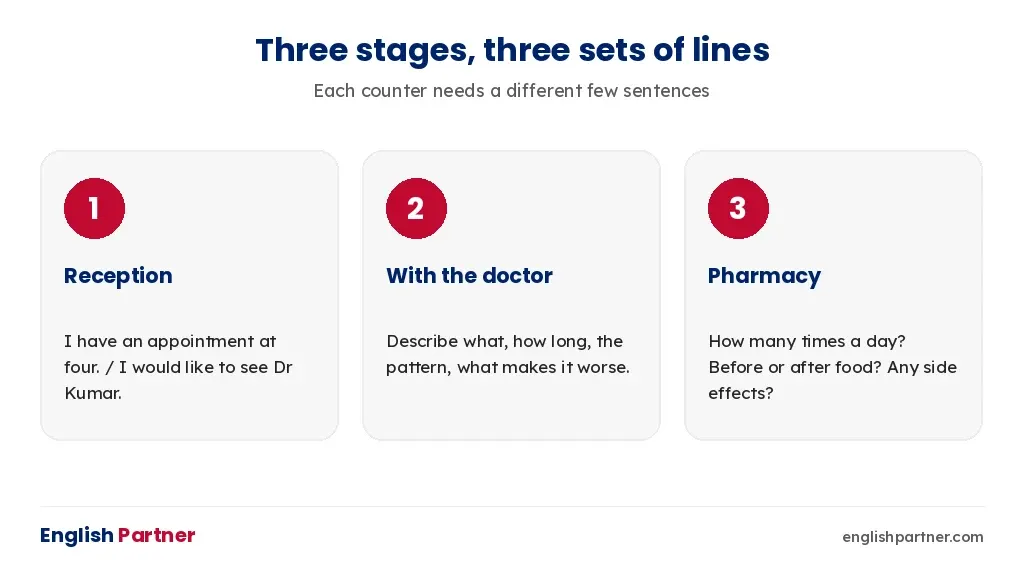
| English | Tamil |
|---|---|
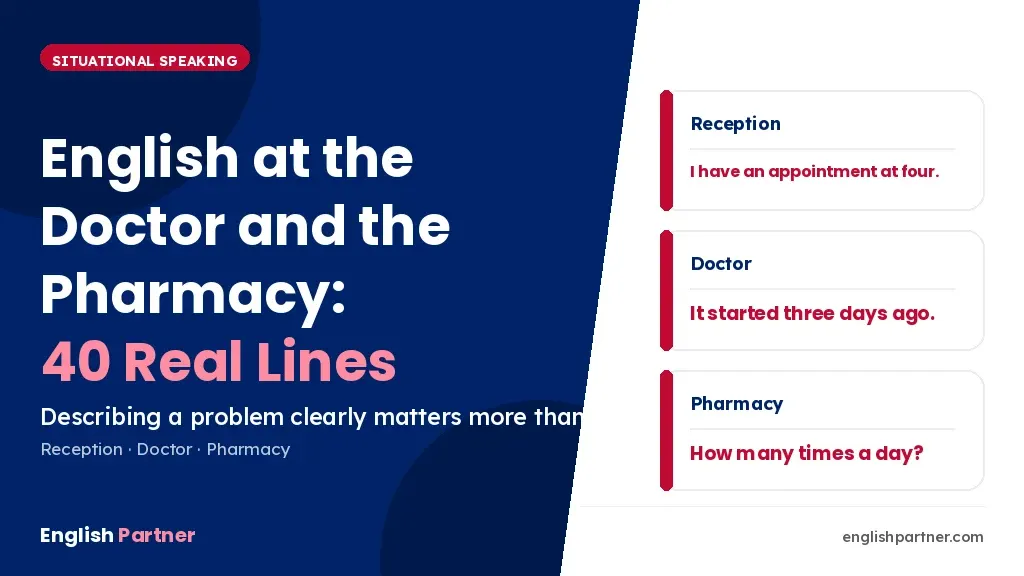
| I have an appointment at four o'clock. | நாலு மணிக்கு அப்பாயின்மென்ட் இருக்கு. |
| I would like to see Dr Kumar, please. | டாக்டர் குமாரை பாக்கணும். |
| This is my first visit. | நான் முதல் தடவ வர்றேன். |
| How long is the wait? | எவ்ளோ நேரம் காக்கணும்? |
| Do I need to fill in a form? | ஃபார்ம் நிரப்பணுமா? |
| Can I pay by card? | கார்டுல கட்டலாமா? |
Questions the doctor will ask you
These come up in almost every consultation, and knowing them in advance removes most of the nervousness – you are no longer translating a surprise question.
| They ask | You answer |
|---|---|
| What seems to be the problem? | I have a sore throat. |
| How long have you had this? | For about four days. |
| Is it constant or does it come and go? | It comes and goes. |
| Does anything make it worse? | It is worse when I swallow. |
| Are you taking any medicines? | Only a paracetamol, yesterday. |
| Any allergies? | None that I know of. |
| Has this happened before? | Yes, about six months ago. |
| Any other symptoms? | No, nothing else. |
And two sentences to keep ready for when you do not follow something: “Sorry, could you explain that once more?” and “Could you write that down for me, please?” Both are completely ordinary requests.
At the pharmacy
Four questions cover almost every prescription, and asking them in this order is quick and clear.
| English | Tamil |
|---|---|
| How many times a day should I take this? | ஒரு நாளுக்கு எத்தனை தடவ? |
| Before food or after food? | சாப்பாட்டுக்கு முன்னாடியா, அப்புறமா? |
| For how many days? | எத்தனை நாளுக்கு? |
| Are there any side effects? | ஏதாவது சைட் எஃபெக்ட் இருக்கா? |
| Is there a cheaper alternative? | இதுக்கு குறைவான விலையில ஏதாவது இருக்கா? |
| Could you write the timing on the strip? | ஸ்ட்ரிப்ல நேரத்த எழுதி கொடுக்க முடியுமா? |
That last one is a genuinely useful habit regardless of language – and it is a normal thing to ask for.
Booking the appointment on the phone
The call usually comes before the visit, and it is shorter than people expect. Three facts are all they want.
| English | Tamil |
|---|---|
| I would like to book an appointment, please. | அப்பாயின்மென்ட் வேணும். |
| With Dr Kumar, if possible. | டாக்டர் குமார் கிட்ட முடிஞ்சா. |
| It is for a persistent cough. | நீண்ட நாள் இருமலுக்கு. |
| Any time after five would suit me. | அஞ்சு மணிக்கு அப்புறம் எப்போ வேணாலும் சரி. |
| Could I get something earlier? | இதுக்கு முன்னாடி ஏதாவது கிடைக்குமா? |
| Thank you, I will be there at four. | நன்றி, நாலு மணிக்கு வருவேன். |
Say your name clearly and slowly at the start. On a clinic phone line, the name is the single thing most likely to be misheard, and spelling it out is normal: “Kavitha – K for kilo, A, V, I…”
Words for where it hurts and how it feels
You rarely need more than these, and having the right word saves a long explanation.
| English | Tamil |
|---|---|
| a sharp pain | கூர்மையான வலி |
| a dull ache | மெதுவான வலி |
| a burning feeling | எரிச்சல் |
| swelling | வீக்கம் |
| dizzy / light-headed | தலை சுத்துது |
| a sore throat | தொண்ட வலி |
| short of breath | மூச்சு வாங்குது |
| stiff / cannot move it fully | மடக்க முடியல |
One useful habit: point while you say it. “I have a dull ache here.” Combining the word with the gesture removes any chance of being misunderstood, and doctors expect it.
3 mistakes that confuse the conversation
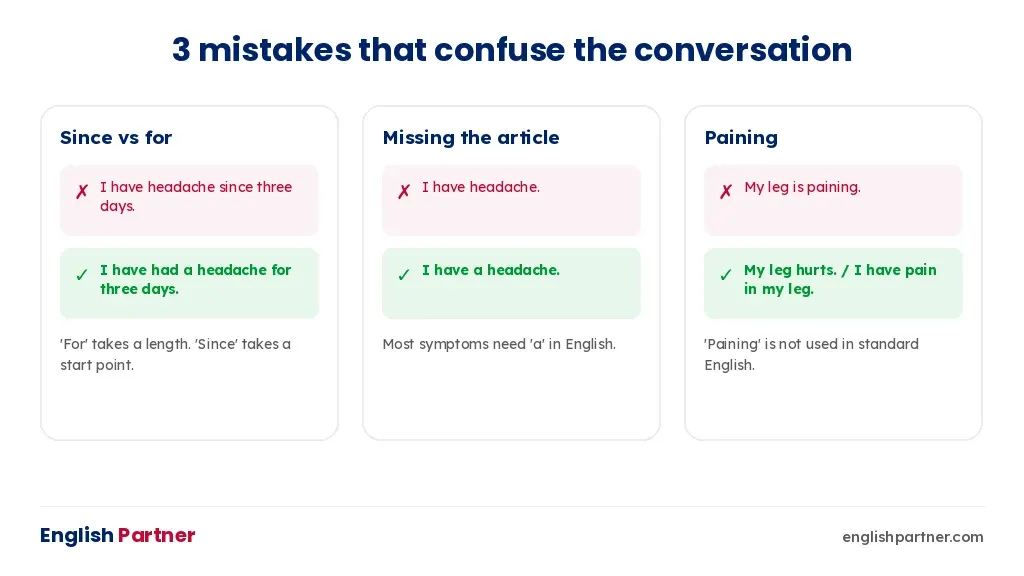
Mistake 1 – since instead of for. “I have headache since three days.” For takes a length, since takes a start point: “I have had a headache for three days” or “since Monday.”
Mistake 2 – dropping the article. “I have headache.” Most symptoms need a in English: “I have a headache.” (Fever and pain are the exceptions – “I have fever” is widely used, though “I have a fever” is the standard form.)
Mistake 3 – paining. “My leg is paining.” Common in India, not standard English: “My leg hurts” or “I have pain in my leg.”
None of these will stop a doctor understanding you. They matter because the corrected versions are shorter and clearer, which is exactly what you want in a six-minute consultation. The British Council covers the same for and since distinction in its grammar material.
Your 3-day practice plan
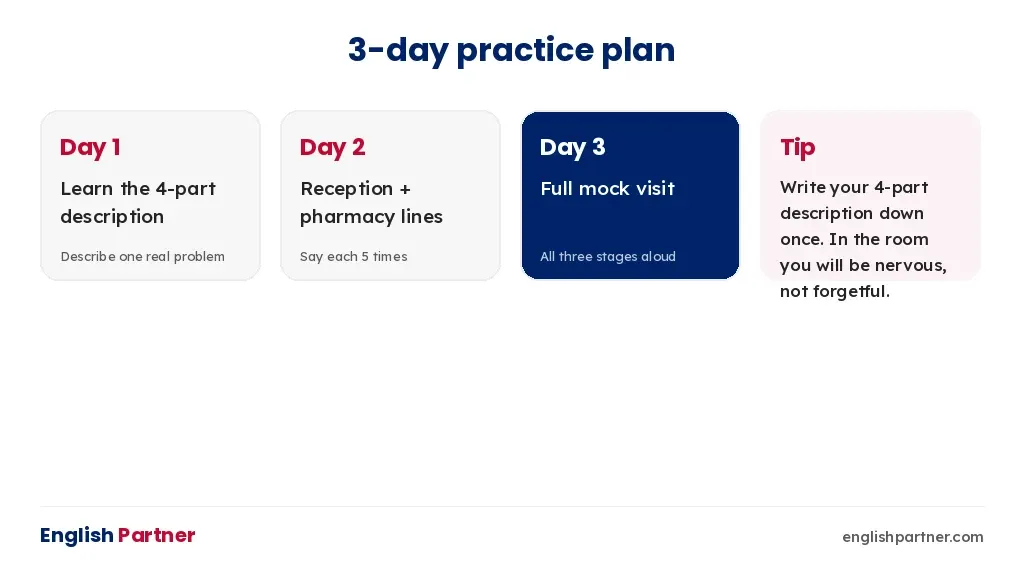
Day 1: Build the four-part description for one real problem you have had recently. Say it aloud five times.
Day 2: The reception lines and the four pharmacy questions, five times each.
Day 3: One full mock visit out loud – reception, doctor, pharmacy, in order.
Write your four-part description on your phone before a real appointment. In the room you will be nervous rather than forgetful, and having it written removes the one thing that actually goes wrong.
When self-practice is not enough
Prepared lines work until the doctor asks something you did not expect, or speaks faster than you can follow. That is the moment prepared sentences stop helping.
Practising with a trainer builds the part you cannot rehearse: following a question in real time and answering without a long pause. Learners can join our spoken English classes in Coimbatore, our spoken English classes in Chennai, or our spoken English classes in Pondicherry.
Final thoughts and your next step
Four pieces of information: what, how long, the pattern, what makes it worse. That is the whole skill. For takes a length, since takes a start point, and hurts replaces paining.
Tonight, build your four-part description for one real problem and say it out loud five times. That is the part you will actually need.
Want to practise unscripted questions with a trainer? Send “Hi” on WhatsApp for a free five-minute level test in your language.
Frequently asked questions
How do I describe my problem to a doctor in English?
In four parts: what it is, how long you have had it, whether it is constant or comes and goes, and what makes it worse. “I have had a headache for three days. It comes and goes, mostly in the evening, and it is worse in bright light.”
Should I say “since three days” or “for three days”?
“For three days.” For takes a length of time; since takes a starting point – “since Monday”, “since this morning”. This is the most common slip in clinic conversations.
Is “my leg is paining” correct English?
It is widely used in India but it is not standard English. Say “my leg hurts” or “I have pain in my leg”. Doctors will understand either way, but the standard forms are worth learning.
What should I ask at the pharmacy?
Four questions cover it: how many times a day, before or after food, how many days to continue, and whether there are any side effects. Asking them in that order is clear and quick.
What do I say if I do not understand the doctor?
“Sorry, could you explain that once more?” or “Could you write that down for me, please?” Both are completely normal requests and far better than nodding without understanding.
Do I need medical vocabulary in English?
Very little. Everyday words are enough – headache, stomach pain, cough, fever, dizzy, swelling. What matters is describing when it started and how it behaves, not naming anything technical.
How do I book an appointment in English on the phone?
“I would like to book an appointment with Dr Kumar, please.” Then answer three things: your name, the problem in one line, and when you can come.
Which English Partner course covers situations like this?
Basic Level builds everyday situation conversations through daily speaking practice, with the lines explained in your mother tongue first. Pre-Basic is the starting point if full sentences still feel difficult.