English Conversation Between Two Friends: 25 Real Dialogues
 Dhinesh Kumar
Content Writer
Published
Time to read
9 minutes
Dhinesh Kumar
Content Writer
Published
Time to read
9 minutes
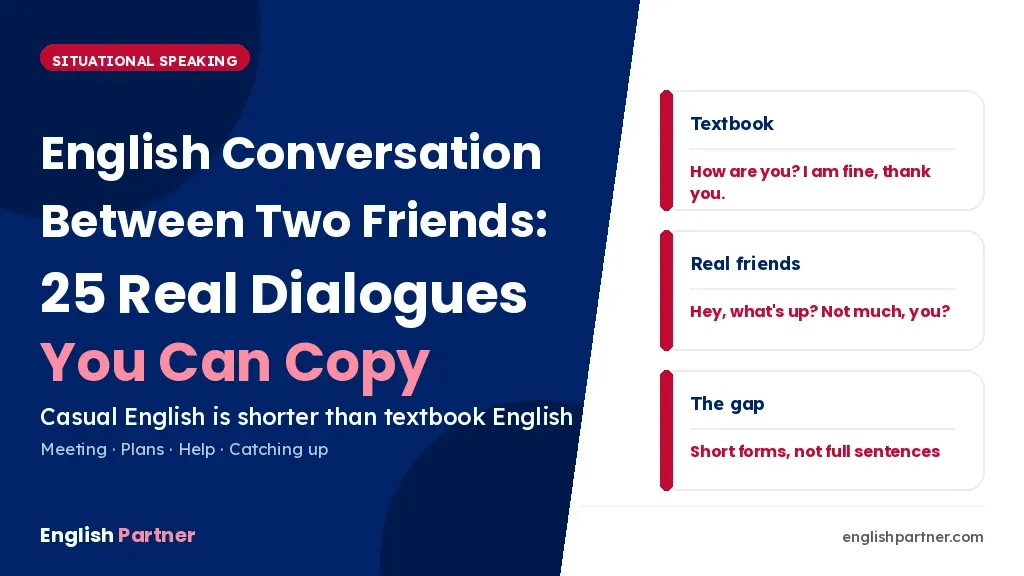
Quick answer: Friends do not speak in full sentences. “I am going to the market now” becomes “Just heading to the market.” Below are 25 real dialogues with Tamil meaning, 20 openers that are not “How are you”, and the three habits that make casual English sound stiff.
Why textbook conversation does not sound like real friends
School taught the conversation that begins “How are you?” / “I am fine, thank you. And you?” Nobody speaks like that. Not in Coimbatore, not in London.
Real casual English is shorter than textbook English in three specific ways. Subjects get dropped (“Heading out”). Auxiliaries get dropped (“You coming?”). And almost everything gets contracted (can’t, won’t, that’s, I’ll).
Learners who say every word in full are not making grammar mistakes. They just sound like a formal letter, which is why a conversation with a friend feels stiff even when every sentence is correct.
Textbook English vs friend English
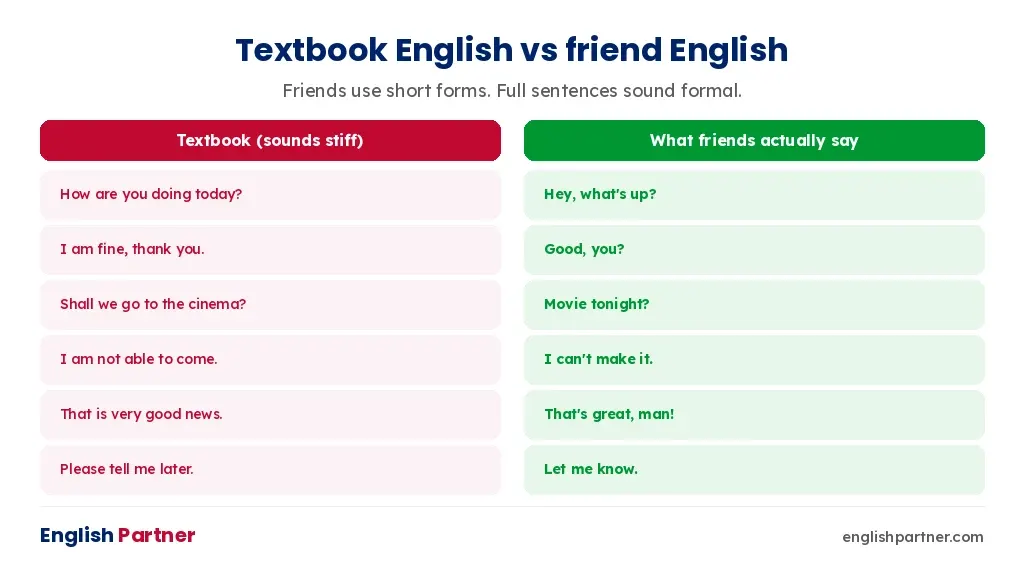
Read each pair aloud. The right-hand column is not lazier English – it is the normal register for people who know each other.
English conversation between two friends: 25 dialogues
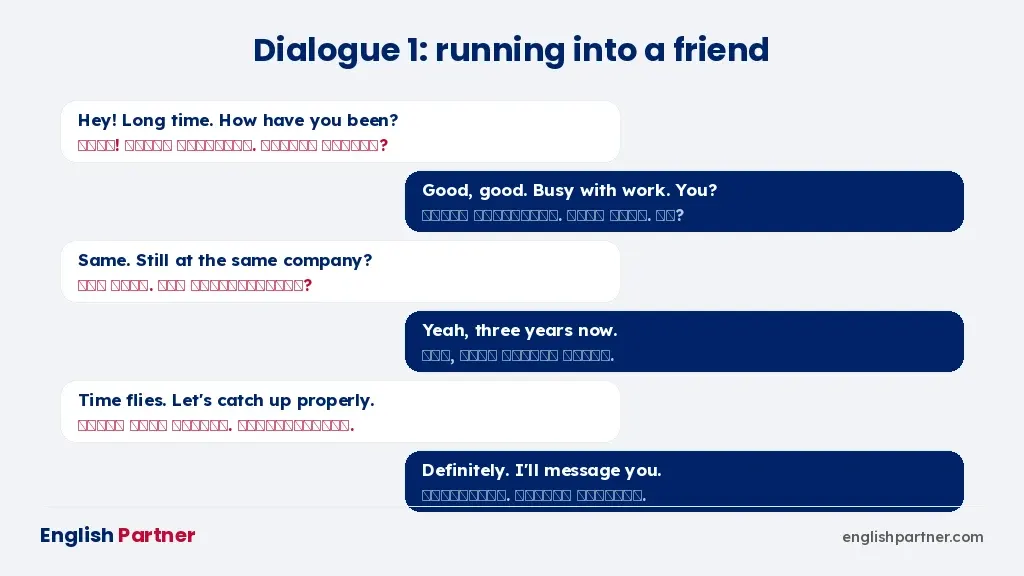
1. Running into each other
| English | Tamil |
|---|---|
| Hey! Long time. How have you been? | ஹேய்! ரொம்ப நாளாச்சு. எப்படி இருக்க? |
| Good, good. Busy with work. You? | நல்லா இருக்கேன். வேலை பிஸி. நீ? |
| Same. Still at the same company? | அதே தான். அதே கம்பெனியிலயா இன்னும்? |
| Yeah, three years now. | ஆமா, மூணு வருஷம் ஆச்சு. |
2. Making a plan
| English | Tamil |
|---|---|
| Doing anything this weekend? | இந்த வீக்எண்ட் ஏதாவது இருக்கா? |
| Not yet. Why, what’s the plan? | இல்ல. ஏன், என்ன பிளான்? |
| Was thinking of a movie. You in? | மூவி போகலாம்னு இருந்தேன். வர்றியா? |
| Sure. What time? | கண்டிப்பா. எத்தனை மணிக்கு? |
3. Cancelling politely
| English | Tamil |
|---|---|
| Hey, sorry – I can’t make it today. | சாரி, இன்னைக்கு வர முடியாது. |
| No problem. Everything okay? | பரவாயில்ல. எல்லாம் ஓகேவா? |
| Yeah, just something came up at home. | ஆமா, வீட்ல கொஞ்சம் வேலை வந்துடுச்சு. |
| Cool, let’s do it next week then. | சரி, அடுத்த வாரம் வெச்சுக்கலாம். |
4. Asking for help
| English | Tamil |
|---|---|
| Are you free for a minute? Need a favour. | ஒரு நிமிஷம் ஃப்ரீயா? ஒரு ஹெல்ப் வேணும். |
| Yeah, tell me. | ஆமா, சொல்லு. |
| Can you drop me at the station? | ஸ்டேஷன்ல டிராப் பண்ண முடியுமா? |
| Sure, give me ten minutes. | கண்டிப்பா, பத்து நிமிஷம் கொடு. |
5. Catching up on news
| English | Tamil |
|---|---|
| So what’s new with you? | சரி, என்ன புதுசா விஷயம்? |
| Nothing much. Same old. | ஒன்னும் இல்ல. அதே தான். |
| Come on, something must have happened! | ஏதாவது நடந்திருக்கும்ல! |
| Actually, yes – I changed jobs. | ஆமா உண்மையா, வேலை மாறிட்டேன். |
6. Congratulating a friend
| English | Tamil |
|---|---|
| Hey, I heard about the promotion. Congrats! | ப்ரமோஷன் பத்தி கேள்விப்பட்டேன். வாழ்த்துக்கள்! |
| Thanks, man. Took long enough. | நன்றி. ரொம்ப நாள் ஆயிடுச்சு. |
| You deserve it. Party when? | உனக்கு தகுதி இருக்கு. பார்ட்டி எப்போ? |
| Soon, soon. I’ll let you know. | சீக்கிரம். சொல்றேன். |
7. When a friend seems upset
| English | Tamil |
|---|---|
| Everything okay? You seem a bit off. | எல்லாம் ஓகேவா? கொஞ்சம் சரியில்லாம இருக்க. |
| Just a rough week, that’s all. | வாரம் கொஞ்சம் கஷ்டமா இருந்தது, அவ்ளோதான். |
| Want to talk about it? | பேசணும்னு தோணுதா? |
| Maybe later. Thanks for asking. | அப்புறம் பேசலாம். கேட்டதுக்கு நன்றி. |
8. Borrowing something
| English | Tamil |
|---|---|
| Do you still have that charger? | அந்த சார்ஜர் இன்னும் இருக்கா? |
| Yeah, why? Need it? | ஆமா, ஏன்? வேணுமா? |
| Just for a day. I’ll return it tomorrow. | ஒரு நாளைக்கு மட்டும். நாளைக்கு தந்துடுவேன். |
| Take it, no rush. | எடுத்துக்கோ, அவசரம் இல்ல. |
9. Disagreeing without a fight
| English | Tamil |
|---|---|
| I don’t know, I see it differently. | தெரியல, எனக்கு வேற மாதிரி தோணுது. |
| Yeah? How so? | அப்படியா? எப்படி? |
| Fair point, but still. | சரிதான், ஆனா இருந்தாலும். |
| Let’s agree to disagree. | அவரவர் கருத்து அவரவருக்கு. |
10. Ending the conversation
| English | Tamil |
|---|---|
| Alright, I should head out. | சரி, நான் கிளம்பணும். |
| Yeah, me too. Good seeing you. | ஆமா, நானும். சந்திச்சது சந்தோஷம். |
| Same. Let’s not make it so long next time. | நானும். அடுத்த தடவை சீக்கிரம் சந்திக்கலாம். |
| Done. Catch you later! | சரி. அப்புறம் பாக்கலாம்! |
The remaining fifteen exchanges follow the same shape, and once you see it you can build them yourself: a two- or three-word opener, a reply carrying one detail, then a question bounced straight back. That pattern is the whole engine of casual conversation.
20 openers that are not "How are you"
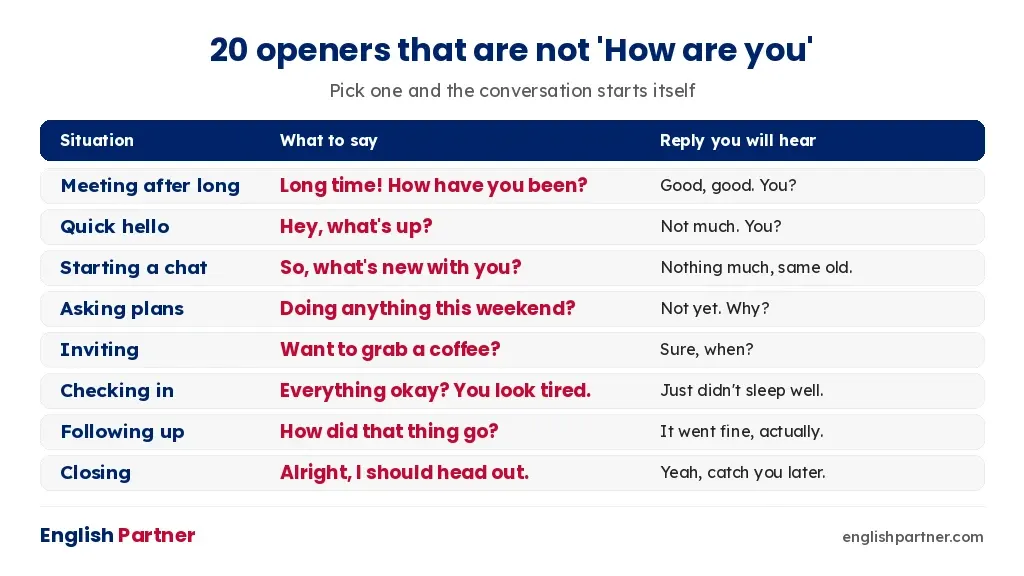
Choose one opener and memorise its reply as a pair. Learning them together is what stops the silence after the first line.
3 mistakes that make casual English sound formal
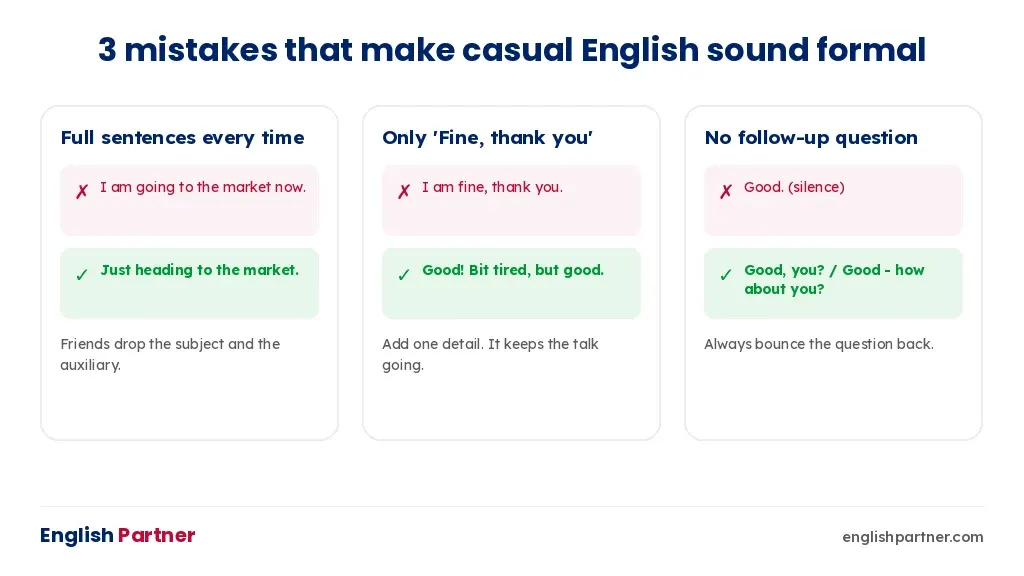
Mistake 1 – full sentences every time. “I am going to the market now.” Correct, but formal. Friends say “Just heading to the market.” Dropping the subject is normal, not sloppy.
Mistake 2 – “I am fine, thank you” and nothing else. It closes the conversation. Add one detail: “Good – bit tired, but good. You?” Now there is something to reply to.
Mistake 3 – no follow-up question. Answer, then bounce. “Good, you?” is two words and it keeps the conversation alive for another five minutes.
The three short forms that do most of the work
Casual English is not a different language. It is the same sentences with three things removed.
1. The subject disappears. “I am heading out” becomes “Heading out.” “I will call you” becomes “Will call you.” This feels wrong to learners because school marked it as incomplete. Between friends it is the normal form, and the full version sounds like an announcement.
2. The auxiliary disappears in questions. “Are you coming?” becomes “You coming?” “Have you eaten?” becomes “Eaten?” The rising tone carries the question, so the helping verb is not needed.
3. Everything contracts. can’t, won’t, I’ll, that’s, don’t, it’s. Adults who learned English through writing often avoid contractions entirely, and it is the single loudest signal that someone is speaking carefully rather than naturally.
Apply these three to any correct sentence you already know and it immediately sounds like a friend talking. Nothing new has to be learned – only removed.
The four questions that carry any conversation
When you run out of things to say, you almost never need new vocabulary. You need one of these four:
| Question | Use it when |
|---|---|
| What about you? | You just answered something |
| How did that go? | They mentioned an event or plan |
| Since when? | They mentioned a change |
| Really? What happened? | Anything surprising |
These four cover most casual talk because they all push the work back to the other person, which is exactly what a natural conversation does. The British Council teaches the same turn-taking habit in its speaking modules.
Your 3-day practice plan
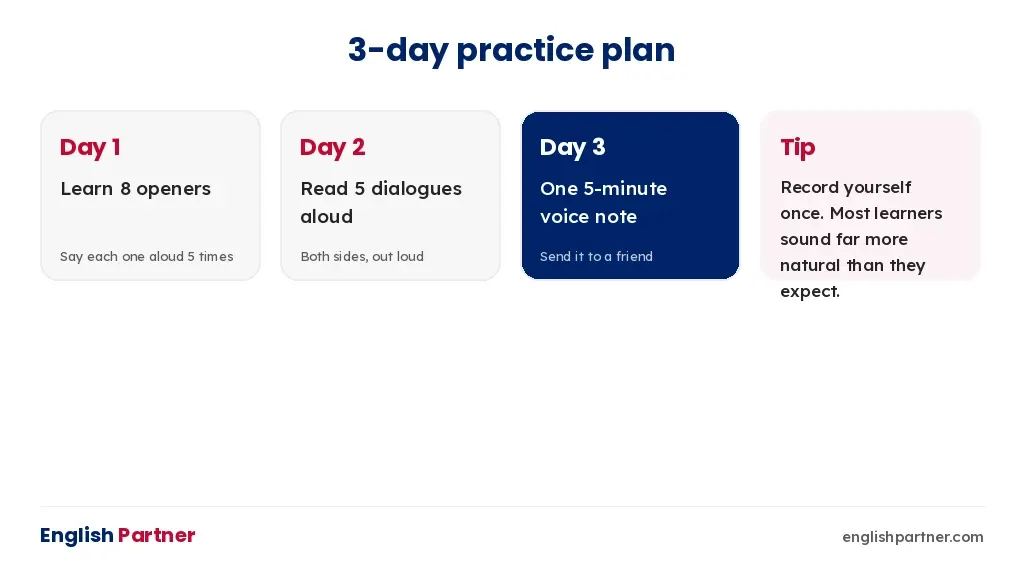
Day 1: Eight openers with their replies, said aloud five times each.
Day 2: Read five of the dialogues above aloud, playing both voices. Out loud, not silently.
Day 3: Send one five-minute voice note to a friend in English. No script.
Record yourself once before you send it, and listen back. Most learners find they sound noticeably more natural than they expected – the stiffness you hear while speaking is mostly nerves, and it does not survive a recording.
When self-practice is not enough
Dialogues on a page are predictable. Real friends interrupt, change the subject and answer something you did not ask – and that is where practised lines stop working.
Trainer-led practice puts you in unscripted conversation with someone who can explain the miss in your mother tongue right after it happens. Learners can join our spoken English classes in Coimbatore, our spoken English classes in Chennai, or our spoken English classes in Pondicherry.
Final thoughts and your next step
Casual English is not harder than textbook English. It is shorter. Drop the subject, use contractions, add one detail, bounce a question back – that is most of it.
Pick two openers from the table tonight and use them tomorrow with someone you already speak to. That is the whole task for day one.
Want unscripted practice with a trainer? Send “Hi” on WhatsApp for a free five-minute level test in your language.
Frequently asked questions
How do two friends start a conversation in English?
Rarely with “How are you?”. Real openers are shorter – “Hey, what’s up?”, “Long time! How have you been?”, “So what’s new?”. Twenty of them are listed below with the replies you will actually hear.
Why does my English sound too formal with friends?
Because you are speaking in complete sentences. Friends drop the subject and the auxiliary – “Heading to the market” instead of “I am going to the market now.” Contractions do most of the rest.
What should I say instead of “I am fine, thank you”?
Add one small detail so the conversation can continue: “Good – bit tired, but good. You?” The detail gives the other person something to reply to, which “fine, thank you” does not.
Is it rude to use short forms like “can’t” and “gonna”?
Not between friends. Contractions such as can’t, won’t, I’ll and that’s are normal in all spoken English, including at work. “Gonna” and “wanna” are fine with friends but better avoided in interviews.
How many dialogues should I practise a day?
Two or three, read aloud in both voices, is enough. Reading them silently does almost nothing – the benefit comes from your mouth forming the phrases.
How do I keep a conversation going when I run out of things to say?
Bounce a question back – “What about you?”, “How did that go?”, “Since when?”. Four short follow-up questions will carry almost any casual conversation.
How do I end a conversation politely in English?
“Alright, I should head out”, “Anyway, I’ll let you go”, or “Catch you later”. Ending clearly is a normal part of the conversation, not rudeness.
Which English Partner course covers casual conversation?
Basic Level covers everyday conversation with daily speaking tasks. Mastery in Communication is for learners who know the grammar but still sound formal or hesitant.