English at the Bank: 40 Lines for the Counter, the Call and the App
 Dhinesh Kumar
Content Writer
Published
Time to read
8 minutes
Quick answer: Bank English is about twenty sentences, used over and over. Open with what you came for in one line. For a problem, say what happened, what you want, and ask for a reference number — in that order. The 40 lines and the phrases to drop are below.
Why the bank feels harder than it is
A bank counter has a queue behind you, a form in front of you and someone waiting for an answer. That pressure is what makes people switch to Tamil mid-sentence, not the difficulty of the English.
The language itself is small. Bank staff handle the same dozen requests every day — deposits, withdrawals, statements, card issues, KYC updates. They are not listening for grammar. They are listening for which of those twelve things you want.
So the whole skill is being able to open with one clear line. Everything after that is the staff member guiding you.
At the counter, start to finish
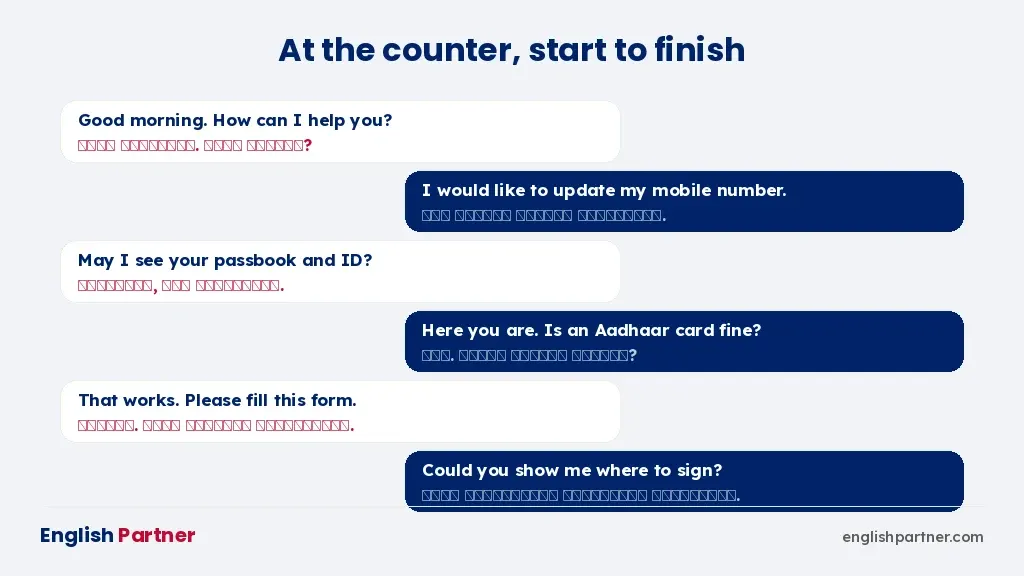
Notice how short the lines are. Nobody is making speeches. Three or four words is often the whole turn.
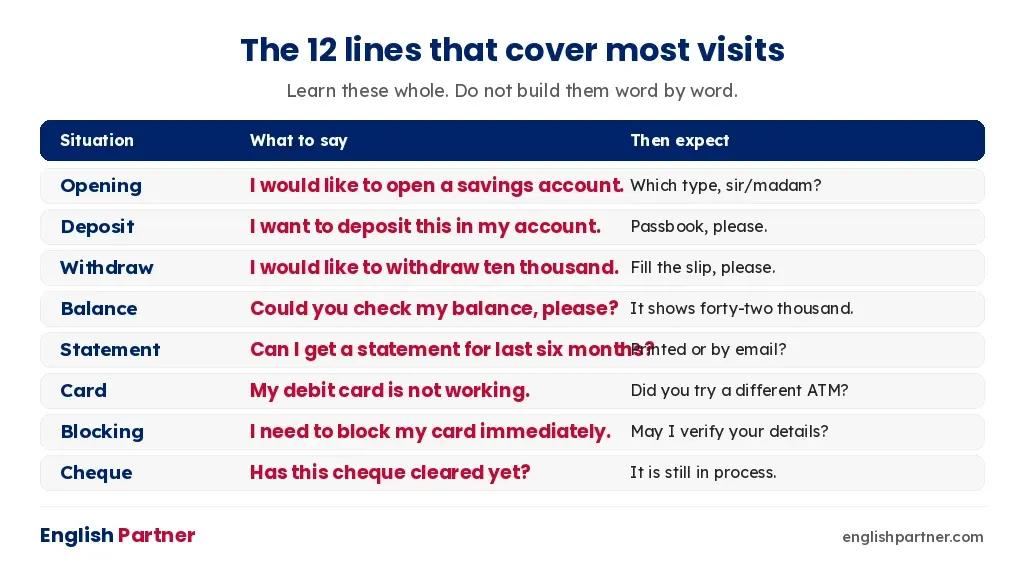
Bank conversation in English: the counter lines
| English | Tamil |
|---|---|
| I would like to open a savings account. | சேமிப்பு கணக்கு தொடங்கணும். |
| I want to deposit this in my account. | இத என் கணக்குல போடணும். |
| I would like to withdraw ten thousand. | பத்தாயிரம் எடுக்கணும். |
| Could you check my balance, please? | பேலன்ஸ் பார்க்க முடியுமா? |
| Can I get a statement for the last six months? | கடந்த ஆறு மாச ஸ்டேட்மென்ட் வேணும். |
| I need to update my mobile number. | மொபைல் நம்பர் மாத்தணும். |
| Has this cheque cleared yet? | இந்த செக் கிளியர் ஆயிடுச்சா? |
| Where do I need to sign? | எங்க கையெழுத்து போடணும்? |
| Could you show me how to fill this? | இத எப்படி நிரப்பணும்னு காட்டுங்க. |
| How long will it take? | எவ்ளோ நேரம் ஆகும்? |
Say each one aloud five times before your next visit. Ten lines, ten minutes, and the counter stops being an event.
On a customer care call
Phone banking is harder than the counter for one reason: nobody can see you pointing at the passbook. Everything has to be said.
| English | Tamil |
|---|---|
| I need to block my debit card immediately. | என் டெபிட் கார்ட உடனே பிளாக் பண்ணணும். |
| My card was declined at the shop. | கடையில கார்ட் வேலை செய்யல. |
| I did not receive the OTP. | OTP வரல. |
| Could you check the status of my request? | என் ரிக்வெஸ்ட் நிலைமை பார்க்க முடியுமா? |
| Sorry, I am losing you — could you repeat that? | சரியா கேட்கல, மறுபடியும் சொல்லுங்க. |
| Could I have a complaint reference number? | கம்ப்ளைன்ட் நம்பர் கொடுக்க முடியுமா? |
Say the urgent thing first. On a blocking call, “I need to block my card” goes before any explanation — the agent starts the process while you give the rest.
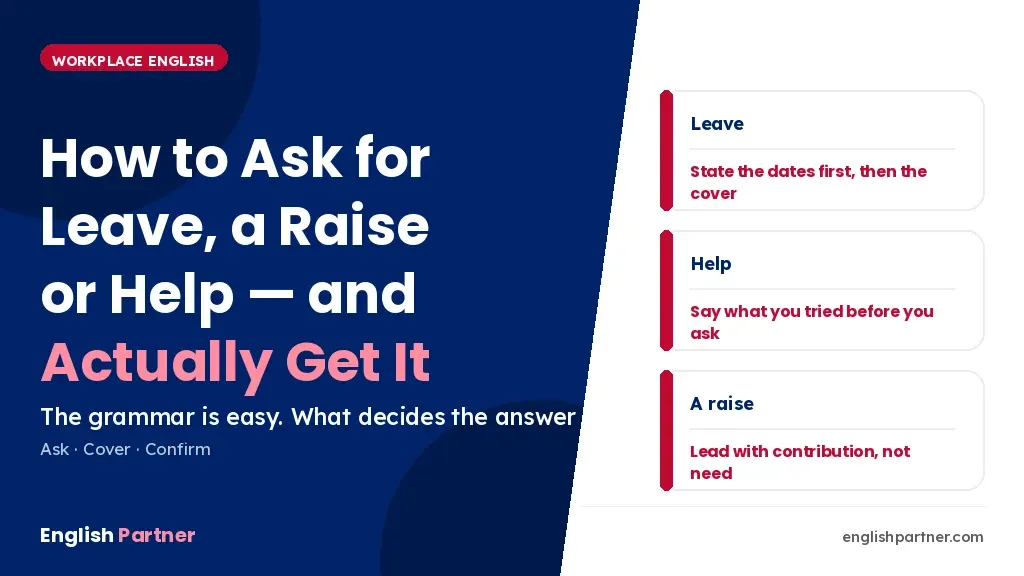
Reporting a problem in three steps
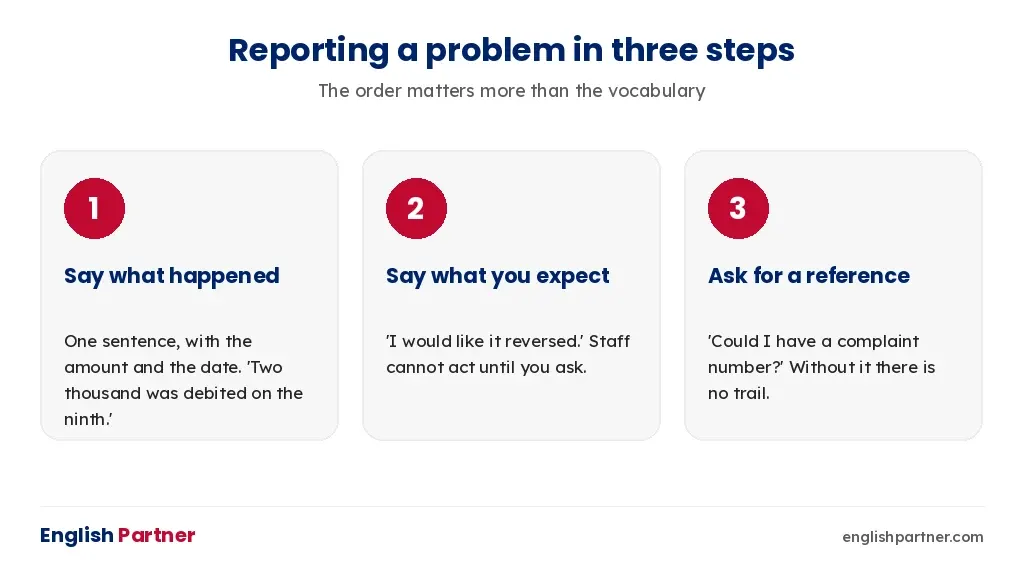
1. Say what happened. One sentence, with the amount and the date. “Two thousand rupees was debited on the ninth but the shop did not receive it.”
2. Say what you want. This is the step people skip. Staff cannot act until you ask. “I would like it reversed.”
3. Ask for a reference. “Could I have a complaint number?” Without one there is no trail and your follow-up call starts from zero.
That order works at the counter, on a call and in an email. Most unresolved complaints are unresolved because step two never happened.
UPI and app problems
Different vocabulary, same three steps.
| English | Tamil |
|---|---|
| The amount was debited twice. | ரெண்டு தடவ பணம் போயிடுச்சு. |
| The payment failed but the money was deducted. | பேமென்ட் ஃபெயில் ஆச்சு, ஆனா பணம் போயிடுச்சு. |
| It still shows as pending. | இன்னும் பெண்டிங்னு காட்டுது. |
| I sent it to the wrong number. | தப்பான நம்பருக்கு அனுப்பிட்டேன். |
| How long does a refund usually take? | ரீஃபண்ட் எவ்ளோ நாள் ஆகும்? |
One habit worth building: before you call, write the amount, the date and the transaction reference on your phone. Nerves lose numbers far more often than they lose words.
Opening an account, step by step
This is the longest bank conversation most people have, and the one where switching to Tamil halfway is most common. It runs in four predictable stages.
Stage 1 — saying what you want. “I would like to open a savings account.” They will ask which type, so have an answer ready: a regular savings account, a zero-balance account, or a salary account.
Stage 2 — documents. “I have my Aadhaar card and PAN card. Do you need anything else?” Asking that one question up front saves a second trip more often than anything else on this page.
Stage 3 — the form. Nobody fills a bank form perfectly first time. “Could you show me what goes in this column?” and “Should I write my permanent address or current address?” are completely ordinary things to ask.
Stage 4 — closing. “When will the account be active?” and “Will the cheque book be posted or should I collect it?” Two questions, and you leave knowing what happens next.
| English | Tamil |
|---|---|
| Which documents do I need to bring? | என்ன டாக்குமென்ட் கொண்டு வரணும்? |
| Is there a minimum balance? | மினிமம் பேலன்ஸ் இருக்கா? |
| Are there any charges for this? | இதுக்கு ஏதாவது கட்டணம் இருக்கா? |
| When will the account be active? | கணக்கு எப்போ வேலை செய்ய ஆரம்பிக்கும்? |
| Will I get a passbook today? | இன்னைக்கே பாஸ்புக் கிடைக்குமா? |
If they switch to Tamil halfway
This happens constantly in Coimbatore and Chennai branches, and most learners read it as a verdict on their English. It is not. Staff switch because it is faster for them, and because they assume they are being helpful.
You have three options, and all three are fine:
- Switch with them. If you only came to get the work done, do that. One counter visit is not an exam.
- Stay in English and let them mix. You answer in English, they answer in Tamil, the work still gets done, and you still got the practice.
- Say it directly. “Sir, I am practising my English, can we continue in English?” In my experience, nine out of ten people say yes and slow down a little.
What matters is that you do not go silent. Silence is the only one of these that costs you something.
3 phrases to stop using
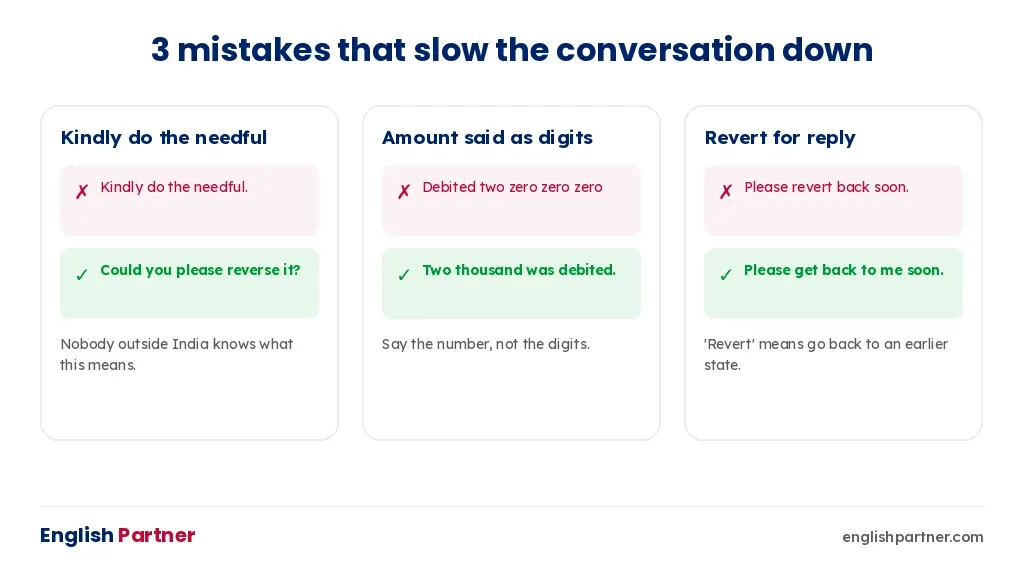
1. “Kindly do the needful.” Understood across India, meaningless almost everywhere else, and it never says what you actually want. Replace with the specific request: “Could you please reverse the transaction?”
2. Saying amounts as digits. “Two zero zero zero was debited.” Say the number: “Two thousand was debited.”
3. “Please revert back.” Revert means return to an earlier state, so you are asking them to undo something. Use “Please get back to me.”
None of these stop you being understood in an Indian branch. They matter on calls routed outside the state, in written complaints, and in any bank dealing with customers abroad. The British Council covers the same everyday-English distinctions in its learning material.
Your 3-day practice plan
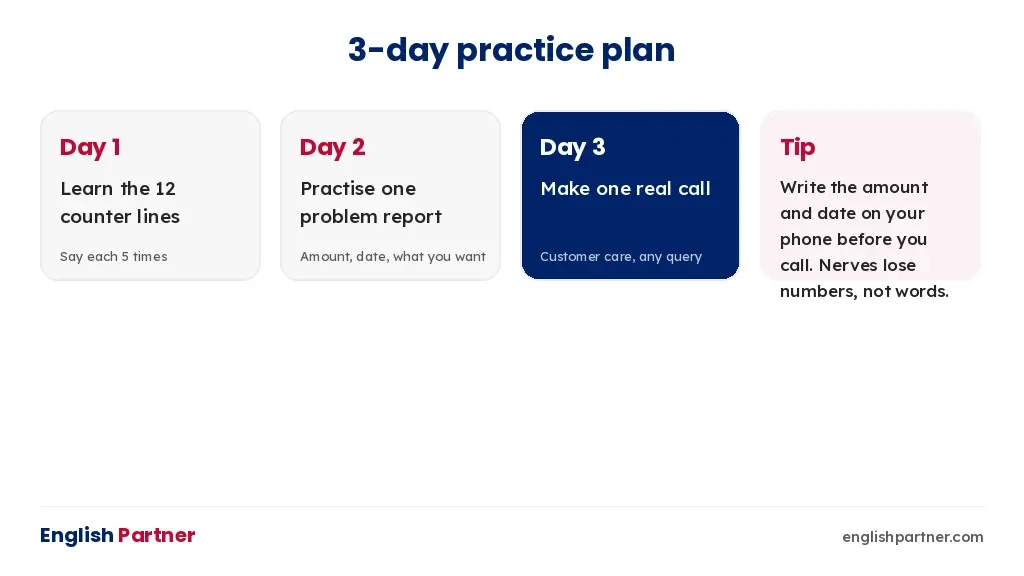
Day 1: The ten counter lines, five times each, out loud.
Day 2: Build one problem report using the three steps — a real transaction from your own statement.
Day 3: Make one real customer care call in English. Any query, however small.
Day 3 is the one that counts. The first real call is always the hardest, and after it the rest stop feeling like a test.
When self-practice is not enough
Prepared lines hold until the staff member asks something you did not expect, or speaks faster than you can follow. That moment is where rehearsed sentences stop helping.
Trainer-led practice builds the part you cannot script — following a question in real time and answering without a long pause. Learners can join our spoken English classes in Coimbatore, our spoken English classes in Chennai, or our spoken English classes in Pondicherry.
Final thoughts and your next step
Open with one clear line. For a problem: what happened, what you want, reference number. Drop do the needful and revert back, and say amounts as numbers.
Tonight, say the ten counter lines out loud five times each. That is the next visit handled.
Want to practise unscripted questions with a trainer? Send “Hi” on WhatsApp for a free five-minute level test in your language.