Telephone English: 20 Real Call Conversations for Bank, Delivery and Office
 Vishaleni
Content Writer
Published
Time to read
9 minutes
Vishaleni
Content Writer
Published
Time to read
9 minutes
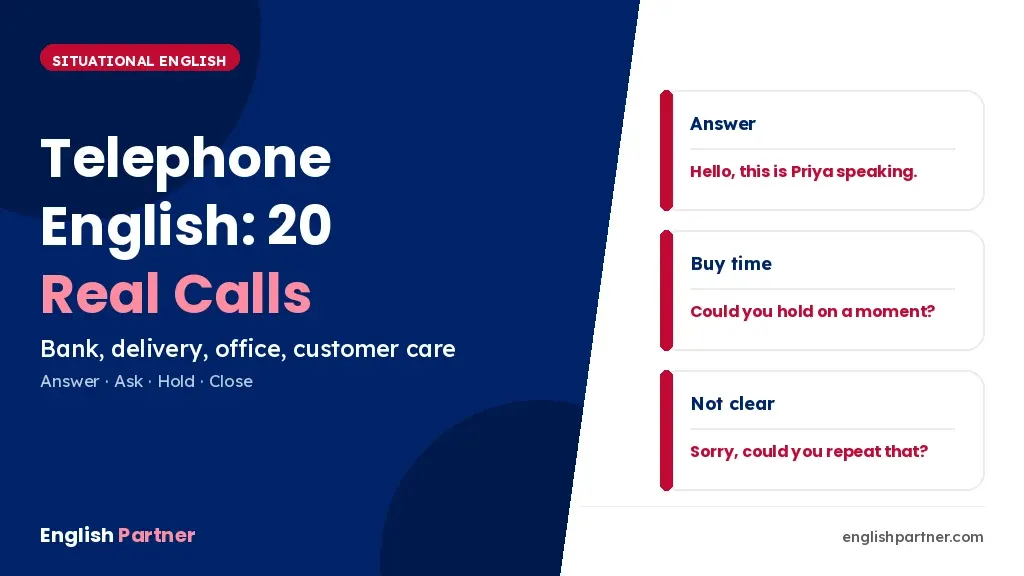
Quick answer: Every phone call in English has four stages – open, reason, middle, close – and eight lines cover almost all of them: Hello, this is Priya speaking. May I know who’s calling? I’m calling about my order. Sorry, could you repeat that? Could you speak a little slower? Could you hold on a moment? I’m in a meeting, can I call you back? Thank you for your help. Twenty full conversations are below.
Why the phone feels harder than face-to-face
Learners who manage fine in person often freeze on a call. It is not that phone English is more advanced – it is usually simpler. What changes is that you lose the face.
Face-to-face, half the meaning arrives through expression, gesture and lip movement. On a call, all of it has to come through sound, often a poor line, often an unfamiliar accent. Your brain gets less information and less time.
The good news is that real calls repeat. Delivery calls, bank calls, office calls and customer care calls follow the same few shapes. Trainers at English Partner teach those shapes directly, because once you know the stages, no call can catch you out.
Every call has four stages
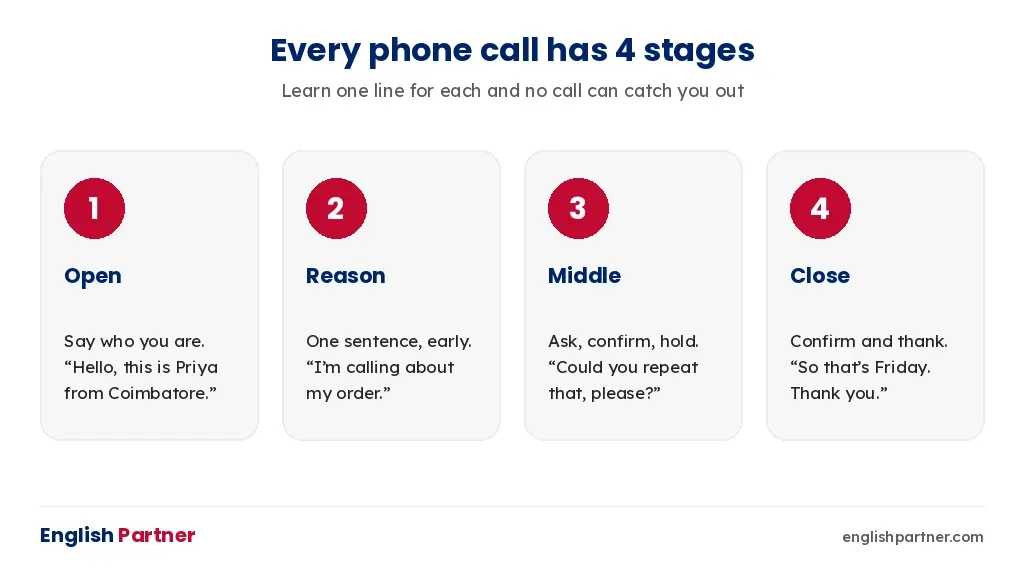
Open – say who you are. Hello, this is Priya from Coimbatore.
Reason – one sentence, early. I’m calling about my order.
Middle – ask, confirm, hold. Could you repeat that, please?
Close – confirm and thank. So that’s Friday at four. Thank you.
Most learners skip the second stage and the other person has to guess why you called. Giving the reason in your first two lines makes the rest of the call easier for both of you.
The 8 lines that save every call
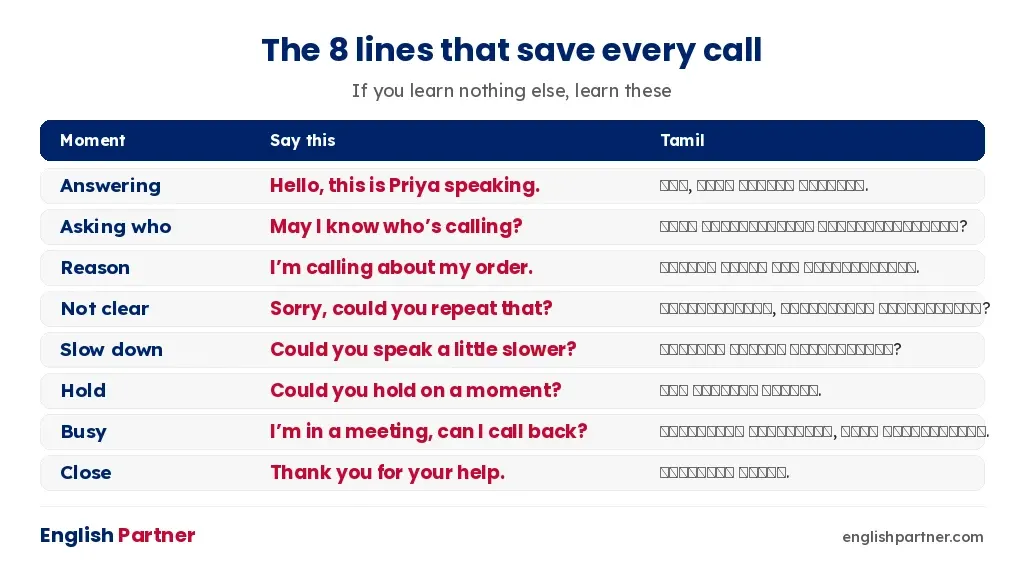
| Moment | Say this | Tamil |
|---|---|---|
| Answering | Hello, this is Priya speaking. | ஹலோ, நான் பிரியா பேசறேன். |
| Asking who | May I know who’s calling? | யாரு பேசறீங்கன்னு தெரிஞ்சுக்கலாமா? |
| Reason | I’m calling about my order. | ஆர்டர் பத்தி பேச கூப்பிட்டேன். |
| Not clear | Sorry, could you repeat that? | மன்னிக்கணும், மறுபடியும் சொல்றீங்களா? |
| Too fast | Could you speak a little slower, please? | கொஞ்சம் மெதுவா பேசுறீங்களா? |
| Hold | Could you hold on a moment, please? | ஒரு நிமிஷம் இருங்க. |
| Busy | I’m in a meeting — can I call you back? | மீட்டிங்ல இருக்கேன், நான் கூப்பிடறேன். |
| Close | Thank you for your help. | உதவிக்கு நன்றி. |
Answering and starting a call
| English | Tamil |
|---|---|
| Hello, this is Priya speaking. | ஹலோ, நான் பிரியா பேசறேன். |
| Good morning, English Partner, Priya speaking. | காலை வணக்கம், இங்கிலிஷ் பார்ட்னர், பிரியா பேசறேன். |
| May I know who’s calling? | யாரு பேசறீங்க? |
| Sorry, who am I speaking to? | மன்னிக்கணும், யாரோட பேசறேன்? |
| Is this a good time to talk? | இப்போ பேசலாமா? |
| I’m calling about my order. | ஆர்டர் பத்தி கூப்பிட்டேன். |
| I’m returning your call. | நீங்க கூப்பிட்டீங்க, அதான் கூப்பிடறேன். |
| Could I speak to Mr Kumar, please? | குமார் சார் கிட்ட பேசலாமா? |
When you cannot hear or understand
This is the part learners avoid, and it is the part that matters most. Asking someone to repeat is completely normal in English – native speakers do it on every second call.
| English | Tamil |
|---|---|
| Sorry, could you repeat that? | மறுபடியும் சொல்றீங்களா? |
| Sorry, I didn’t catch that. | சரியா கேட்கல. |
| Could you speak a little slower, please? | கொஞ்சம் மெதுவா பேசுங்க. |
| The line isn’t very clear. | லைன் சரியா இல்ல. |
| Could you spell that for me? | ஸ்பெல்லிங் சொல்றீங்களா? |
| Let me repeat that back to you. | நான் திரும்ப சொல்றேன், சரியா பாருங்க. |
| So that’s four-nine-two-one, correct? | நாலு ஒன்பது ரெண்டு ஒன்னு, சரியா? |
| Can I message you the details instead? | டீடெயில்ஸ் மெசேஜ் பண்ணலாமா? |
Holding, transferring and calling back
| English | Tamil |
|---|---|
| Could you hold on a moment, please? | ஒரு நிமிஷம் இருங்க. |
| Just a second, let me check. | ஒரு செகண்ட், பார்க்கிறேன். |
| Thanks for holding. | காத்திருந்ததுக்கு நன்றி. |
| I’ll put you through to the right person. | சம்பந்தப்பட்டவங்க கிட்ட கனெக்ட் பண்றேன். |
| He’s not at his desk right now. | அவரு இப்போ இல்ல. |
| Can I take a message? | ஏதாவது சொல்லணுமா? |
| Can I call you back in ten minutes? | பத்து நிமிஷத்துல கூப்பிடலாமா? |
| What’s the best time to reach you? | எப்போ கூப்பிட்டா நல்லா இருக்கும்? |
Telephone conversation in English: 4 real calls
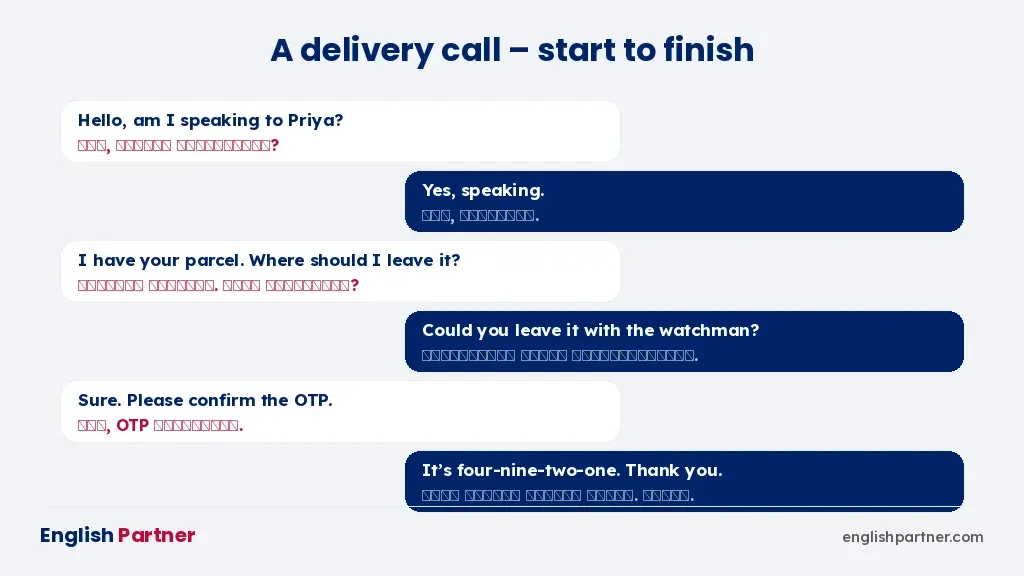
1. A delivery call
| Who | English |
|---|---|
| Caller | Hello, am I speaking to Priya? |
| You | Yes, speaking. |
| Caller | I have your parcel. Where should I leave it? |
| You | Could you leave it with the watchman, please? |
| Caller | Sure. Please confirm the OTP. |
| You | It’s four-nine-two-one. |
| You | Thank you. Have a good day. |
2. Calling the bank
| Who | English |
|---|---|
| You | Hello, this is Priya Raman. I’m calling about my account. |
| Bank | Certainly. May I have your account number? |
| You | Yes — could you speak a little slower, please? I’ll note it down. |
| Bank | Of course. Go ahead when you’re ready. |
| You | My number is 3-0-4-2-7-1. A payment hasn’t been credited. |
| Bank | Let me check that for you. Could you hold on a moment? |
| You | Sure, I’ll hold. |
| You | So it will be credited by Friday. Thank you for your help. |
3. Taking a call at work when you are busy
| Who | English |
|---|---|
| You | Hello, this is Arun speaking. |
| Caller | Hi Arun, this is Meena from the Chennai office. |
| You | Hi Meena. I’m in a meeting right now — can I call you back in an hour? |
| Caller | That’s fine. It’s about Friday’s report. |
| You | Got it. I’ll call you at four with an update. |
| You | Thanks for understanding. Talk soon. |
4. Customer care complaint
| Who | English |
|---|---|
| You | Hello, I’m calling about an order I placed last week. |
| Agent | May I have your order number, please? |
| You | It’s 7-8-2-3-5. The item arrived damaged. |
| Agent | I’m sorry about that. Would you like a replacement or a refund? |
| You | A replacement, please. How long will it take? |
| Agent | Three to four working days. |
| You | So the new one arrives by Thursday. Could you send me a confirmation message? |
| You | Thank you for your help. |
3 phone-English mistakes (and the fix)
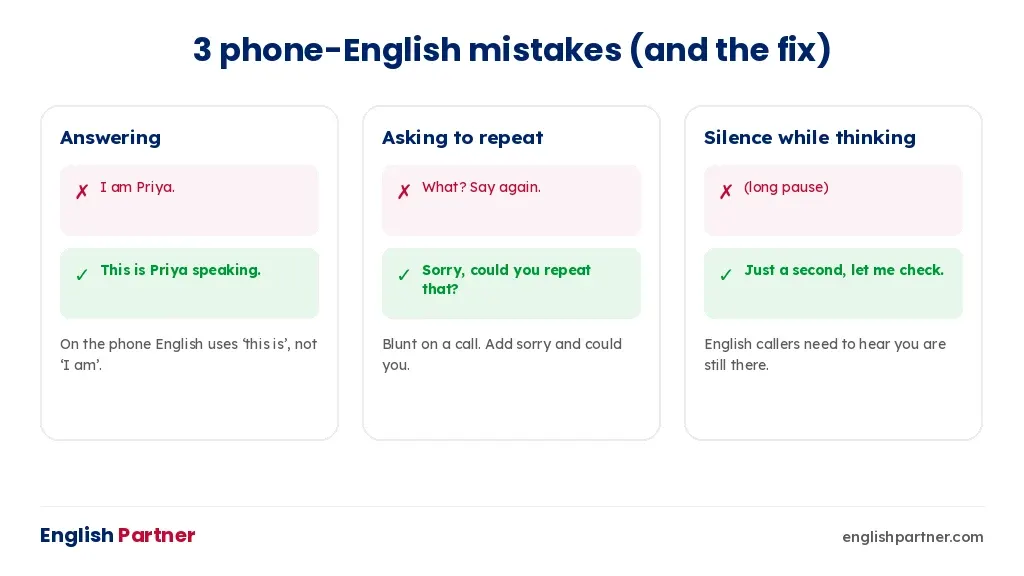
Mistake 1: “I am Priya.” Face-to-face that is fine. On the phone, English uses “This is Priya speaking.” A small switch, but it is the first thing the other person hears.
Mistake 2: “What? Say again.” Direct translation of “என்ன? மறுபடி சொல்லுங்க”, and it lands as rude in English. Add the two softeners: “Sorry, could you repeat that?”
Mistake 3: going silent while you think. Face-to-face, the other person can see you thinking. On a call, silence sounds like a dropped line. Say “Just a second, let me check” and keep the call alive.
One more, smaller: say phone numbers digit by digit – “four-nine-two-one”, not “four thousand nine hundred and twenty-one.”
Your 5-day phone English plan
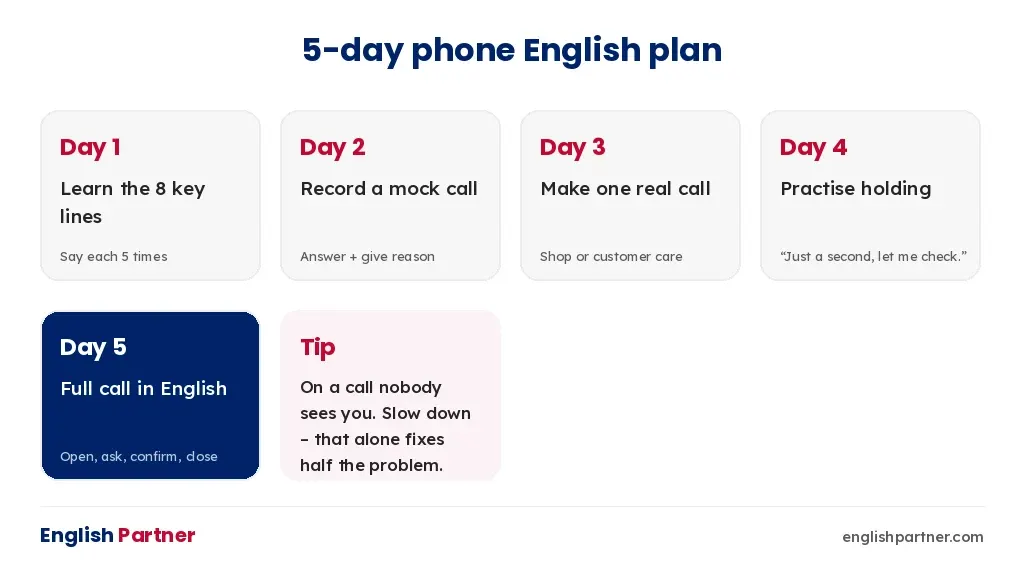
Day 1: Learn the eight key lines. Say each one five times, out loud.
Day 2: Record a mock call on your phone – answer, give your reason, ask one question, close. Listen once.
Day 3: Make one real call in English. Customer care is easiest – they are trained to be patient.
Day 4: Practise holding and confirming: “Just a second, let me check.” “So that’s Friday, correct?”
Day 5: A full call in English, all four stages, start to finish.
The recording on Day 2 does the most work. Almost every learner discovers the same two things – long silences, and speaking too fast when nervous.
When self-practice is not enough
You can rehearse a call alone. What you cannot do alone is handle the moment when the other person says something you did not expect – and that is exactly what real calls do.
That is what daily speaking practice with a trainer builds. Our Basic level covers everyday calls, and Mastery Communication works on real-time conversation and handling the unexpected – with a trainer who explains in your mother tongue and practises with you every day on WhatsApp and live calls. The spoken English in Tamil page explains how the Tamil track works, and learners in the city can join our spoken English classes in Coimbatore in person. As the British Council notes, listening skills improve fastest with real, repeated practice rather than study alone.
Final thoughts and your next step
Four stages, eight lines, and permission to ask someone to repeat. That is telephone English.
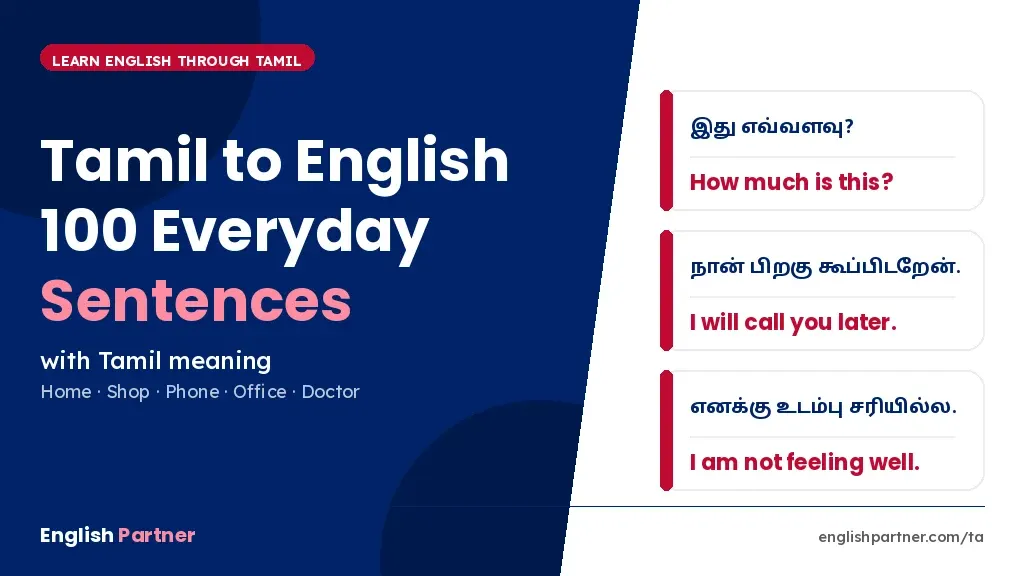
Record one mock call tonight. If shop conversations feel easier to start with, our English at the shop guide is the gentler first step, and the 100 Tamil to English sentences cover the everyday lines behind both.
Not sure which level to start from? Send “Hi” on WhatsApp for a free five-minute level test. No payment, no pressure.
Frequently asked questions
How do I answer the phone in English?
Say “Hello, this is Priya speaking.” On the phone, English uses “this is”, not “I am”. If you are answering for a company: “Good morning, English Partner, Priya speaking.”
How do I ask someone to repeat on a call?
“Sorry, could you repeat that?” or “Sorry, I didn’t catch that.” Both are polite and normal. Saying just “What?” or “Say again” sounds abrupt in English.
What do I say if I cannot understand the accent?
“Could you speak a little slower, please?” Nobody minds — it is a normal request on calls, and it is far better than guessing and getting the details wrong.
How do I put someone on hold politely?
“Could you hold on a moment, please?” When you come back: “Thanks for holding.” If it will take longer: “Can I call you back in ten minutes?”
What should I say if I am busy when they call?
“I’m in a meeting right now — can I call you back in an hour?” Give a time, not just a refusal. That one detail makes it sound professional.
How do I end a phone call in English?
Confirm the main point, then thank them: “So that’s Friday at four. Thank you for your help. Bye.” Repeating the detail avoids mistakes and gives the call a clean ending.
Why is phone English harder than face-to-face English?
Because you lose the face, the gestures and the lip movement that normally carry half the meaning. The words themselves are usually simpler on a call — what you need is practice with only sound.
How can I practise phone English alone?
Record yourself doing a mock call on your phone — answer, give a reason, ask one question, close. Listen once. You will hear the long pauses and the fillers immediately.