Tamil to English: 100 Everyday Sentences with Tamil Meaning (Home, Shop, Phone, Office)
 Vishaleni
Content Writer
Published
Time to read
9 minutes
Vishaleni
Content Writer
Published
Time to read
9 minutes
Quick answer: The fastest way to start speaking English is to take the sentences you already say in Tamil every day and learn their English version. Below are 100 of them – home, shop, phone, office, doctor – with the Tamil next to each one. Say them out loud, one situation a day. Most of my learners are using real English by the end of the first week.
Why I start every Tamil beginner with sentences, not grammar
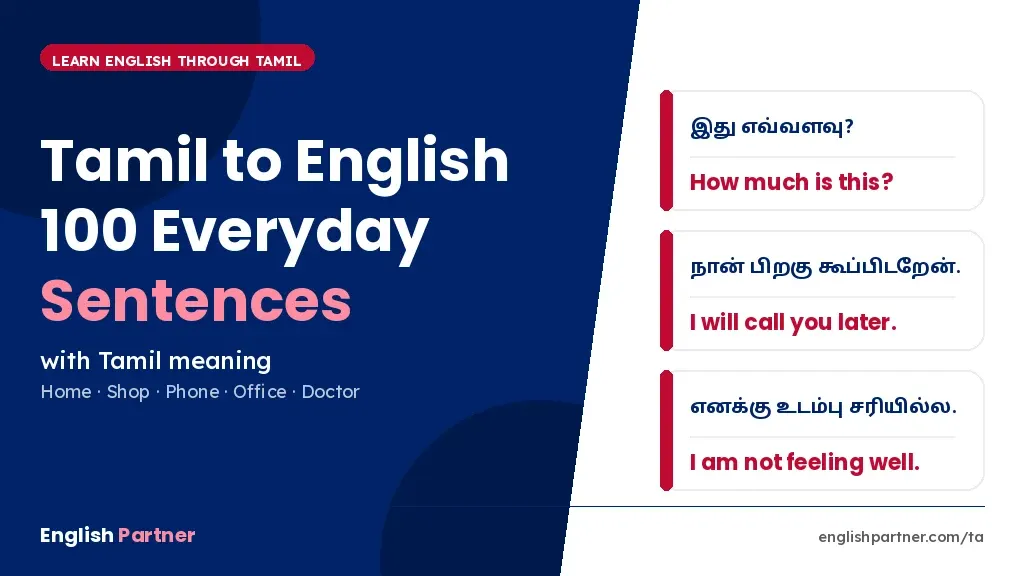
Every batch I take at English Partner starts the same way. I ask a new learner one question in Tamil: “இது எவ்வளவு?” – how do you say this in English?
Most of them know. How much is this? They say it, a little unsure, but they say it.
Then I ask them to say it at a shop. And they go quiet. Not because they don’t know the sentence – because somewhere between the brain and the mouth, the fear steps in. What if the tense is wrong? What if he laughs?
That is the real problem. Not vocabulary. Not grammar. It is that nobody ever put the English sentence next to the Tamil one and made you say it out loud until it felt like yours.
So that is what this post does. No rules. Just 100 sentences you already say in Tamil, with the English beside them. The grammar is hiding inside – we will look at it near the end, after your mouth has already learned the patterns.
How to use this list (the way we do it in class)
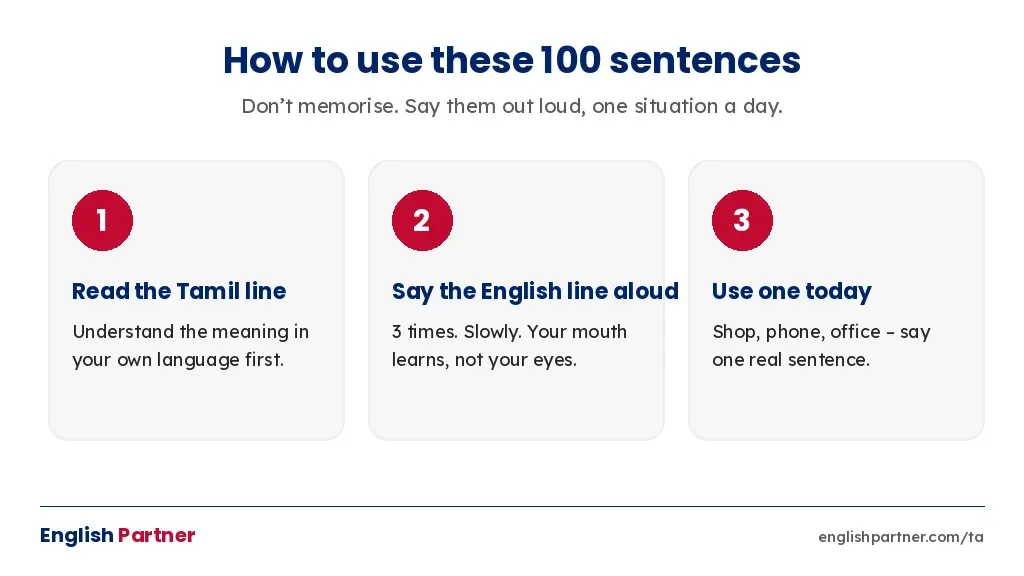
Read the Tamil line first. You need the meaning to sit in your own language before the English will stick.
Say the English line three times, out loud. Not in your head. Your mouth has to learn the sentence – reading silently is how most people “know” English but still can’t speak it.
Use one sentence today. One. At the tea shop, on a call, with your child. That single real sentence does more than fifty you only read.
Please don’t try to finish all 100 tonight. Ten sentences a day, one situation. There is a 7-day plan at the end – it is the same plan I give on the first day of Pre-Basic.
100 Tamil to English sentences by situation
1. Greetings and introductions
The first thirty seconds with a stranger. Get these right and the rest of the conversation relaxes – for both of you.
| Tamil | English |
|---|---|
| வணக்கம், நல்லா இருக்கீங்களா? | Hello, how are you? |
| நான் நல்லா இருக்கேன், நன்றி. | I am fine, thank you. |
| என் பெயர் கவிதா. | My name is Kavitha. |
| நான் கோயம்புத்தூரில் இருந்து வர்றேன். | I am from Coimbatore. |
| உங்களை சந்திச்சதுல சந்தோஷம். | Nice to meet you. |
| உங்க பெயர் என்ன? | What is your name? |
| நீங்க எங்க இருந்து வர்றீங்க? | Where are you from? |
| காலை வணக்கம். | Good morning. |
| அப்புறம் பார்க்கலாம். | See you later. |
| நல்ல இரவு, நல்லா தூங்குங்க. | Good night, sleep well. |
2. At home and with family
Home is the safest place to practise – nobody is judging you there. One of my learners, a homemaker from Tirupur, started by saying just “Food is ready” to her kids every evening. Two months later she was taking her daughter’s school calls in English.
| Tamil | English |
|---|---|
| சாப்பாடு ரெடி. | Food is ready. |
| நீ சாப்பிட்டியா? | Did you eat? |
| எனக்கு பசிக்குது. | I am hungry. |
| அம்மா எங்கே? | Where is Amma? |
| கதவை மூடு. | Close the door. |
| லைட்டை அணைச்சிடு. | Switch off the light. |
| கொஞ்சம் தண்ணி தரீங்களா? | Can you give me some water? |
| நான் இப்போ கிளம்பறேன். | I am leaving now. |
| வீட்டுக்கு எப்போ வருவே? | When will you come home? |
| இன்னைக்கு விருந்தாளி வர்றாங்க. | Guests are coming today. |
3. Daily routine
Notice the pattern here: I + verb + time. Once you see it, you can describe your whole day.
| Tamil | English |
|---|---|
| நான் காலையில ஆறு மணிக்கு எழுந்திருப்பேன். | I wake up at six in the morning. |
| நான் தினமும் நடைப்பயிற்சி செய்வேன். | I go for a walk every day. |
| நான் இப்போ குளிக்க போறேன். | I am going to take a bath now. |
| நான் காலை உணவு சாப்பிட்டேன். | I had my breakfast. |
| நான் பஸ்ல ஆபீஸ் போவேன். | I go to the office by bus. |
| நான் ஒன்பது மணிக்கு வேலை ஆரம்பிப்பேன். | I start work at nine. |
| நான் ஒரு மணிக்கு மதிய உணவு சாப்பிடுவேன். | I have lunch at one o’clock. |
| நான் சாயங்காலம் ஆறு மணிக்கு வீட்டுக்கு வருவேன். | I come home at six in the evening. |
| நான் ராத்திரி டிவி பார்ப்பேன். | I watch TV at night. |
| நான் பத்து மணிக்கு தூங்க போவேன். | I go to sleep at ten. |
4. At the shop or market
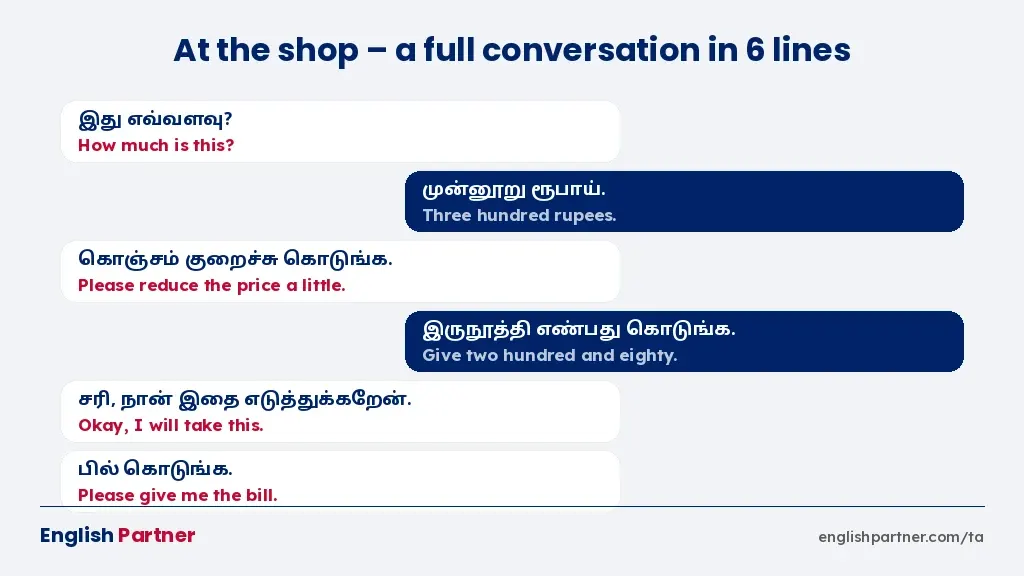
This is where most of my learners get their first real win. Shopkeepers hear short sentences all day – nobody is checking your grammar at the counter.
| Tamil | English |
|---|---|
| இது எவ்வளவு? | How much is this? |
| கொஞ்சம் குறைச்சு கொடுங்க. | Please reduce the price a little. |
| இது ரொம்ப விலை அதிகம். | This is too expensive. |
| எனக்கு ஒரு கிலோ அரிசி வேணும். | I need one kilo of rice. |
| வேற கலர் இருக்கா? | Do you have another colour? |
| நான் இதை எடுத்துக்கறேன். | I will take this. |
| பில் கொடுங்க. | Please give me the bill. |
| கார்டு எடுத்துப்பீங்களா? | Do you accept cards? |
| சில்லறை இருக்கா? | Do you have change? |
| இதை மாத்தி தர முடியுமா? | Can you exchange this? |
5. On the phone
Phone English feels harder because you can’t see the other person’s face. But real calls are very repetitive. These ten lines cover almost every call you will make or receive.
| Tamil | English |
|---|---|
| ஹலோ, யாரு பேசறது? | Hello, who is speaking? |
| நான் ரமேஷ் பேசறேன். | This is Ramesh speaking. |
| நான் பிறகு கூப்பிடறேன். | I will call you later. |
| உங்க குரல் சரியா கேக்கல. | I can’t hear you properly. |
| ஒரு நிமிஷம் இருங்க. | Please hold on for a minute. |
| நான் இப்போ மீட்டிங்ல இருக்கேன். | I am in a meeting now. |
| மெசேஜ் பண்ணுங்க. | Please send me a message. |
| கால் கட் ஆயிடுச்சு. | The call got disconnected. |
| நான் நாளைக்கு கால் பண்றேன். | I will call you tomorrow. |
| கூப்பிட்டதுக்கு நன்றி. | Thank you for calling. |
6. Asking for help and directions
If you learn only two sentences from this whole post, make it “Please speak slowly” and “Please say that again.” They buy you time in every conversation, and nobody minds.
| Tamil | English |
|---|---|
| கொஞ்சம் உதவி செய்ய முடியுமா? | Can you help me, please? |
| பஸ் ஸ்டாண்ட் எங்க இருக்கு? | Where is the bus stand? |
| இந்த வழியா போகணுமா? | Should I go this way? |
| இங்க இருந்து எவ்வளவு தூரம்? | How far is it from here? |
| இடது பக்கம் திரும்புங்க. | Turn left. |
| நேரா போங்க. | Go straight. |
| எனக்கு புரியல. | I don’t understand. |
| மெதுவா சொல்லுங்க. | Please speak slowly. |
| மறுபடியும் சொல்லுங்க. | Please say that again. |
| நான் வழி தவறிட்டேன். | I have lost my way. |
7. At the office
You know your work. You just don’t want to be the one who stays quiet in the standup because the English won’t come out in time. These ten are the ones that come up every single day.
| Tamil | English |
|---|---|
| நான் இன்னைக்கு லேட்டா வருவேன். | I will be late today. |
| எனக்கு நாளைக்கு லீவு வேணும். | I need leave tomorrow. |
| இந்த வேலை முடிஞ்சிடுச்சு. | This work is done. |
| ரிப்போர்ட் எப்போ வேணும்? | When do you need the report? |
| நான் மெயில் அனுப்பிட்டேன். | I have sent the mail. |
| மீட்டிங் எத்தனை மணிக்கு? | What time is the meeting? |
| எனக்கு ஒரு சந்தேகம் இருக்கு. | I have a question. |
| இதை நான் நாளைக்கு முடிக்கிறேன். | I will finish this tomorrow. |
| கொஞ்சம் நேரம் கொடுங்க. | Please give me some time. |
| நான் இப்போ கிளம்பலாமா? | May I leave now? |
8. At school or college
| Tamil | English |
|---|---|
| நான் காலேஜ்ல படிக்கிறேன். | I am studying in college. |
| உள்ளே வரலாமா? | May I come in? |
| இந்த வார்த்தைக்கு என்ன அர்த்தம்? | What does this word mean? |
| எனக்கு இது புரியல. | I did not understand this. |
| நான் ஹோம்வொர்க் முடிச்சிட்டேன். | I have finished my homework. |
| நாளைக்கு தேர்வு இருக்கு. | There is an exam tomorrow. |
| நான் பரீட்சையில பாஸ் ஆயிட்டேன். | I passed the exam. |
| என் புத்தகத்தை மறந்துட்டேன். | I forgot my book. |
| இதை மறுபடியும் விளக்குங்க. | Please explain this again. |
| நான் ரெண்டாம் வருஷம் படிக்கிறேன். | I am in my second year. |
9. Health and at the doctor
One thing to watch here: in English we have a headache – we are not “having” one. I hear this in almost every batch, and I explain why below.
| Tamil | English |
|---|---|
| எனக்கு உடம்பு சரியில்ல. | I am not feeling well. |
| எனக்கு தலைவலி. | I have a headache. |
| எனக்கு காய்ச்சல் இருக்கு. | I have a fever. |
| நான் டாக்டரை பார்க்கணும். | I need to see a doctor. |
| மாத்திரை எப்போ சாப்பிடணும்? | When should I take the tablet? |
| எனக்கு ஓய்வு வேணும். | I need rest. |
| இப்போ கொஞ்சம் பரவாயில்ல. | I feel a little better now. |
| மருந்துக்கடை எங்க இருக்கு? | Where is the pharmacy? |
| எனக்கு அப்பாயின்ட்மென்ட் வேணும். | I want an appointment. |
| நல்லா தண்ணி குடிங்க. | Drink plenty of water. |
10. Feelings and small talk
| Tamil | English |
|---|---|
| எனக்கு ரொம்ப சந்தோஷம். | I am very happy. |
| நான் ரொம்ப களைப்பா இருக்கேன். | I am very tired. |
| எனக்கு கவலையா இருக்கு. | I am worried. |
| இன்னைக்கு நல்ல வானிலை. | The weather is nice today. |
| ரொம்ப வெயில் அடிக்குது. | It is very hot. |
| மழை பெய்யுது. | It is raining. |
| வாழ்த்துக்கள்! | Congratulations! |
| கவலைப்படாதீங்க. | Don’t worry. |
| நான் உங்களுக்கு உதவறேன். | I will help you. |
| மறுபடியும் நன்றி. | Thank you again. |
The 5 patterns hiding inside these 100 sentences
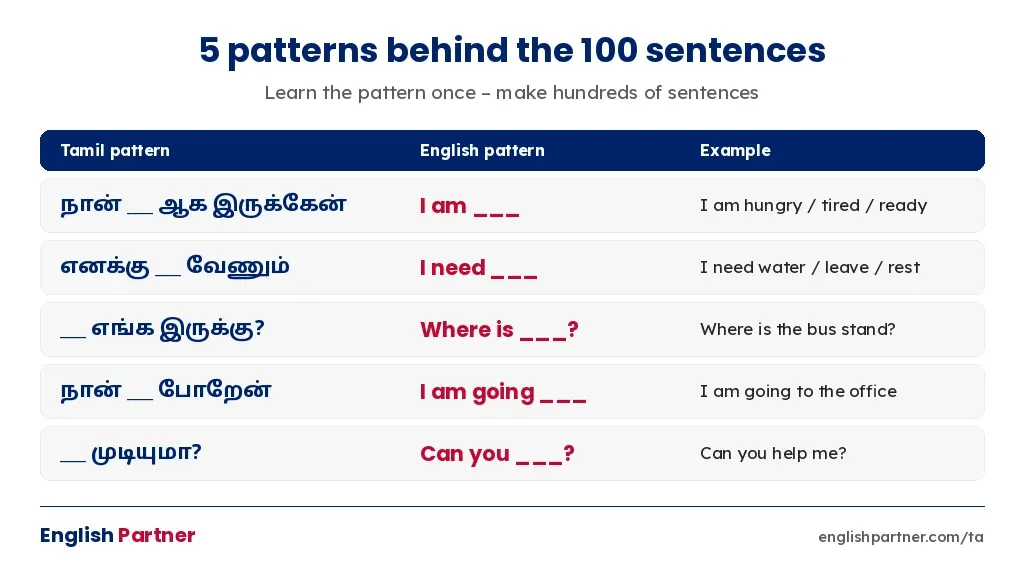
Now go back and look again. Most of those 100 sentences are built from just five patterns. This is the part I love showing in class – the moment a learner realises they are not memorising 100 things, they are learning five.
| Tamil pattern | English pattern | Make your own |
|---|---|---|
| நான் ___ ஆக இருக்கேன் | I am ___ | I am hungry / tired / ready / late |
| எனக்கு ___ வேணும் | I need ___ | I need water / leave / rest / help |
| ___ எங்க இருக்கு? | Where is ___? | Where is the bus stand / pharmacy / office? |
| நான் ___ போறேன் | I am going ___ | I am going home / to the office / to the shop |
| ___ முடியுமா? | Can you ___? | Can you help me / repeat that / reduce the price? |
One more thing I always point out: in Tamil, the verb comes at the end (நான் ஆபீஸ் போறேன்). In English, the verb comes right after the person (I am going to the office). That one difference is behind most of the “word order” confusion Tamil speakers feel. Once you actually see it, it stops bothering you.
3 mistakes Tamil speakers make (and the simple fix)
I want to be clear: these are not “bad English.” They are Tamil grammar quietly walking into your English sentence. Every Tamil speaker does this at first – I did too.
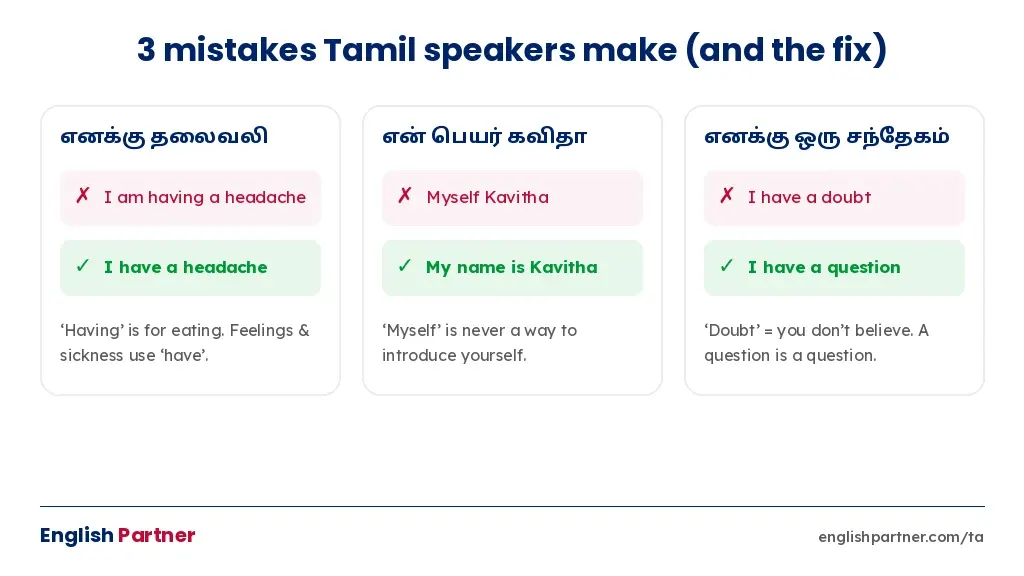
Mistake 1: “I am having a headache.”
In Tamil we say எனக்கு தலைவலி இருக்கு, so “having” feels right. But in English, having is for eating or holding a party. For sickness and feelings, use have: I have a headache. I have a fever.
Mistake 2: “Myself Kavitha.”
I hear this in mock interviews every week, from Coimbatore to Madurai. It is not correct English. Say “My name is Kavitha” or simply “I am Kavitha.”
Mistake 3: “I have a doubt.”
சந்தேகம் can mean doubt or question in Tamil. In English, a doubt means you don’t believe something. When you want to ask, say “I have a question.”
Your 7-day practice plan
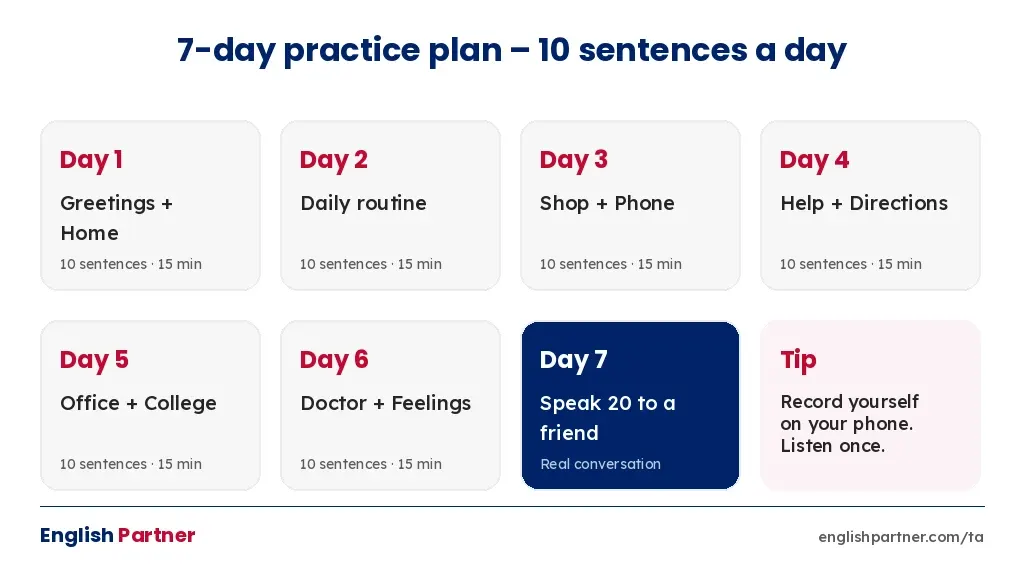
Day 1: Greetings + Home (sentences 1–20). Say each English line three times.
Day 2: Daily routine (21–30). Then describe your day in five sentences.
Day 3: Shop + Phone (31–50). Use one at a real shop today.
Day 4: Help + Directions (51–60). Practise “Please speak slowly” until it is automatic.
Day 5: Office + College (61–80). Send one short English message to a colleague or friend.
Day 6: Doctor + Feelings (81–100). Tell someone how you feel – in English.
Day 7: Pick 20 sentences and have one real conversation with a friend or family member. Record it on your phone. Listen once.
Fifteen minutes a day. That is genuinely all. In three years of training I have not seen a single learner improve by studying two hours on Sunday. The ones who get fluent are the ones who say ten sentences every single day, even on the days they don’t feel like it.
When a sentence list is not enough
A list like this gets you started. It gives you the words. But there is one thing a list cannot do: it cannot listen to you and tell you what to fix.
Most Tamil learners get stuck at the same point, and I can usually predict the week. You know the sentences. But in a real conversation you are still translating in your head, the words come out slowly, and you go quiet. Then you decide English is “not for you.”
It is for you. That is exactly the stage where a trainer who speaks Tamil makes the difference – not to give you more rules, but to explain in Tamil why the English sentence works, and to make you speak every day on WhatsApp until you stop translating.
That is what our spoken English classes in Tamil are built for. Your trainer explains in Tamil, you practise daily on WhatsApp and live calls, and a new batch starts every Friday. If you are starting from zero, Pre-Basic begins with exactly the kind of sentences you just read – and yes, my team and I are the ones taking those classes.
Final thoughts and your next step
You did not need a grammar lesson today. You needed 100 sentences you already say in Tamil, with the English next to them. Now you have them.
Start with Day 1 tonight. Say ten sentences out loud. Tomorrow, ten more. By Sunday you will have said more English than you have in months – and it will have felt easy.
Not sure which level to start from? Send us a “Hi” on WhatsApp. One of our Tamil trainers will do a quick free level test and tell you exactly where to begin. No payment, no pressure – just a five-minute chat in your own language.
Frequently asked questions
How can I learn English sentences through Tamil?
Take sentences you already say in Tamil every day and learn their English version. Read the Tamil line, say the English line aloud three times, and use one sentence in real life the same day. Learn by situation – shop, phone, office – not by grammar rule.
Is it okay to think in Tamil while speaking English?
Yes, at the beginning. Every learner translates in their head at first. It reduces on its own when you repeat the same sentences daily. Trying to "stop thinking in Tamil" by force only makes you freeze.
Why do Tamil speakers put the verb at the end in English?
Because Tamil puts the verb last (நான் ஆபீஸ் போறேன்), while English puts it right after the person (I am going to the office). This is the biggest word-order difference between the two languages, and it fixes itself once you notice it.
Is "I am having a headache" correct English?
No. In English, "having" is for eating or holding an event. For sickness and feelings, use "have": I have a headache, I have a fever, I have a cold.
How many sentences should I practise a day?
Ten. One situation from this list, fifteen minutes, every day. That beats a two-hour session once a week, because speaking is a muscle and it needs daily use.
Can I learn spoken English in Tamil without knowing grammar?
Yes. Sentences first, grammar later is how children learn and how English Partner teaches beginners. Once you can say fifty sentences comfortably, grammar rules make sense because you already have examples in your mouth.
Which English level should a Tamil beginner start at?
If you understand English but cannot speak, start at Pre-Basic. If you can manage simple sentences but hesitate, Basic. A free level test on WhatsApp tells you exactly where you stand in five minutes.
Do English Partner trainers explain in Tamil?
Yes. Trainers on the Tamil track explain every lesson in Tamil first, then move you to English, with daily practice on WhatsApp and live calls. A new batch starts every Friday.