I Tried English Apps for My Kid Here's What Actually Made a Difference
 Vishaleni
Content Writer
Last Updated
Time to read
7 minutes
Vishaleni
Content Writer
Last Updated
Time to read
7 minutes
Tips for Natural Usage
Many parents today want their children to speak English confidently. That is why many families start searching for online English classes for kids or download English learning apps to get started.
So the first step most of us take is simple: download a few English learning apps.
Some apps will be colorful, fun, and easy for our child to use. But after a few months, we started asking ourself an important question:
Is my child actually learning to speak English… or just watching English content? That question changes how we look at English learning for kids.
What Free Apps Actually Do Well
Let’s be fair, free apps aren’t useless. They’re great at building vocabulary, introducing phonics, and keeping kids entertained with gamified lessons. Your child will happily spend 20 minutes earning stars and unlocking characters. And yes, they will pick up some English words along the way.
But here’s where every app hits a wall:
Apps can teach your child to recognize “apple”, but they cannot teach your child to walk into a classroom, raise their hand, and confidently say “I don’t understand, can you explain that again?” That gap is everything.
What Apps Do Well vs. What They Can't Deliver
| Apps & Video Platforms CAN Deliver | What They CANNOT Deliver |
|---|---|
| Vocabulary recognition | Spontaneous spoken responses |
| Phonics & pronunciation exposure | Real-time correction of mistakes |
| Gamified engagement | Conversational back-and-forth |
| Listening comprehension basics | Confidence to speak in front of others |
| Self-paced learning convenience | Personalised feedback on fluency |
Why School English Improves Writing But Rarely Improves Speaking
School English is built around exams. Teachers are focused on grammar rules, essay formats, and answer patterns. That system produces children who can score 90 on a written test and still freeze up when asked “What did you do over the weekend?” in English.
Speaking confidence is a muscle, and school doesn’t exercise it. Most English classrooms in India have 30–40 students. That means your child gets, at best, 2 minutes of speaking time per class.
| Skill Area | School Classes | Apps / YouTube | Live Trainer Sessions |
|---|---|---|---|
| Grammar & Writing | Strong | Moderate | Strong |
| Reading Comprehension | Strong | Moderate | Strong |
| Speaking Confidence | Weak | Weak | Strong |
| Listening & Response | Weak | Moderate | Strong |
| Real-world Conversation | Weak | Weak | Strong |
| Vocabulary Building | Moderate | Strong | Strong |
| Personalised Feedback | Rarely | Never | Always |
Because speaking requires interaction with a real person.
This is why many experts recommend structured online English classes for kids where live trainers help children practice real conversations and receive feedback instantly.
Programs like our online english classes for kidsfocus on this active communication approach, helping children build confidence through structured speaking activities rather than only passive lessons.
Passive vs. Active Learning - The Difference That Matters Most
Here’s a simple test: after 3 months of watching English content on a video platform, can your child hold a 2-minute conversation? For most kids, no. And that’s not the child’s fault. Watching videos and using apps are passive, your child consumes English. Speaking with a live trainer is active, your child produces English. The brain only truly learns language when it has to generate it under real (gentle) pressure.
| 01Watching videos | 02Using an app | 03Repeating phrases | 04Speaking with a real trainer |
Steps 1–3 build familiarity. Step 4 builds fluency.
There’s a massive difference, and most parents don’t discover it until months have gone by. Knowledge Retention: Passive vs. Active Learning
| Period | After 1 Week | After 1 Month | After 3 Months |
|---|---|---|---|
| Passive (apps / videos) | 35% | 22% | 18% |
| Active (trainer sessions) | 62% | 68% | 72% |
Why Teaching Through Mother Tongue Changes Everything
This is the part most parents don’t expect to matter, but it’s one of the biggest differences families notice in real results. When a trainer explains an English concept in your child’s mother tongue, say, explaining the difference between ‘was’ and ‘is’ using a Tamil sentence structure the child already understands, something clicks instantly. The child isn’t translating a foreign idea; they’re building a bridge from what they already know.
A child who understands WHY they’re saying something will always outperform a child who has only memorised WHAT to say. Mother-tongue instruction gives children the “why.”
What to Look for in a Structured English Program
Not all ‘English programs’ are equal. Here’s the checklist that actually matters when evaluating one for your child:
- Live human trainers, not bots – Real-time feedback on pronunciation and fluency is irreplaceable. Software can’t catch the nervous pause or the soft mispronunciation.
- Small batch or 1-on-1 format – Your child needs actual speaking time, not just watching others. Look for programs with 5 or fewer kids per session.
- Mother-tongue support available – Especially for younger children (5–10 years), having a trainer who speaks Tamil, Telugu, or Kannada makes a measurable difference in comprehension speed.
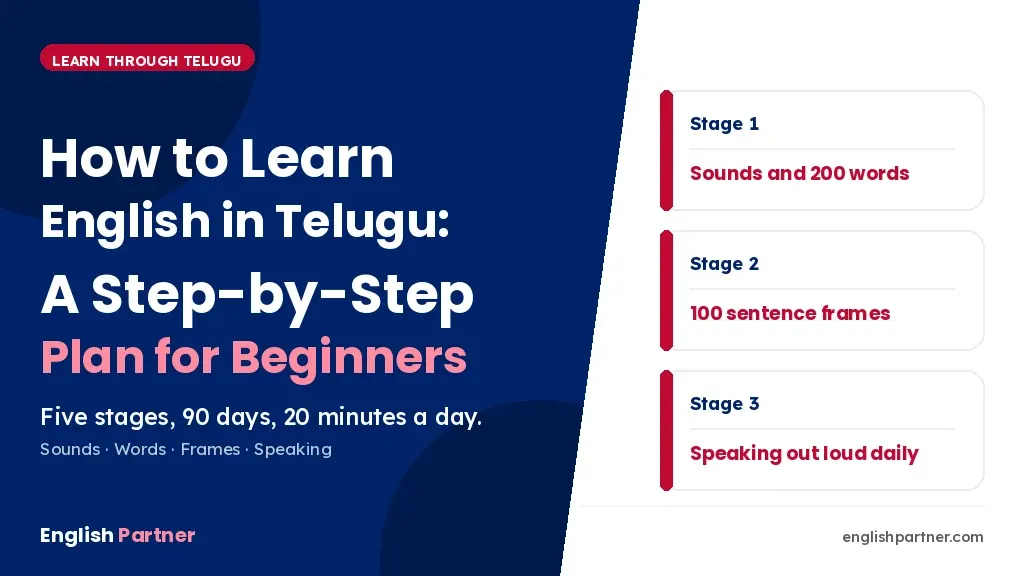
- Structured progression with milestones – Not ’30 sessions of random topics.’ There should be a clear learning arc from basic confidence to real-world fluency.
- Age-appropriate content and tone – A 7-year-old and a 12-year-old need completely different approaches. One-size-fits-all programs fail one of them, usually the younger one.
Final Thoughts for Parents
English is not just a subject anymore.
It is a communication skill that will help children in:
- education
- career opportunities
- global communication
Apps are a great starting point.
But if you want your child to speak English confidently, they need something more: structured guidance interactive learning real speaking practice When children learn through conversation, encouragement, and the right teaching approach, English stops feeling like a difficult subject. It simply becomes a language they enjoy using every day.
Final Thoughts for Parents
Offers structured online English classes for kids, led by live trainers with Tamil, Telugu, and Kannada support in small interactive batches and a proven 90-day fluency structure. Built for kids by educators who understand how they actually learn.
Frequently asked questions
Do English learning apps help children improve their speaking skills?
English learning apps can help children build vocabulary, learn phonics, and improve listening comprehension. However, most apps focus on recognition and repetition rather than real conversations. Speaking confidence usually develops when children interact with real people and practice responding in real time rather than only watching or tapping through lessons.
Why do many children understand English but hesitate to speak it?
Many children learn English through textbooks and exams, which focus on grammar and writing. While this helps them understand the language, they rarely get enough speaking practice in classrooms. Without regular conversation practice, children may know the correct words but still feel nervous or unsure about using them in real situations.
What is the difference between passive and active English learning?
Passive learning happens when children watch videos, listen to lessons, or use apps where they mainly consume content. Active learning occurs when children participate in conversations, answer questions, and express their ideas. Active learning helps improve language retention and speaking confidence because the brain learns language best when it actively produces it.
At what age should children start learning spoken English?
Children can begin developing spoken English skills once they are comfortable forming sentences in their native language, typically around ages 5–6. At this stage, interactive learning environments that encourage conversation and curiosity can help children build confidence and develop natural communication skills.
Why does learning English through a child’s mother tongue help?
Explaining English concepts using a child’s mother tongue can make learning easier because children understand the logic behind the language. When trainers connect English grammar or sentence patterns to familiar structures in Tamil, Telugu, or Kannada, children grasp the concept faster and remember it better.
What should parents look for in an online English learning program for kids?
Parents should evaluate programs based on factors such as live interaction with trainers, small group sessions that allow children to speak, structured lesson progression, and personalized feedback. Programs that focus on conversation practice rather than only videos or worksheets tend to help children develop real communication confidence.
How can structured programs help children become confident English speakers?
Structured programs provide guided speaking practice, feedback from trainers, and gradual progression from basic conversations to more complex communication. For example, programs like English Partner Kids focus on interactive speaking sessions with live trainers and mother-tongue support, helping children move from understanding English to confidently using it in everyday conversations.