BEEN → Past participle of “to be” Used with: have / has / had Example: I have been to Chennai.
BEING → Present participle of “to be” Used with: am / is / are / was / were Example: She is being rude.
Clear and effective communication solely relies on a strong grasp of grammar because grammar helps to organize the language. Grammar is like the blueprint of a building: Without a solid foundation and proper construction, the building is unstable or may collapse. The same applies to grammar in communication. When grammar is incorrect, it will hinder communication. Clear and effective communication relies on a strong grasp of Grammar.
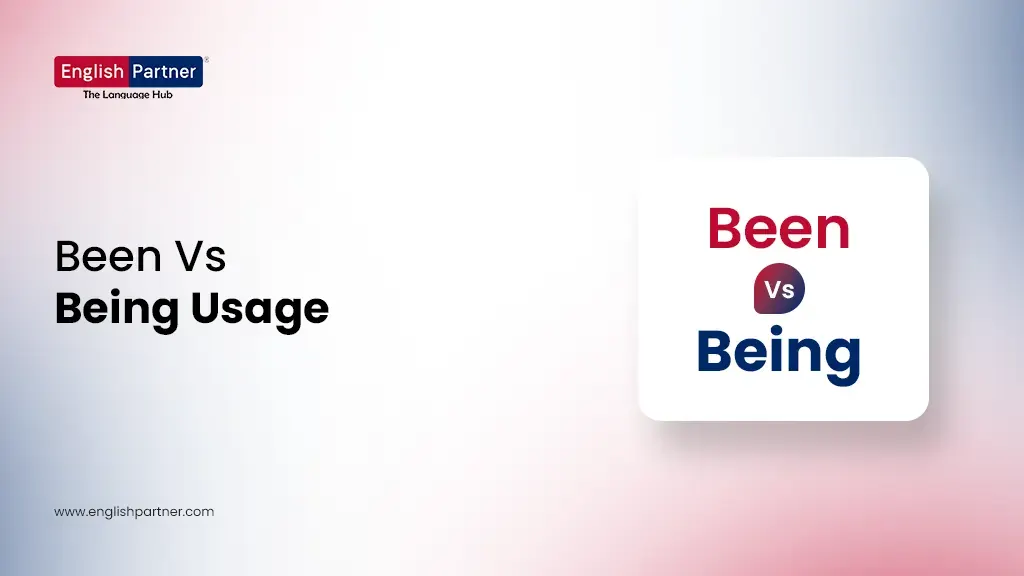
And here in this blog let us look at the difference between ‘Been’ and ‘Being’.
Been and Being come from the same Root Word, but they have different meanings. Although they have the same root word, the meanings and the usage differ. Let us understand the difference in the blog.
Want to stop making grammar mistakes in conversation? See our Basic Level course“
What does "Been" mean?
The past participle of the verb “to be” is “been.” It is often used in perfect tenses, especially the past and the present perfects.
Present Perfect Tense: An activity that occurred at an ambiguous point in the past and is relevant to the present is indicated by this tense.
Example:
I have been to Paris.
This means that at some point in the past, you visited Paris, and it’s still relevant to the conversation now.
Past Perfect Tense: This tense is used to describe an action that was completed before another action in the past.
Example:
- By the time I arrived, she had already gone to the store.
This means she left the place before I arrived.
What is "Being"?
The continuous form of the verb “to be” is “being.” It describes an action taking place or in progress when used in continuous (progressive) tenses.
Present Continuous Tense: It indicates an action that is happening right now.
Example:
- I am being careful.
This means that right now, I am taking care, or I am in the process of being careful.
- Past Continuous Tense: This tense is used to describe an action that was ongoing in the past.
Example: She was being rude yesterday. This suggests that during the time in question, she was in the process of acting rudely.
Differences in Usage
“Been” refers to something that has already happened, typically used in perfect tenses.
“Being” refers to something happening or ongoing, typically used in continuous tenses.
Examples to Clarify the Difference
- Been:
He has been my friend for ten years.
(This indicates that being friends started in the past and continues to the present.)
I have never been to that restaurant. (The experience of going to the restaurant has never happened.)
-
- Being:
Common Mistakes to Avoid
Using “been” when you mean “being”:
Incorrect: “Why are you always been so quiet?”
Correct: “Why are you always being so quiet?”
Using “being” when you mean “been”:
Incorrect: I have being to the gym today.
Correct: I have been to the gym today.
Quick Summary:
- “Been” is used in perfect tenses to show completed actions or experiences.
- “Being” is used in continuous tenses to describe actions that are happening now or in progress.
Practice this in our live English speaking classes“
| BEEN | BEING | |
| Meaning | Past Participle of ‘to be’ | Present participle of “to be” |
| Usage | Used in perfect tenses (present perfect, past perfect, future perfect) – Used in passive voice | Used in continuous tenses (present continuous, past continuous, future continuous) – Can function as a gerund (verb as a noun) Can function as an adjective |
| Example | I have been to Paris. (Present Perfect) The book has been read. (Passive Voice) | She is being kind. (Present Continuous – Being late is unacceptable. (Gerund) – The most important thing is being honest. (Adjective) |
If this pair caught you out, could have been vs should have been vs would have been is the same trap one step further on. Everything else is in the English grammar guide.

Frequently asked questions
What is the difference between "been" and "being"?
“Been” and “being” are both forms of the verb “to be,” but they have distinct grammatical functions.
* Been: Primarily used in perfect tenses (present perfect, past perfect, future perfect) and in the passive voice.
* Being: Primarily used in continuous tenses (present continuous, past continuous, future continuous), as a gerund (verb used as a noun), and sometimes as an adjective.
Can you give an example of "been" in a sentence?
“I have been to the beach many times.” (Present Perfect)
Can you give an example of "being" in a sentence?
“She is being very helpful today.” (Present Continuous)
What is the role of "been" in the passive voice?
“Been” is essential for forming the passive voice. For example: “The book has been read.” (Focus is on the book, not the reader.)
Can "being" be used as a noun?
Yes, “being” can function as a gerund, which is a verb used as a noun. For example: “Being late is unacceptable.”