
Table of Content
Tips for Natural Usage
The Language That Sells
Scroll through any ad, social media post, or brand website today and chances are, you’ll find one thing in common: English.
From catchy Instagram captions to persuasive ad headlines, English has become the global language of digital marketing. It’s how brands connect with audiences across borders, how messages travel faster online, and how businesses grow in a competitive digital world.
But why English? Because it’s the bridge language that is clear, adaptable, and widely understood. Whether it’s a small business in India or a global brand in Singapore, using English helps marketers reach customers everywhere with one unified voice.
Let’s dive into how English turns clicks into connections and words into results
Why English Matters in Digital Marketing
In today’s online world, marketing isn’t just about visuals or design, it’s about communication. And English is the key that opens doors to a global audience.
Let’s see why it matters so much:
1. English Is the Global Internet Language
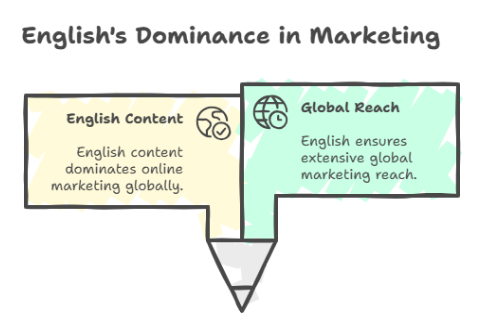
More than 60% of all content on the internet is written in English. Whether it’s a blog, YouTube video, or ad campaign, English helps your message reach far beyond local borders.
Example: A bakery in Chennai posting “Fresh cakes delivered daily” in English can attract not just locals, but also tourists or global followers.
2. Digital Platforms Speak English
All major platforms Google, Instagram, Facebook, LinkedIn, YouTube use English as their main language.
Even when users speak other languages, the system commands, ad dashboards, and algorithm cues are all built around English.
3. English Builds Trust and Professionalism
Brands using clear and correct English look more reliable and global. Poor grammar or unnatural phrases can make an ad feel unprofessional or confusing.
Example:
- Incorrect: “Buy this product, it make you happy.”
- Correct: “Buy this product, it makes you happy.”
4. English Connects Cultures and Customers
A single English message can reach multiple markets India, Singapore, Dubai, the US without translation barriers. That’s why most global campaigns use simple, conversational English that everyone can relate to.
English for Different Marketing Channels
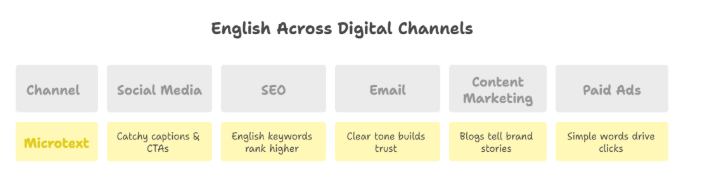
Digital marketing is not one-size-fits-all. Each platform speaks a little differently—but English remains the common thread tying them together. Let’s see how it works across key channels
1. Social Media Marketing
Short, catchy English phrases can grab attention within seconds.
- “Don’t just scroll-shop!”
- “New look. Same love.”
Using simple, relatable English helps brands connect emotionally with their audience.
2. Search Engine Optimization (SEO)
Most search keywords are in English, even in non-English countries.
Example: People might search “best fitness center near me” instead of their local translation.
Using English keywords in blogs, meta tags, and titles improves visibility on Google.
3. Email Marketing
Emails written in clear English build trust and response.
- Subject: “You’ve got something exciting waiting inside!”
- Body: Short, friendly, and human. Avoid robotic tone or over-formality.
4. Content Marketing
From blog articles to YouTube scripts, English helps brands share value-based stories.
Example:
- Blog: “5 Ways to Stay Healthy While Working from Home”
- Video: “How Our Gym Helped 10,000 People Transform Their Lives”
5. Paid Ads (Google & Meta)
Ad headlines and descriptions in English perform better globally.
Example:
- Headline: “Transform Your Skin in 7 Days.”
- CTA: “Shop Now.”
Simple English = higher click rates + wider reach.
English and Brand Voice
In digital marketing, it’s not just what you say—it’s how you say it.
That “how” is your brand voice, and English plays a big part in shaping it.
A brand’s voice builds emotion, trust, and identity. Whether your brand sounds friendly, formal, or inspiring depends on how you use English words and tone.
1. Formal English = Trust and Expertise
Used in industries like finance, healthcare, or education.
- Example: “Enhance your productivity with our proven solutions.”
Sounds professional and reliable.
2. Conversational English = Relatability and Warmth
Perfect for lifestyle, fashion, or personal brands.
- Example: “Need a quick pick-me-up? Grab your favorite brew now!”
Feels friendly and human, not robotic.
3. Inspirational English = Motivation and Emotion
Ideal for fitness, personal growth, or wellness brands.
Example: “One step closer to the best version of you.”
Touches hearts and drives action.
4. Humorous or Trendy English = Attention and Shareability
Used by youth-focused or entertainment brands.
Example: “Adulting is hard. Coffee helps.”
Creates connection through fun and relatability.
English as a Tool for Storytelling and Persuasion
Behind every great marketing campaign lies a story—and English is the language that brings those stories to life for audiences around the world.
Storytelling in digital marketing isn’t about selling products; it’s about building emotion and trust. The right words can turn a simple message into a lasting impression.
1. From Information to Emotion
Facts tell. Stories sell.
- “Our shoes are comfortable” is informative.
- “Run farther, feel lighter, live freer” is emotional.
The second line connects directly to the customer’s lifestyle and feelings.
2. Turning Products into People’s Stories
Use English storytelling to show how your product fits into real lives.
- Example: Instead of saying “This skincare cream works fast,” say “Meet Meera—she found her glow back in just a week.”
- Personal stories make marketing human.
3. The Persuasive Power of Words
A few powerful English words can change how people think:
- Discover, Transform, Unlock, Experience, Begin
These verbs inspire curiosity and encourage action.
4. Relatable, Simple Language Wins
Good storytelling doesn’t need complicated English. It just needs clarity and heart.
“We started in a small kitchen with one recipe and a dream.”
Stories like these make audiences believe and belong.
Common Mistakes in English Digital Marketing
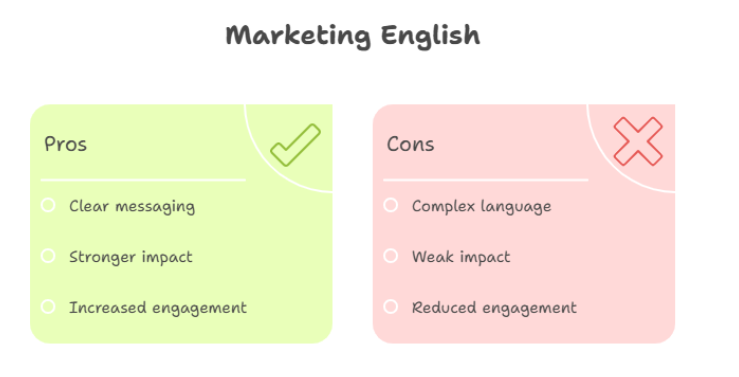
Even strong campaigns can fail if the English feels confusing, robotic, or culturally off. Here are some of the most common mistakes marketers make—and how to fix them
1. Using Complicated or Over-Formal English
Many brands think big words sound smart, but they often push people away.
- “Avail our premium promotional propositions today.”
- “Grab our best deals today!”
Keep it short, friendly, and easy to understand.
2. Poor Grammar or Spelling
- Small language errors can damage brand trust.
“Your welcome to join.” - “You’re welcome to join.”
Always proofread your posts, captions, and ad copies before publishing.
3. Direct Translation from Native Language
Translating word-for-word often sounds unnatural in English.
- “Close the fan.”
- “Turn off the fan.”
Learn phrases as they’re actually used in English, not just their literal meanings.
4. Ignoring Tone and Audience
Writing in the wrong tone can make your message feel disconnected.
- Example: Using corporate English on Instagram can sound boring, while slang in a formal ad can seem unprofessional.
- Match your English tone to your audience’s style and mood.
5. Too Many Hashtags or Emojis
English content should enhance clarity, not clutter it.
“#Amazing #BestProduct #BuyNow #OfferLimited”
“Don’t miss out—our biggest sale ends tonight!”
How to Improve English for Digital Marketing
You don’t need to be an English expert to succeed in digital marketing. You just need the right approach and practice. Here’s how you can sharpen your English skills for the digital world
1. Read English Ads and Social Posts Daily
Follow popular brands and study how they write.
Notice how they:
Keep sentences short
- Use emotional triggers (like “discover,” “enjoy,” “save,” “feel”)
- End with a strong call-to-action (“Shop now,” “Join today,” “Learn more”)
2. Learn Marketing Vocabulary & Tone
Familiarize yourself with common English words in digital marketing:
- Engage, boost, launch, offer, inspire, connect, share, experience.
- Try using them in your own posts and captions.
3. Write Every Day — Even Short Captions Count
The best way to improve English writing is by using it.
Start with simple formats:
One-line Instagram captions
Short blog titles
Product descriptions
Practice helps you find your unique marketing voice.
4. Watch English Ads & Campaigns
Observe how brands tell stories visually and verbally.
- Watch campaigns by Nike, Dove, or Indian startups like Zomato or Swiggy.
- They all use simple English that feels emotional and easy to remember.
5. Get Feedback and Keep Learning
Ask others to review your content. Small grammar or tone adjustments can make a big difference in how professional your writing feels.
Pro Tip: Don’t focus on “perfect English.” Focus on effective English—words that connect, convince, and convert.
At English Partner, our spoken English courses online include marketing-based English practice, helping learners create impactful posts, ad copies, and email campaigns.
Wrapping Up
Digital marketing runs on creativity, visuals, and most importantly language. And when that language is English, your message gains global power.
Whether it’s an Instagram caption, a YouTube ad, or a website headline, English helps you communicate clearly, connect emotionally, and compete confidently on the world stage.
Quick Recap:
- English is the global language of digital marketing.
- It drives success across SEO, ads, and social media.
- The right English tone builds trust and brand identity.
- Small improvements in grammar and word choice can transform engagement.
At English Partner, we don’t just teach English, we help you use it to grow your brand, boost confidence, and tell your story effectively.
Vishaleni
Frequently Asked question?
Because English is the global language of communication. It helps marketers reach audiences from multiple countries through one common medium. Most online content, ads, and search terms are in English.
Absolutely . Even simple English phrases like “Best offers today!” or “Order now!” can attract customers beyond your local region and make your brand look more professional.
Most high-ranking keywords on Google are in English. Writing English blogs, titles, and descriptions helps your brand appear in global and regional search results.
It depends on your audience:
- Professional tone → for LinkedIn or corporate websites.
- Casual tone → for Instagram, Facebook, or lifestyle brands.
- Conversational tone → for email and video content.
- Read English marketing blogs and ad headlines.
- Watch short English promotional videos.
- Practice writing posts and CTAs daily.
- Join English Partner’s spoken English courses online to learn the right mix of grammar, tone, and real-world marketing English.