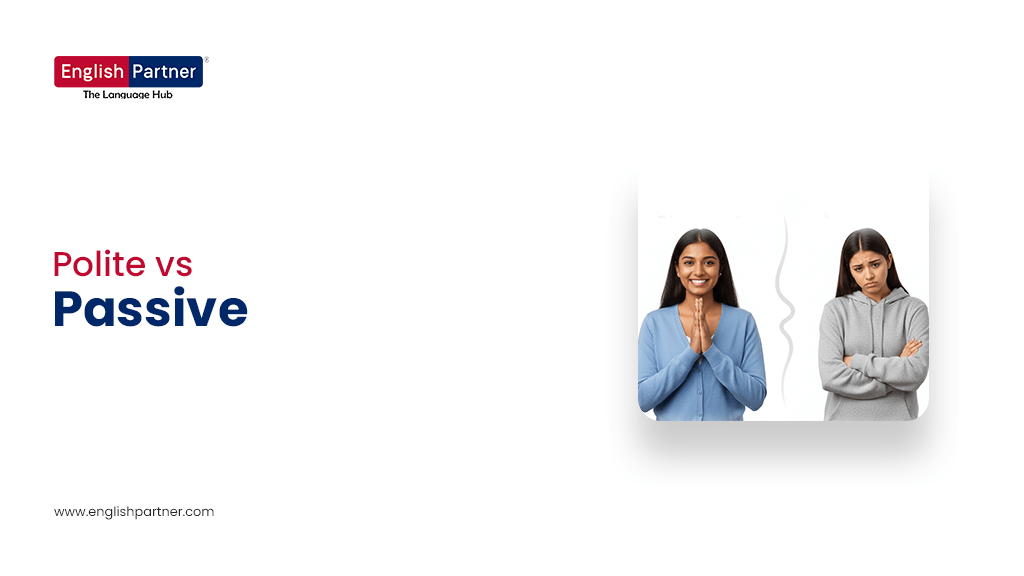
Table of Content
- What Does “Polite” Really Mean?
- What Does “Passive” Really Mean?
- Polite vs Passive — Simple Comparison
- Why People Confuse Politeness With Passiveness
- Signs You Are Polite
- Signs You Are Passive
- Polite Phrases You Should Use Daily
- Passive Phrases to Avoid
- Why Politeness Is Not Weakness
- Why Passiveness Hurts You
- How to Build a Confident Polite Personality
- Conclusion
Tips for Natural Usage

We all want to be polite.
We want to be kind, respectful, soft-spoken, and easy to talk to.
But sometimes, without realizing it, politeness becomes passiveness, and that is when problems begin.
You’ve probably experienced this:
- You try to be polite, but people ignore your needs.
- You try to avoid hurting someone, but they walk all over you.
- You speak softly, but people don’t take you seriously.
- You agree to everything, but inside you feel frustrated.
This is not because you are “too nice.”
It’s because you haven’t learned the difference between polite and passive.
There is a fine line between sounding respectful and sounding weak, and once you understand it, your communication becomes confident, clear, and emotionally balanced.
What Does “Polite” Really Mean?
Politeness is NOT about being quiet, soft, or agreeable.
Politeness is:
- Respectful
- Kind
- Clear
- Balanced
- Calm
- Thoughtful
Politeness means you value others, but you also value yourself.
Examples of Polite Behaviour
- Saying “please” and “thank you”
- Expressing your needs clearly
- Speaking with kindness
- Disagreeing respectfully
- Asking questions without fear
- Saying “no” calmly
- Taking care of your boundaries without hurting others
Politeness is strength with softness.
What Does “Passive” Really Mean?
Passiveness is when you try so hard to avoid conflict that you lose your voice.
Passiveness includes:
- Fear of saying what you feel
- Hesitating to express needs
- Over-apologizing
- Saying “yes” even when you want to say “no”
- Allowing others to decide everything
- Being uncomfortable but staying silent
Passive people are often kind-hearted…
but others misunderstand them as weak, confused, or easy to control.
Examples of Passive Behaviour
- “It’s okay… whatever you decide.”
- “I’m sorry… sorry… sorry…”
- “It’s fine, I don’t mind.” (even when you do)
- “I don’t know… maybe…”
- “If you want… I guess… it’s okay…”
Passiveness protects other people’s feelings, but destroys your own.
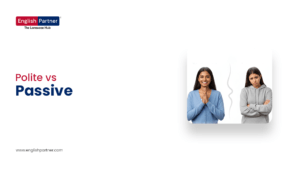
Polite vs Passive — Simple Comparison
Feature | Polite | Passive |
Tone | Calm | Hesitant |
Confidence | High | Low |
Boundaries | Clear | Missing |
Communication | Respectful | Fearful |
Emotion | Balanced | Anxious |
Impact on Others | Respect | Disregard |
Relationship Effect | Healthy | Unbalanced |
Politeness is healthy.
Passiveness is draining.
Why People Confuse Politeness With Passiveness
Many people think:
- Being polite means staying quiet
- Being polite means agreeing all the time
- Being polite means not expressing your opinion
- Being polite means making others happy
- Being polite means sacrificing your needs
This is wrong.
Here are the REAL reasons people slip into passiveness:
1. Fear of hurting others
You don’t want to disappoint anyone.
2. Low self-esteem
You think your needs don’t matter.
3. Childhood conditioning
You were told “don’t talk back,” “don’t argue,” “adjust always.”
4. Fear of conflict
You are scared of arguments.
5. Lack of communication vocabulary
You don’t know polite but strong phrases.
6. People-pleasing habit
You want everyone to like you.
7. Past trauma or emotional experiences
You learned to stay quiet to stay safe.
Understanding your reason helps you break the pattern.
Signs You Are Polite
You express your opinion calmly
You don’t shout, but you don’t hide.
You set boundaries with kindness
“No, I can’t do it today — but I can help tomorrow.”
You’re respectful but not afraid
You speak your truth without hurting others.
You choose words thoughtfully
Your language is gentle but clear.
You communicate your needs
You say what you prefer.
You say “no” when needed
You don’t feel guilty for taking care of yourself.
Being polite makes you feel light, confident, and respected.
Signs You Are Passive
You avoid expressing your needs
You let others decide everything.
You say “yes” even when you want to say “no”
And you feel angry later.
You keep apologizing
Even when it’s not your fault.
You let people interrupt you
And you stay quiet.
You don’t share your true feelings
Because you don’t want to create tension.
You let people take advantage of you
Because you don’t want to “be rude.”
You doubt your own voice
You think others know better.
Passiveness feels like you’re shrinking inside yourself.
How to Be Polite Without Being Passive
1. Use Clear + Gentle Phrases
Being polite doesn’t mean being indirect.
Try these:
- “I prefer…”
- “I would like…”
- “Could we try this?”
- “I feel differently about this.”
- “Here’s what works for me.”
These are soft but STRONG.
2. Don’t Over-Apologize
Stop saying:
- “Sorry for disturbing.”
- “Sorry I asked.”
- “Sorry for everything.”
Replace with:
- “Do you have a moment?”
- “Can I ask something?”
- “Thank you for your time.”
You are not a burden.
3. Say “No” Politely, Not Fearfully
Here’s how:
Passive:
“Um… I guess I can… if you want…”
Polite:
“I won’t be able to do it today. But I can help tomorrow.”
Clear. Respectful. Strong.
4. State Your Preferences
You are allowed to prefer things.
Examples:
- “I prefer the first option.”
- “Could we meet at 5 instead of 4?”
- “I’d like a milder version of this dish.”
If you never express preferences, you disappear.
5. Keep Your Tone Steady
Tone decides EVERYTHING.
Polite tone = warm
Passive tone = shaky
Rude tone = sharp
You want warm + confident.
Practice speaking slowly, gently, and clearly.
6. Use “I” Statements
They make you sound strong AND respectful.
Examples:
- “I think…”
- “I feel…”
- “I prefer…”
- “I don’t feel comfortable with that.”
These protect your boundaries.
7. Maintain Confident Body Language
Politeness is also physical.
DO:
- Eye contact
- Open posture
- Small smile
- Steady voice
AVOID:
- Looking down
- Fidgeting
- Shrinking posture
- Whispering voice
Even if your words are polite… passive body language ruins everything.
Polite Phrases You Should Use Daily
- “I appreciate that.”
- “Could we do it this way?”
- “Here’s my thought on this…”
- “I understand your point.”
- “Let’s figure this out together.”
- “I prefer another option.”
- “That doesn’t work for me.”
- “Could you clarify that?”
These make you respectful AND confident.
Passive Phrases to Avoid
- “Sorry, sorry, sorry…”
- “If you want… it’s okay…”
- “Anything is fine…”
- “Maybe… I guess…”
- “You decide everything.”
- “Never mind… ignore what I said.”
Each of these erases your strength.
Why Politeness Is Not Weakness
Politeness is a superpower when done correctly.
It shows:
- Emotional intelligence
- Maturity
- Inner peace
- Respect
- Strength
- Self-control
Passive behavior is fear-driven.
Politeness is choice-driven.
Why Passiveness Hurts You
Passiveness:
- kills self-respect
- builds resentment
- attracts people who take advantage
- destroys your confidence
- hides your real personality
- stops others from understanding your boundaries
Politeness improves relationships.
Passiveness damages them.- kills self-respect
How to Build a Confident Polite Personality
Step 1: Speak slowly
Fast speech = nervous
Calm speech = confidentStep 2: Use simple sentences
Avoid overthinking grammar.
Clarity > complexity.Step 3: Practise saying “no”
Start with small situations.
Step 4: Respect yourself first
People treat you the way you treat yourself.
Step 5: Practise daily conversations
This rewires your confidence.
English Partner helps you practise gently without pressure.
If you want to develop a polite, confident communication style without fear or hesitation, English Partner offers personalised training designed exactly for this.
Conclusion
You don’t have to choose between being kind and being strong.
You can be respectful and assertive.
You can be gentle and confident.
You can be polite without ever sounding weak.True politeness is not silence.
True politeness is clear communication with respect for yourself and others.Once you learn this balance, your conversations become healthier, your relationships become stronger, and your confidence becomes unshakeable.
Be polite.
Be clear.
Be confident.
And never let your kindness silence your voice
Vishaleni
Vishaleni is a results-driven content creator and copywriter who turns ideas into powerful words. With a knack for engaging storytelling and SEO-savvy writing, she helps brands connect, convert, and grow.

Frequently Asked question?
Polite means respectful + confident.
Passive means agreeable + fearful.
Yes, especially when tone, body language, or word choice is too strong.
Use clear, gentle phrases and set boundaries calmly.
Replace “sorry” with “thank you” or “could you please…”.
“I can’t do this right now, but I can help later.”
No. Passiveness is weakness. Politeness is strength.
Speak slowly, use “I feel/I think/I prefer,” and practise regularly.