Table of Content
- English Builds Confidence in Expression
- English Encourages Creative Thinking
- English Improves Problem-Solving & Critical Thinking
- English Strengthens Teamwork & Collaboration
- English Connects Kids to Global Opportunities
- How Parents Can Support This Growth
- How English Partner Helps Children Learn for Life
- Wrapping Up
Tips for Natural Usage

English Builds Confidence in Expression
When children start learning English, something powerful begins to grow inside them the courage to express themselves.
Speaking English gives kids a voice they can use anywhere in school, at events, or even online. It’s not just about correct grammar; it’s about the confidence to say what they think, ask questions, and share ideas without fear.
Why it Matters:
- English helps kids express emotions and opinions clearly.
- It builds self-esteem; they feel “seen” and “heard.”
- Confidence in speaking leads to confidence in thinking and decision-making.
Every word spoken in English is a step towards self-belief. When children communicate freely, they don’t just learn a language they learn to believe in themselves.
English Encourages Creative Thinking
When children learn English, they don’t just memorize words — they learn to imagine, describe, and create.
Each new word becomes a tool for thinking differently and seeing the world in new ways.
1. Words Inspire Imagination
Learning English introduces children to colorful expressions, stories, and characters. When a child says “The cloud looks like cotton candy,” they’re not just practicing English — they’re learning to observe and describe creatively.
2. Storytelling Builds Original Thinking
Encouraging children to make up short English stories or finish a sentence like “One day, I found a talking dog…” helps them develop storytelling skills, problem-solving, and emotional expression.
3. Thinking Beyond Translation
When children start forming thoughts directly in English instead of translating from their mother tongue, they begin to think faster and more creatively. It teaches them flexibility in thought — an essential life skill.
4. Example in Action
During an English Partner storytelling activity, a student described the sun as “a golden coin in the sky.” It wasn’t from a textbook — it came from pure imagination. That’s the power of learning English with creativity, not pressure.
English Improves Problem-Solving & Critical Thinking
Learning English isn’t only about speaking, it’s about understanding, interpreting, and reasoning.
When children learn to read, listen, and respond in English, they’re actually training their brains to analyze situations, connect ideas, and think logically.
1. Reading Builds Understanding
When kids read short English stories or passages, they don’t just learn new words—they learn to understand why things happen.
Example: Reading a story like “The Lion and the Mouse” teaches them cause and effect—helping them think beyond “what happened” to “why it happened.”
2. Asking and Answering Questions
When children learn to ask in English—“Why did she do that?”, “What will happen next?”—they develop curiosity and reasoning.
English becomes the tool that shapes their thought process.
3. Problem-Solving Through Conversations
Speaking English encourages kids to respond in real time.
Example:
- Teacher: “What would you do if you lost your toy?”
- Child: “I’ll look for it or ask my mom.”
This builds quick thinking, decision-making, and empathy—skills useful in life, not just language class.
4. Connecting Knowledge
When kids understand lessons, instructions, or puzzles in English, they learn to apply knowledge, not just memorize it. It strengthens both their academic and emotional intelligence.
English Strengthens Teamwork & Collaboration
In today’s world, success isn’t just about individual talent—it’s about how well we work with others.
English plays a huge role in helping children connect, listen, and collaborate with people around them.
1. Group Activities Build Communication
When children participate in English discussions, role-plays, or team games, they learn how to share ideas, listen to others, and find common ground.
Example: During a classroom project, kids saying “Let’s do this together” or “You can draw, I’ll write” build social and teamwork skills naturally.
2. English as a Bridge Between Peers
English connects children from different schools, cities, and even countries.
A child who can communicate in English can confidently interact with others during events, competitions, or online learning activities—making the world feel smaller and friendlier.
3. Learning Respect and Empathy
Speaking in English requires listening carefully to others’ ideas.
When children say “I agree,” or “That’s a good idea,” they are not just using phrases—they are practicing respect and collaboration in action.
4. Teamwork in Real Life
Whether it’s a school play, a group presentation, or a sports meet, teamwork in English helps children feel included and understood.
It prepares them for real-world environments like workplaces and communities later in life.
English Connects Kids to Global Opportunities
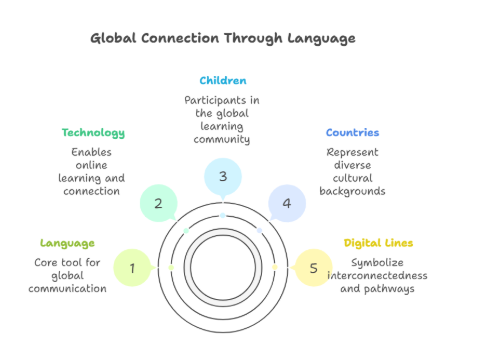
English is more than a school subject — it’s the gateway to the world.
When children learn English, they don’t just learn to communicate; they gain access to knowledge, cultures, and opportunities beyond borders.
1. Access to Global Knowledge
English opens doors to books, educational videos, and learning resources from around the world.
Children can read stories by international authors, explore science topics on YouTube, or even join global workshops — all because they understand English.
2. Early Global Awareness
Through English, children hear stories, values, and ideas from different cultures.
They learn empathy and open-mindedness by understanding how people live, think, and dream in other parts of the world.
3. Building Confidence for the Future
In schools, colleges, and workplaces, English is a common language of communication.
Children who start early become more confident in global environments, whether presenting, traveling, or working abroad.
4. Creating Future Leaders
Strong English communication skills help children grow into leaders who can connect with people across backgrounds.
They learn not just to talk, but to influence, inspire, and lead.
How Parents Can Support This Growth
Children learn best when English is not just a subject, but a part of daily life. Parents play a big role in shaping this environment, no matter how fluent they are. It’s not about perfect grammar; it’s about creating curiosity, comfort, and consistency.
1. Make English a Part of Everyday Talk
Use short English phrases during daily routines:
- “Brush your teeth.”
- “Let’s go to school.”
- “Good job!”
Even simple sentences build familiarity and confidence.
2. Read Together, Even for 5 Minutes a Day
Bedtime stories, picture books, or short English comics make learning natural.
Children remember emotions connected to stories more than vocabulary lists.
3. Watch and Learn Together
English cartoons, songs, or educational YouTube videos introduce new words and expressions in a fun way.
4. Celebrate Mistakes
If your child says something wrong, gently correct them or repeat the right version without scolding.
Example:
Child: “He go school.”
Parent: “Yes, he goes to school.”
This builds confidence instead of fear.
5. Encourage Expression Over Accuracy
Ask open-ended questions like:
- “What did you like about this story?”
- “Can you tell me what happened today?”
This helps children think, form sentences, and express feelings freely.
How English Partner Helps Children Learn for Life
At English Partner, we believe learning English shouldn’t be a chore, it should be a journey that builds confidence, communication, and life skills. Through our Edge program (Online English Course for Kids),we give your child a learning experience that lasts a lifetime.
1. Age-Appropriate, Live Courses
Our English Partner Edge platform offers live, interactive classes designed for kids and teens of different levels—from BUDS (for kindergarten) to Advanced levels.
Each level focuses on fluency, grammar, vocabulary, and real-life speaking skills, so children advance at a pace that suits them.
2. Phonics & Reading Foundation
The Edge program starts early, especially through our phonics courses
This helps children decode words, pronounce clearly, and build strong reading skills. A strong reading base supports everything else: writing, speaking, comprehension.
3. Grammar, Communication & Life Skills in “Blossoms” Modules
In the Blossoms tier, children learn grammar in fun ways, through games, quizzes, storytelling, and collaborative activities.
They not only learn sentence structure or vocabulary, they learn to use English actively in conversations, projects, and peer interactions.
4. Speak & Practice: Real Conversation Practice
One of the strongest features of Edge is Speak & Practice, where children engage in live speaking, group challenges, role plays, and JAM (Just A Minute) rounds
This hands-on speaking experience builds not just fluency, but comfort in expressing their ideas in English.
5. Continuous Feedback & Personalized Guidance
Throughout the English Partner’s Edge program for kids & teens, progress is monitored. Teachers give feedback, help weak areas, and encourage children to speak, not just memorize.
That means your child doesn’t just complete English lessons, they grow in confidence and ability.
6. Family-Friendly and Accessible
Because Edge is fully online, children can learn from home, and parents can easily follow their progress.
English Partner also gives you the ability to enroll in different levels as your child grows, so it’s not a one-off, but a lifetime learning track.
Wrapping Up
When children learn English, they gain something much greater than a new language, they gain life skills that shape who they become.
Through English, children learn to:
- Communicate confidently with others,
- Think creatively and express unique ideas,
- Solve problems and make smart decisions,
- Collaborate with empathy and teamwork,
- And connect globally with new people and opportunities.
Every English word they learn builds their world a little bigger. It helps them not just in classrooms, but in conversations, friendships, and future careers.
The goal isn’t perfection, it’s participation. The more children speak, read, and think in English, the stronger their skills and confidence become.
At English Partner, we help kids develop English that lasts a lifetime, the kind that builds courage, creativity, and connection.
Give your child the gift of growth through our spoken English courses online.
Vishaleni

Frequently Asked question?
English builds more than just language skills, it improves confidence, communication, creativity, and problem-solving. Children who can express their thoughts clearly often perform better in studies, teamwork, and public speaking.
Yes! Speaking English regularly helps children gain the courage to share ideas and interact with others. The more they practice through stories, games, or conversations, the more comfortable they become expressing themselves.
Not at all. Even learning basic English helps children describe their thoughts, imagine freely, and explore new ideas. Creativity grows when they use English to express what they see and feel.
- Speak short English phrases daily.
- Read together for a few minutes.
- Watch English cartoons or songs.
Praise effort more than accuracy.
Even small steps help children see English as fun and natural.
English Partner focuses on life-based English, not just textbook grammar.
Kids learn to use English for real communication, through speaking, storytelling, teamwork, and creative thinking activities designed for long-term growth.